The Man Who Shot the World’s Fury: Misan Harriman’s Unflinching Lens on Power and Protest
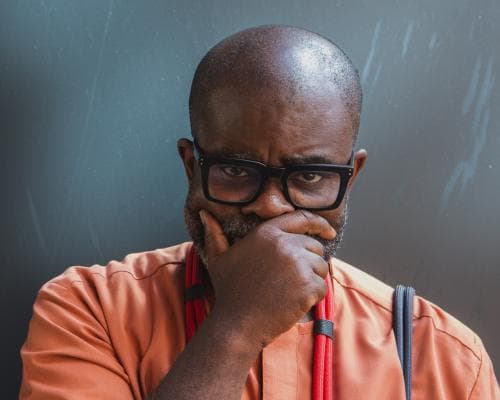
He arrived at the Groucho Club with two Leicas slung like bandoliers and the calm of a man who has seen too much to be rattled by a headline. Misan Harriman, 48, had just flown in from New York, where he’d watched two million people flood the streets for the Knicks’ first NBA championship in 53 years. “All colours, all shapes, and sizes,” he said, almost wistfully. It was a parade of pure, unscripted joy — the kind of crowd he usually captures in black and white, at the epicenter of something far darker.
For the past six years, Harriman has been the unofficial chronicler of collective anger. Grenfell. Black Lives Matter. Climate protests. Gaza. Sudan. Congo. His Instagram feed — half a million followers strong — is a gallery of the world’s most urgent moments, shot in stark monochrome that makes every face feel like a monument. But Harriman is not just a photographer. He is a cultural power broker with a platform he uses relentlessly, posting near-daily video monologues from his study, those thick-rimmed glasses framing a face that refuses to look away from controversy. And that made him a target.
In the past few months, the British tabloid machine — the Telegraph, the Times, the Daily Mail, GB News — turned its crosshairs on him. The reason? His role as chairman of the Southbank Centre, London’s sprawling 75-year-old arts complex. They questioned whether a man who photographs protests and speaks out on Gaza and the climate crisis was fit to lead a national institution. The pressure became personal. Death threats, he told me. “I’m very visible,” he said, “and this is an age where it takes one person who has been force-fed a single story about me … that could end up in a very scary, dangerous place.” Just hours after we spoke, he announced he would step down in the autumn. Not because of the row, he insists — the decision was made in January, delayed by “internal processes.” But the papers celebrated it as a scalp.
Here’s what fascinates me: Harriman didn’t flinch. He walked into that members’ club with the same Leicas he uses to document tear gas and triumph, kicked off his walking boots, and ordered a drink. His craft is not about the camera — it’s about proximity. He gets close. His protest photography is intimate, almost uncomfortable in its honesty. He doesn’t shoot from the sidelines; he stands in the middle of the noise. That takes a kind of nerve that money can’t buy. It’s the same nerve that got him the Southbank chair in the first place, and the same nerve that made him a lightning rod.
What does this say about wealth and taste? In the world of billionaires, the ultimate luxury is not a watch or a yacht — it’s the freedom to speak your truth without fear. Harriman had that, and he used it. He turned his Instagram into a pulpit, his camera into a shield. But the market for unfiltered opinion in the public square is volatile. The ultra-wealthy who collect his prints — and they do, because his work is already entering the canon of protest art — are buying more than an image. They are buying a piece of someone who stood in the blast radius and refused to look away. That is rare. That is heritage in the making.
So where does Misan Harriman go from here? He’s not retreating. The documentary about his work, “Shoot the People,” is screening. The cameras are still slung across his shoulders. And the world is still on fire. For the collector who wants to own a moment that mattered — not a pretty landscape, but a piece of history still smoking — Harriman’s work is the ultimate acquisition. It signals that you understand power, and that you’re not afraid of where it lives. The rest is just noise.
The Experience
Arrange a private viewing of Misan Harriman’s limited-edition protest prints through our concierge — a curated collection that belongs in the study of anyone who shapes culture, not just consumes it.
More in ENTERTAINMENT