The Mayfly Moment: How a Song Born in a Ship’s Cabin Became a Blueprint for Creative Freedom
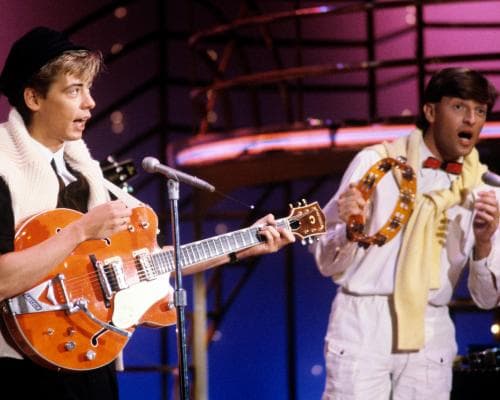
Imagine the most valuable thing you own. Now imagine it came from a room the size of a ship’s cabin, with a chocolate-brown wall scrawled with punk band names. That’s where Nick Heyward wrote ‘Fantastic Day.’ He was 18, living in the basement of the Ski Club of Great Britain, where his parents ran the bar. He had a homemade mic stand, three chords—D, C, and G—and a voice that stammered when he tried to remember lyrics. So he stopped trying. He let the song come from somewhere else. That unconscious, magical realm. And it did.
Here’s the part that matters to anyone who understands the value of a singular creative act: Heyward thought the song had already been written. He asked around. No one could name a song called ‘Fantastic Day.’ In 1978, before Shazam and Spotify, you couldn’t check. So he kept it. Later, he saw Sheena Easton sing ‘9 to 5’ on TV and added the opening line about the strain of getting on that train. He was working in a windowless commercial art studio, going mad. The song became a quiet rebellion—a bittersweet antidote to fluorescent lights and office politics. Bob Sargeant, the producer, understood the Beatles obsession and added a trumpet fanfare and a jazzy G sixth chord. The result? A song that feels like a mayfly: brief, luminous, and utterly alive.
Now, let’s talk about rarity. Not the song itself—though it is a cult artifact of 1980s British pop—but the process. Heyward wrote without a net. He didn’t write words down. He trusted the spur of the moment. That kind of creative risk is vanishing in an era of algorithm-driven content. The bassist, Les Nemes, hated the song. He called it the one he ‘hated’—and then played it at a showcase for Arista because nothing else was working. That reluctant performance got them signed. The lesson? The thing you undervalue might be the thing that changes everything. For collectors and connoisseurs, that’s the real treasure: not the polished final product, but the raw, unpolished impulse behind it.
What does this say about wealth and taste? True luxury is not about perfection. It’s about provenance. It’s about the story of a 19-year-old standing in front of a punk-scrawled wall, envisioning a future he couldn’t yet see. The song has travelled around the world with Heyward, and he says he never gets bored singing it. Every time feels fresh. That’s the hallmark of something made without calculation: it retains its soul. In a market flooded with mass-produced content and status signals, the authentic artifact—whether a song, a watch, or a piece of furniture—carries a different kind of value. It signals that the owner understands the difference between a commodity and a talisman.
Looking ahead, the story of ‘Fantastic Day’ is a quiet manifesto for the next generation of creators and collectors. The mayfly moment—the flash of inspiration you can’t replicate—is the only thing worth chasing. Heyward didn’t plan it. He didn’t optimize it. He just let it be. And that, in the end, is the most exclusive thing of all. The willingness to trust the unconscious, to let a song be born in a ship’s cabin, and to carry it around the world for decades without ever losing the wonder. That’s not a career move. That’s a life.
The Experience
Book a private listening session with a rare vinyl archivist to hear the original demo of ‘Fantastic Day’ on a hand-built tube amplifier. For inquiries, contact our concierge.