The Shopping Mall Collapse That Demands a Robotic Rescue Revolution
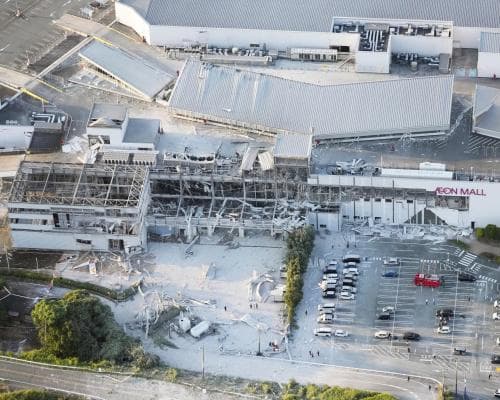
The ceiling of an Aeon shopping mall in Kumamoto didn't just fall — it swallowed people. At 9:26 p.m. local time, a 7.1-magnitude earthquake ripped through Japan's Kyushu island, collapsing a retail complex that should have been a safe haven. Four people were pulled out alive. Ten remain missing. And as rescue workers carefully pick through unstable concrete and twisted steel, one question haunts the scene: why are we still sending humans into buildings that could collapse again?
Japan knows earthquakes. This region, the Kumamoto Prefecture, sits atop the Japan Median Tectonic Line — the country's longest fault zone. In 2016, a 7.0-magnitude quake killed 277 people. Now, another disaster has struck, and the response looks eerily similar. Firefighters, police, and Self-Defense Forces are crawling through rubble by hand. Gas leaks are suspected. Hospitals are running on backup power. It is heroic, slow, and deadly. The technology to do better already exists — but it's not in the field.
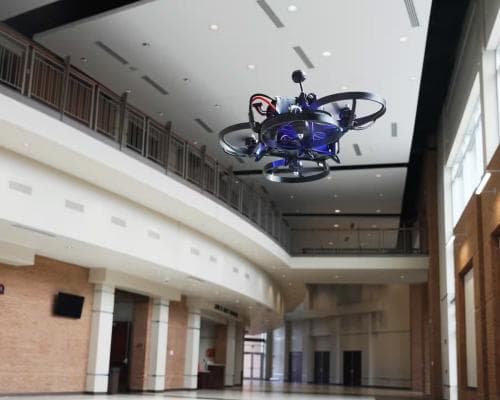
Here's the breakthrough that should be here: snake robots, quadrupeds, and autonomous drones that can slither through voids, map collapsed structures in 3D, and detect human breath or heartbeat from meters away. Companies like Boston Dynamics, Ghost Robotics, and Japan's own Tohoku University have been refining these machines for years. Spot, the yellow dog-like robot, can open doors, climb stairs, and carry sensors. But it's not crawling through the Aeon mall tonight. Why? Because disaster robotics remains a lab curiosity, not a funded mandate.
Capital is the missing piece. Japan spends billions on earthquake early-warning systems and seismic retrofitting — passive defense. But active robotic response? That's underfunded and fragmented. A single advanced rescue robot costs upwards of $75,000. A fleet for a prefecture like Kumamoto would run several million. Against the backdrop of a $4 trillion economy, that's pocket change. Yet no billionaire has stepped up to fund a national robotic rescue corps. No SoftBank Vision Fund has thrown money at a dedicated search-and-rescue startup. The market gap is obvious: disaster robotics is a classic tragedy of the commons — everyone needs it, no one pays.
Globally, the competitive landscape is shifting. China is deploying drones and robotic dogs in earthquake drills. The U.S. Department of Defense funds the DARPA Subterranean Challenge, which has produced robots that can navigate dark, unstable tunnels. Europe has ICARUS, a research project for unmanned search-and-rescue. But none of these have scaled to real-world deployment. The technology is mature enough to save lives tonight. The bottleneck is procurement, training, and political will — not engineering.
What this Kumamoto disaster signals is a pivot point. Every trapped person is a vote for robotic augmentation. Every hour of manual digging is a cost that could have been avoided. The next generation of rescue won't be heroes with flashlights — it will be swarms of machines coordinated by AI, communicating with each other and with command centers in real time. The data from this collapse — structural loads, gas concentrations, survivor locations — should be feeding machine learning models, not just incident reports.
Japan is the perfect testbed. It has the oldest population on Earth, the most earthquakes, and a deep cultural reverence for robotics. If the Kumamoto rescue ends with bodies instead of saves, the public outcry will be deafening. The smart money — sovereign wealth funds, philanthropic billionaires, and defense contractors — should already be drawing up plans for a national robotic rescue service. The technology is ready. The only thing missing is a decision. Let's hope the next headline isn't about how many people we lost while we waited.