Pepper-Spraying Drones Are Coming to US Schools — A Ukraine War Tech Transfer That Changes Everything
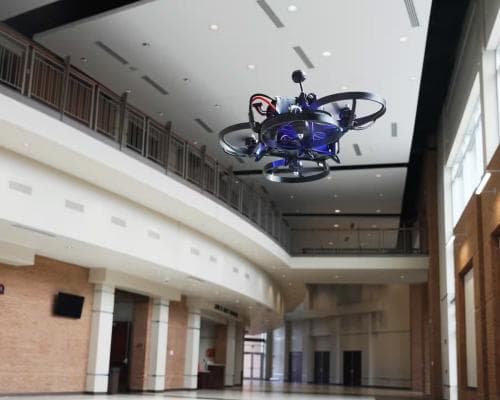
The next school security upgrade won't be a metal detector or a resource officer. It will be a drone that flies through a window, fires pepper balls at a shooter, and talks to teachers from a command center thousands of miles away. That's the pitch from Campus Guardian Angel, a Texas-based company that is now installing its drones in at least eight schools across Georgia, Florida, and Colorado. The technology isn't science fiction — it's a direct transplant from the battlefields of Ukraine, where first-person-view drones have become the defining weapon of asymmetric warfare. Now, that same logic is being applied to the hallways of American high schools.
Here's how it works: When a school receives an alert of an active shooter, Campus Guardian Angel's operations team confirms the threat via live camera feeds. Then, a drone launches from a rooftop dock, flies at up to 900 MHz (a frequency that penetrates buildings better than Wi-Fi), and can stay airborne for about eight minutes. The drone carries a front lance to break through windows not coated with ballistic film, a pepper launcher that fires pepper balls, and even air poppers that create loud bangs. But the most unsettling feature is the embedded speakerphone: the remote pilot can talk directly to the shooter, or to teachers and students, guiding them to safety or issuing commands. "Follow me and I'll take you to the suspect," the company's website promises law enforcement.
The company, founded by a team with backgrounds in military drone systems and private security, is positioning this as a cost-effective alternative to armed guards or expensive ballistic upgrades. A single drone system, including the dock, aircraft, and remote operations center, reportedly costs schools around $50,000 per year — a fraction of the salary for a full-time resource officer. The drones are controlled from a central operations center in Austin, meaning a single team can monitor multiple schools across different states. This is the same remote-pilot model used by the US military for drone strikes, now repackaged for domestic school defense.
But the market context is fraught. School shootings have become a grim American ritual, and the security industrial complex has responded with everything from bulletproof backpacks to AI-powered gun detection software. Yet none of these solutions have meaningfully reduced the frequency or lethality of attacks. Campus Guardian Angel's drones represent a new category: automated, remote-controlled intervention that doesn't require an armed adult on site. The company is entering a space dominated by larger players like Knightscope (security robots) and Evolv Technology (weapon detection), but its focus on aerial response is unique. The question is whether parents, teachers, and school boards will accept drones that can pepper-spray children — even if the target is a shooter.
This signals a broader shift in the school safety sector: the militarization of civilian spaces is accelerating, and the line between battlefield and classroom is blurring. The same drone technology that Ukraine uses to drop grenades on Russian tanks is now being marketed to protect children. For venture capital, this is a growth market — school security spending in the US is projected to exceed $3 billion annually by 2027. But for society, it raises an uncomfortable paradox: we are spending billions on high-tech countermeasures while largely ignoring the root causes of gun violence. The drones don't prevent shootings; they just make the response faster and more lethal.
Looking forward, expect this technology to evolve rapidly. Longer battery life, autonomous targeting (with human oversight), and integration with school lockdown systems are all on the roadmap. The Federal Communications Commission is already examining the 900 MHz spectrum used by these drones, and privacy advocates are raising alarms about constant aerial surveillance of minors. But the genie is out of the bottle. Once a school installs a pepper-spraying drone, it's hard to unring that bell. The next school shooting will be the ultimate test: either the drone stops the attacker in seconds, or it becomes a tragic footnote in a story that was never about technology in the first place. Either way, the school security industry will never be the same.