Jodrell Bank’s Silence Would Be a Cosmic Catastrophe—and a Warning for UK Science
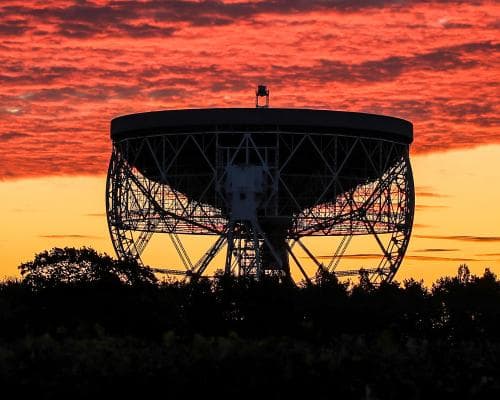
On a cold December day in 1945, a University of Manchester physicist named Bernard Lovell drove into the Cheshire countryside with an army surplus radar and a hunch. He was chasing cosmic rays—high-energy particles hurtling through space—but instead, he stumbled onto something stranger: radio echoes from the ionized trails of shooting stars. That accidental discovery lit the fuse for radio astronomy at Jodrell Bank. Within a decade, engineers had built the Lovell Telescope, the largest steerable radio dish on Earth, and it was the only instrument capable of tracking Sputnik’s frantic beep as it circled the globe in 1957.
Now, that same site—a UNESCO World Heritage site, a cathedral of cosmic inquiry—faces a quiet death. As of this week, the UK’s Science and Technology Facilities Council (STFC) has announced it will pull funding for the e-Merlin network, a seven-telescope array anchored at Jodrell Bank, by March 2028. All observations will cease unless a miracle—or a billionaire—rides in with alternative support. The move is a gut punch to British astronomy and a flashing red light for the country’s commitment to deep-tech research.
Let’s be clear: radio astronomy isn’t some esoteric hobby for tweed-clad academics. It’s the reason we know about pulsars—spinning neutron stars that sweep the cosmos like lighthouses, their beams so precise they rival atomic clocks. It’s how we’ve watched matter spiral into supermassive black holes, testing Einstein’s theories to the breaking point. It gave us the faint glow of the cosmic microwave background—the afterglow of the Big Bang itself. Every major leap in our cosmic picture over the past 70 years has had a radio telescope’s fingerprints on it. Jodrell Bank, with its decades of upgrades, remains world-class. It’s the brain of e-Merlin, a network that can resolve details finer than the Hubble Space Telescope, but from the ground.
The timing couldn’t be more ironic. Just last month, the Rubin Observatory in Chile—a $1.6 billion machine backed by US tech billionaires and international partners—began its decade-long mission to record the largest cosmic movie ever, scanning the entire southern sky every few nights. The UK is a partner in that project, but its own flagship facility is being starved. Meanwhile, China is building the world’s largest radio telescope, the Five-hundred-meter Aperture Spherical Telescope (FAST), and pouring resources into space science. The message is unmistakable: while other nations treat radio astronomy as a strategic asset, Britain is treating it as a line item to cut.
This isn’t just about one telescope. It’s about a physics brain drain. The researchers who train at Jodrell Bank—the engineers who push the limits of signal processing, the data scientists who wrestle with petabyte-scale datasets—are the same people who go on to build quantum computers, satellite constellations, and medical imaging systems. Kill the observatory, and you don’t just lose a few papers on neutron stars. You lose an entire pipeline of talent that feeds the broader deep-tech economy. The STFC’s decision feels like a slow-motion self-sabotage, a choice to let a crown jewel rust while other nations polish theirs.
So what happens next? The window for a rescue is narrow but not closed. Private capital has a growing appetite for space and deep science—think of Jeff Bezos’s Blue Origin or Elon Musk’s Starlink, both of which rely on advanced radio engineering. Could a tech billionaire step in to fund e-Merlin as a philanthropic legacy, the way the Simons Foundation underwrites physics in the US? It’s possible, but unlikely on the current timeline. More probable is a slow decline: the telescopes go dark, the engineers scatter, and the UK’s radio astronomy capability becomes a museum exhibit rather than a living laboratory.
For the rest of us, the lesson is uncomfortable. The same forces that drive innovation—the hunger for the next breakthrough, the pressure to show short-term returns—can also starve the long-term bets that define a civilization. Jodrell Bank isn’t just a dish in a field. It’s a monument to curiosity, a reminder that the most valuable discoveries often come from asking the wrong question at the right time. If we let it fall silent, we’re not just losing a telescope. We’re losing the permission to be surprised.