The Yellow Jersey Returns: Jonas Vingegaard’s Barcelona Masterstroke
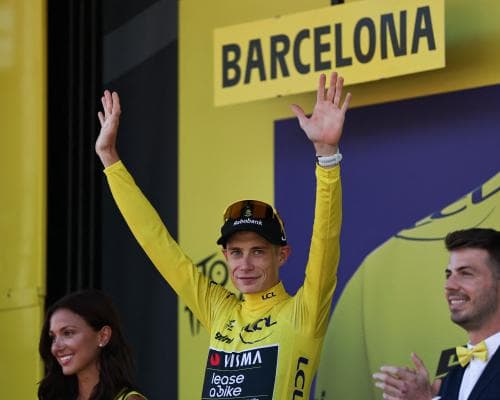
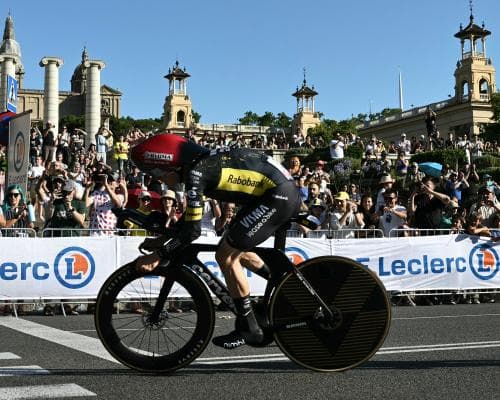
The first thing you notice is the light. That golden Mediterranean sun, spilling over Barcelona’s modernist facades and casting long shadows across the cobbled climb to Montjuïc. It’s the kind of light that makes everything look expensive—even a peloton of carbon-fiber machines worth more than most people’s homes. And there, cutting through it like a blade, was Jonas Vingegaard. Not just winning. Commanding. The Dane, who had not worn the maillot jaune since 2023, took it back in the most luxurious way possible: not alone, but with his entire Visma-Lease a Bike team, moving as one organism through 19.6 kilometers of asphalt.
This was the opening stage of the 2026 Tour de France, a team time trial that began in the shadow of the Sagrada Família and ended at the Olympic stadium atop Montjuïc. For the uninitiated, a team time trial is cycling’s equivalent of a perfectly orchestrated string quartet: each rider must pull in perfect rhythm, drafting off one another, surrendering individual glory for collective speed. Vingegaard’s squad did it with a precision that would make a Swiss watchmaker weep. They beat defending champion Tadej Pogačar’s UAE Team Emirates by twelve seconds—a lifetime in this sport. “It feels amazing to have the yellow jersey again,” Vingegaard said afterward, his voice carrying the quiet satisfaction of someone who knows exactly what he’s earned.
But the real story—the one that whispers of pedigree and provenance—is in the margins. The team time trial is a dying art, a relic of a more romantic era when cycling was less about individual superstars and more about the brotherhood of the road. Visma-Lease a Bike’s victory was a throwback, a reminder that the most beautiful victories are often the most collaborative. Their bikes, custom-painted in a matte yellow that seemed to absorb the Barcelona light, were not just tools; they were sculptures. Each rider’s position was calibrated to within millimeters, their helmets molded to their skulls, their shoes clipped in with the finality of a door closing on a vault.
Then there was the near-miss. Filippo Ganna, the Italian powerhouse riding for the rebranded Netcompany-Ineos team, came within eight seconds of snatching the yellow jersey himself. His team had been fastest through every checkpoint until a puncture—a cruel twist of fate—slowed their leader Kevin Vauquelin. Ganna, a former world time trial champion, powered up the final 800 meters like a man possessed, setting a time that held until Vingegaard’s squad rolled in. For collectors of sporting drama, this was the finest vintage: a race decided not just by legs, but by luck, by tire pressure, by the gods of the road.
What does this tell us about luxury taste? That the best things are never achieved alone. The yellow jersey is not a bauble; it is a covenant between a rider and his team, a symbol of trust and shared ambition. In a world of hyper-individualism, Vingegaard’s victory is a quiet rebuke. It says: the most refined victories are those earned in concert. The ultra-wealthy who collect experiences—who fly to Monaco for the Grand Prix, who charter superyachts to watch the Vendée Globe—will understand this. They know that the rarest thrill is not possession, but participation in something larger than oneself.
Looking ahead, the 2026 Tour is still wide open. Pogačar, the Slovenian champion, will strike back in the mountains. Remco Evenepoel, leaner than ever, lurks. But for now, Barcelona belongs to Vingegaard. The yellow jersey, that most coveted of garments, is back where it belongs—draped over the shoulders of a man who understands that true luxury is not about speed, but about timelessness. And as the sun sets over Montjuïc, one thing is certain: this is a story that will be told for decades, over glasses of Rioja in the finest clubs of Paris.