The Final Reckoning: Why Jackass Became the Most Honest Luxury of All
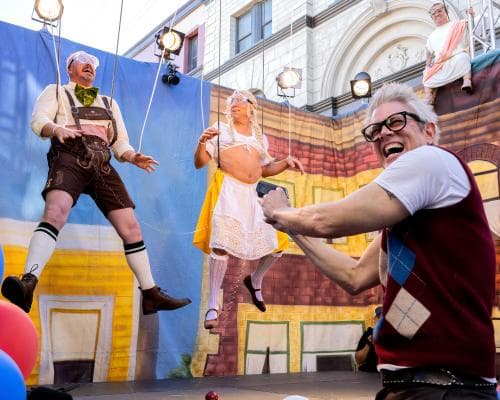
There is a particular kind of wealth that buys you a private island, a Bugatti, or a vault of first-growth Bordeaux. But there is another, rarer currency: the willingness to look like a complete fool for the sake of a laugh. For 26 years, the Jackass crew has been trading in that currency, and their final film, Jackass: Best and Last, is the ultimate liquidation of an irreplaceable asset. It is the finest catalogue of male idiocy ever assembled—and, like a Patek Philippe perpetual calendar, it could only go on for so long before the complications became too much.
I first encountered Jackass at age 12, in the year 2000, when the world was still analog and stupidity had not yet been algorithmically optimized. The show was a revelation: here were men who looked like they might fix your car or skateboard past your house, not impossibly chiseled superheroes. Johnny Knoxville, Steve-O, Bam Margera—they were the anti-heroes of a generation raised on professional wrestling and VHS tapes of Mick Foley being thrown off a steel cage. They had no script, no safety net, and no shame. For a boy who had already discovered the strange joy of jumping out of a tree into a bog and ripping the skin off his arm, Jackass was validation. It was permission. It was, in its own grotesque way, a form of freedom.
That freedom came at a cost. The stunts in Jackass are not CGI; they are real, physical, and often medically inadvisable. The craftsmanship here is not in the editing or the lighting—though the filmmakers deserve credit—but in the sheer, unvarnished commitment to the bit. Every kick to the groin, every bee-swarm, every leap from a moving vehicle is a tiny, perfect artifact of human stupidity. The rarity is in the sincerity: these men are not acting. They are, in the most literal sense, being themselves. And in a luxury market that increasingly prizes authenticity—hand-stitched leather, single-origin coffee, bespoke everything—that rawness is the ultimate rarity. You cannot buy it. You can only watch it, wincing and laughing, as it happens.
For collectors, the Jackass franchise occupies a peculiar niche. It is not a watch or a car or a whisky, but it has the same gravitational pull: a limited run, a devoted following, and a value that only increases with time. The early seasons are bootleg treasures; the films are cult artifacts. And now, with Best and Last, the archive is complete. The market for this kind of content is not measured in dollars but in cultural capital. To have watched Jackass from the beginning is like having owned a first-edition Rolex Daytona before it became a grail. It is a marker of taste—or, more accurately, of a willingness to embrace the absurd. The ultra-wealthy often collect things that signal refinement. Jackass signals the opposite: a refusal to take oneself too seriously, a reminder that even the most curated life needs a little chaos.
What does it say about luxury taste when the most coveted experience is not a private jet but a memory of your friend jumping off a wall and cutting his head open? It says that perfection is overrated. The Jackass crew understood something that the Hermès customer and the Ferrari owner often forget: the best things in life are not flawless. They are the ones that leave a scar, a story, a laugh that echoes for decades. In an era of Instagram-perfect lives, Jackass is the antidote—a celebration of the messy, the painful, and the ridiculous. It is the ultimate luxury to be able to laugh at yourself, and these men have spent 26 years laughing at themselves for our entertainment.
As the credits roll on Jackass: Best and Last, I feel a pang of something like nostalgia. Not for the stunts themselves—my body still aches from that bog jump—but for the era they represent. A time before every idiot with a phone could monetize their stupidity, when idiocy was a craft, a calling, a way of life. The Jackass crew are retiring because they have to. Their bodies have paid the price, and the world has moved on. But in their wake, they leave a legacy that no amount of money can replicate. The next time you see a perfectly polished hypercar or a flawless diamond, remember: the most valuable thing you can own is the willingness to be a fool. And that, my friends, is a luxury that never goes out of style.