The 19-Year-Old Who Would Be King: Paul Seixas and the Art of Racing on the Razor’s Edge
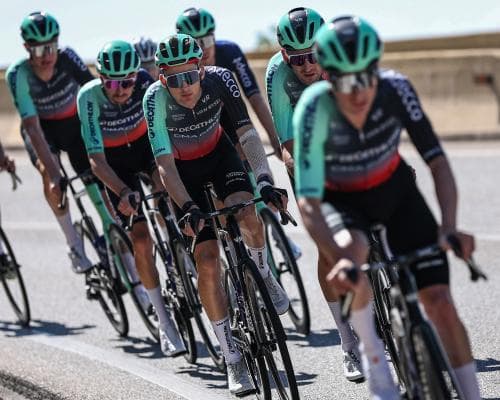
The sound of carbon fibre slicing through the Pyrenean air is a whisper most of us will never hear. But for those who collect rare watches, bespoke automobiles, and the kind of human performance that borders on the supernatural, Paul Seixas is the latest limited-edition release—and he is not yet old enough to order a glass of Château Margaux in most countries.
At 19 years and 11 months, Seixas rolls into Barcelona as the youngest Tour de France debutant since 1937. That alone would be a curiosity—a footnote in the grand history of suffering and glory. But the whispers around him are not nostalgic. They are electric. When reminded that he faces Tadej Pogacar, a four-time champion who rides with the inevitability of a glacier, Seixas simply replied: “There are different ways to win a cycling race.” It is the sort of line you expect from a veteran who has seen the abyss and blinked second. From a teenager, it is either delusion or the rarest kind of composure.
Let us talk about the machine. Seixas rides for Decathlon CMA CGM, a team that, frankly, does not yet move in the same slipstream as the UAE Emirates or Visma-Lease a Bike juggernauts. His bike is a Van Rysel RCR—a French carbon-fibre frame that weighs under seven kilograms and costs roughly €12,000 if you could buy one off the showroom floor. But the real rarity is what sits atop that saddle. Seixas possesses a physiological anomaly: a VO₂ max that tests have reportedly pegged near 90 ml/kg/min, placing him in the same stratosphere as Pogacar and the late, great Marco Pantani. His power-to-weight ratio is the kind of number that makes engineers at Ferrari blush. And he crashed hard less than a month ago, abandoning the Tour Auvergne-Rhône-Alpes with road rash and a bruised hip. “I was able to resume my preparation almost as planned,” he said, as if describing a minor fender-bender in a parking garage.
The market is already pricing him like a masterpiece at auction. French daily L’Équipe ran the headline “Vivement Juillet!” after his Tour debut was confirmed, then added sheepishly: “No pressure!” But the pressure is real, and it is monetary. Seixas is currently linked to every top team in the sport—including Pogacar’s UAE Team Emirates XRG—and insiders whisper that his market value could soon surpass that of the four-time champion himself. For the ultra-wealthy collectors who sponsor these teams, Seixas is not just a rider; he is an asset. A hedge against the future. A young stallion whose potential appreciation rivals that of a 1957 Ferrari 250 Testa Rossa.
What does his rise signal about luxury taste in 2026? It signals a shift away from the polished, the predictable, the safe. The ultra-wealthy are no longer content to buy a finished masterpiece; they want to back the raw canvas. They want to be present at the creation. Seixas is the equivalent of a first-growth Bordeaux before it was classified—the promise of greatness before the world has fully caught on. His calm, almost monastic focus is the new luxury: not the roar of an engine, but the silence of a mind that knows exactly when to attack.
As the Tour unfurls across the Alps and into the Champs-Élysées, watch for him. He will not win this year—the unknown is too vast, the rivals too seasoned. But he is already winning something more valuable: the attention of those who understand that the rarest things in life are not objects, but moments before they become history. Paul Seixas is that moment. And he is riding straight into it, pedals turning, pulse steady, the weight of a nation on his shoulders—and not a single gram of doubt in his legs.