Where the Wild Water Is: Chasing the Last Cool Currents in a Warming Sea
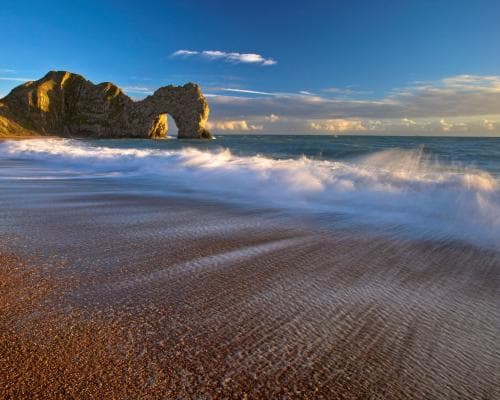
The sea has a temperature, and this July, it was a confession. Off the coast of Marseille, the water felt less like the Mediterranean of postcards and more like a bath drawn too hot, the kind that leaves you dizzy. The EU's Copernicus climate service confirmed what any yachtsman already suspected: the world's oceans just logged their hottest July on record, with the Atlantic coast and the western Med bearing the brunt of a marine heatwave that turned familiar anchorages into saunas. For the ultra-wealthy, whose summers are measured in degrees of latitude as much as luxury, this is not a statistic—it's a summons.
Consider the shift already underway in the charter fleets of the Côte d'Azur. The season that once meant long, languid afternoons off Saint-Tropez now begins with a question: where is the water still cold? The answer, increasingly, is north. Iceland, the Faroe Islands, even the jagged fjords of Patagonia are emerging as the new summer playgrounds for those who can afford to follow the thermocline. It's not just about escape from the heat—though the 2.79°C anomaly that baked western Europe in June and July is enough to send anyone searching for a breeze—but about bearing witness to the last unspoiled seascapes before they change forever.
The irony is exquisite: the very warming that is making the tropics unbearable is making the poles irresistible. Luxury expedition operators report a surge in bookings for voyages that once felt like hardship—think ice-class yachts with heated plunge pools, onboard glaciologists, and champagne served on floes that are melting even as the cork pops. The new luxury is not a private beach; it's a private iceberg. It's the ability to say you swam in waters that will not exist in a decade, to have your captain navigate a channel that wasn't there last summer. The rarity of these moments is their currency, and the wealthy are spending accordingly.
This is not a retreat from the world but a renegotiation with it. The old markers of prestige—the Riviera villa, the Aegean cruise—have become, in the words of one Monaco-based yacht broker, "a liability." Wildfires that devastated Mediterranean swathes this summer, driven by "exceptional" heat, have turned idyllic coastlines into evacuation zones. The clientele that once demanded sun now demands survival—of a sort. They want the bragging rights of having seen the Arctic before it's gone, the cachet of a polar bear sighting over a beach selfie. It's a shift from indulgence to immersion, from consumption to conservation, even if the price tag remains astronomically the same.
And yet, there's a quieter, more contemplative luxury emerging: the art of staying put and observing. For those who still crave the Mediterranean, the new status symbol is a villa with a deep geothermal well and a seawater pool that's actually cool. The smartest hosts are installing marine-grade misting systems and designing meals around the heat—raw crudos, chilled soups, wines from higher altitudes. The conversation at dinner has turned from real estate to reef health, from stock portfolios to sea surface temperatures. It's a kind of wealth that measures itself in adaptability, in the grace with which one navigates a changing planet.
So where do the wealthy go next? The answer is written in the currents. They go to the Lofoten Islands, where the midnight sun still feels like a secret. They go to the Antarctic Peninsula, where the ice cathedral of the Weddell Sea offers a silence no five-star hotel can replicate. They go to the cloud forests of the Azores, where the Atlantic is still a shock of blue cold. The journey is no longer about the destination as a place, but as a moment in time—a fleeting intersection of water, weather, and witness. The new luxury is to be there, now, before the map rewrites itself again. And if you have to pay a small fortune to feel the chill, well, that's the point. It's the rarest thing left in a warming world: a genuine shiver of awe.