The Isle of Man: A Private Kingdom for the Modern Explorer
Imagine a beach where the sand is visible, not a patchwork of towels and umbrellas. A place where the only crowd is a gathering of gulls, and the loudest sound is the clip-clop of a horse-drawn tram. This isn't a forgotten corner of a distant continent; it's the Isle of Man, a self-governing British Crown dependency in the Irish Sea, and it's been the discreet escape for discerning travelers since the Victorians first discovered its rugged charm. But here's the secret the crowds never learned: the island's true luxury isn't in its grand hotels—it's in the quiet, car-free paths that wind through its ancient heart.
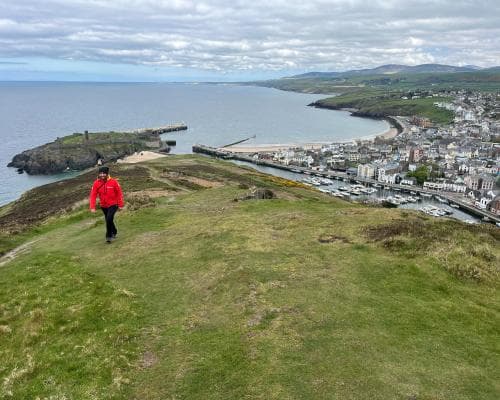
My journey began in Douglas, the capital, where I stepped off the ferry from Heysham to find the promenade nearly empty, save for a few black guillemots and herring gulls. The Victorian-era hotels, painted in bold blues and greens, stood like elegant sentinels along the bay. I wasn't here for a typical holiday; I was here to test a new self-guided walking package from Inntravel, a four-night, single-centre affair that promises a car-free adventure using footpaths and heritage railways. The numbers tell a story: in 1887, the island welcomed 350,000 visitors; last year, just under 330,000. But the secret to its exclusivity isn't the count—it's the dispersal. While most flock to the beach, the true connoisseur heads inland, where the Raad ny Foillan, a 100-mile coastal path, offers a more intimate connection to the land.
The craftsmanship here isn't in a watch or a handbag; it's in the heritage. I boarded the island's 150-year-old horse-drawn tramway, a living piece of history that still carries locals and tourists alike. The experience is a masterclass in slow luxury—the kind you can't buy but only earn through patience. Swapping horsepower for electricity, I took the narrow-gauge railway, hopping off at a request stop near Garwick Beach, a hidden pebbled cove backed by woodland. The walk led me through the Ballannette nature reserve, where wrens trilled and greylag geese bobbed across the lakes, before arriving at the ruins of St Adamnan's church, with its Celtic crosses dating from the 7th to 10th centuries. It's a journey through time, where the only sounds are your footsteps and the whisper of ancient history.
For the ultra-wealthy, rarity is the ultimate currency. The Isle of Man offers a kind of exclusivity that money alone can't buy—it's the feeling of having a place entirely to yourself, even as you follow in the footsteps of Victorian aristocrats. The island's appeal has always been for outsiders, from early hunter-gatherers in 6500 BC to the Vikings who established Tynwald, one of the oldest continuous parliaments in the world. This is a destination that doesn't shout; it whispers. The Halvard hotel, a 20-room boutique property in the heart of Douglas, is the perfect base—intimate, stylish, and utterly unpretentious. After a day of walking, you can settle into its lounge, sipping a local ale, knowing you've discovered something the masses haven't.
What does this signal about the luxury market? It signals a shift away from ostentation toward authenticity. The wealthy no longer want to be seen; they want to feel. The Isle of Man offers a form of wealth that isn't about acquisition but about experience—walking a path that's been trod for centuries, riding a tram that's older than most nations, and sleeping in a hotel where the staff know your name. It's a quiet luxury that speaks volumes. As the world becomes more connected, the true luxury is disconnection. The island's self-governing status, its ancient parliament, and its unspoiled landscapes are reminders that some things are worth preserving.
Looking forward, the Isle of Man is poised to become the next hidden gem for the discerning traveler. With its promise of car-free exploration, heritage railways, and the Go Explore Heritage Pass offering unlimited transport and entry to attractions, it's a model for sustainable, slow tourism. The island isn't trying to compete with the Riviera or the Hamptons; it doesn't need to. Its appeal lies in its timelessness—a place where the past is always present, and the future is unwritten. For those who seek a journey that's both physical and spiritual, this is the destination. The Victorian tourists may have arrived by steamboat, but the modern explorer arrives with a different kind of ambition: to find a place that still feels undiscovered. On the Isle of Man, you'll find it.
As you plan your next escape, consider the Isle of Man not as a trip but as a pilgrimage. It's a place where the journey is the destination, and the only crowd you'll encounter is the one in your imagination, conjured from a black-and-white photograph taken 135 years ago. The sand is waiting, and this time, it's all yours.
The Experience
Book a private, self-guided walking holiday with Inntravel to explore the Isle of Man's hidden paths and heritage railways, or charter a yacht to arrive in Douglas Bay in style.