The Quiet Isle: Europe's Last Unhurried Corners
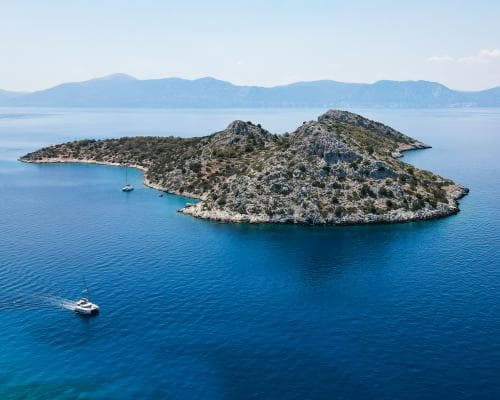
There is a moment, just after the ferry pulls away and the engine's hum fades into the slap of water against hull, when the mainland's grip finally loosens. The phone drops to one bar, then none. The inbox stops its insistent buzzing. And you realize, with a start, that you have done something increasingly radical: you have become unreachable. This is the true currency of the modern luxury escape, and it is found not in the glittering ports of St. Tropez or the crowded calas of Ibiza, but on the lesser-known islands of Europe—those unsung specks of granite and pine that have, so far, escaped the algorithm's notice.
Consider the brief from our travel desk this week, a call for readers' favorite under-the-radar European islands. The response is telling. It speaks of a collective yearning for something beyond the curated itinerary, beyond the five-star resort with its infinity pool and its Wi-Fi that works just a little too well. The islands that surface in these conversations are not the ones with helipads. They are the ones with a single taverna, a path that leads nowhere in particular, and a lighthouse that has seen more storms than tourists. Think of the remote Scandinavian archipelagos where the light is so pale and pure it feels like a secret, or the airport-free Mediterranean outposts where the only schedule is the one dictated by the fishing boats.
What makes these places so covetable is precisely what makes them difficult to package. There is no 'experience' to book, no 'curated pop-up' to attend. Instead, there is the simple, profound pleasure of a day measured by the tide, not the clock. You wake to the cry of gulls, walk to a beach that is gloriously, inconveniently empty, and swim in water so clear it feels like a baptism. The afternoon is for reading a novel that has nothing to do with work, and the evening for a glass of local wine on a terrace overlooking a sea that has not changed in a thousand years. This is not a retreat; it is a reset.
The luxury here is one of access—but access of a different kind. It is the access to a slower rhythm, to a community that has not yet learned to perform for visitors. It is the privilege of being a stranger in a place that still finds strangers novel, of being offered a seat at a family table, of hearing stories that are not scripted for TripAdvisor. This is the new status symbol: not a private island, but a public one that happens to be empty. The wealthy, after all, have always understood that the rarest commodity is not gold, but peace. And peace, true peace, cannot be bought at a boutique hotel's spa. It can only be found, often by accident, on a wind-scoured shore where the only footprint in the sand is your own.
There is a quiet irony in the fact that the most exclusive destinations now are the ones that cannot be reached by private jet. The journey is part of the point: a slow train to a small port, a ferry that leaves twice a day, a final, bone-rattling ride in a local's pickup truck. This is the antithesis of the seamless, frictionless travel that has defined luxury for a generation. And yet, it is precisely this friction that makes the arrival so sweet. The effort is a form of devotion, a way of proving to yourself that you are serious about escaping. You are not just buying a ticket; you are earning the silence.
What does this signal for the future of luxury travel? It suggests a move away from the monumental and toward the intimate, away from the spectacle and toward the subtle. The next great investment is not in a new resort, but in the preservation of a place's quietness. For the traveler, the new currency is discernment—the ability to find the island that the guidebooks have forgotten, the one that the influencers have deemed too hard to reach, the one that remains, blessedly, itself. This is the ultimate luxury: to be somewhere that has not yet been told what it should be.
So where do the wealthy go next? They go to the places that are hardest to pronounce, let alone to book. They go to the islands where the electricity flickers, where the menu is written on a chalkboard, and where the most luxurious thing on offer is a hammock strung between two olive trees. They go to find the version of themselves that existed before the notifications. And they go, most of all, to remember that the world is still vast, and strange, and wonderfully, gloriously empty—if you know where to look.