The Art of the Impossible: Inside the Drama of the Tour de France Femmes
There is a moment in every great race when the body screams and the mind goes quiet, and all that remains is the raw, unadorned will to move forward. That moment arrived on the second ascent of the Col du Tourmalet, where the air thinned and the crowd roared, and the Tour de France Femmes found its hero. Demi Vollering, the Dutch powerhouse, had spent the day trading blows with Poland’s Katarzyna Niewiadoma, and as the gradient bit hard, the race hung on a thread of pure nerve. This was not just a bike race; it was a study in human endurance, a masterclass in the art of the possible, and a reminder that the most exquisite victories are often the hardest won.
For those who collect moments rather than objects, this final stage was a masterpiece of tension and release. Vollering, riding for SD Worx–Protime, had started the day with a slender lead, but Niewiadoma, a rider of rare tenacity, attacked with the fury of someone who had nothing to lose. The yellow jersey changed hands on the road, then back again, as the two women danced a brutal ballet on the steepest slopes. It was the kind of drama that makes you forget to breathe—the kind that, in the world of luxury, we chase in everything from a perfectly aged Bordeaux to a hand-stitched leather saddle. Here, the craftsmanship was in the pedal stroke, the heritage in the mountains themselves, and the rarity was a finish line that seemed to recede with every desperate push.
But what sets this victory apart is not just the physical feat; it is the architecture of belief that made it possible. Vollering’s team, SD Worx, executed a plan of near-military precision, with riders like Demi’s loyal domestiques sacrificing their own chances to set a brutal tempo that cracked the field. And then there was Zoe Backstedt, the British champion, whose “monster turn” on that second ascent—a selfless, all-out effort that she later described as turning herself “inside out”—became the hinge on which the race turned. Backstedt, a non-climber by trade, had been given one job: go full gas until your legs give out. She did, and in doing so, she gave Vollering the platform to launch her final, decisive move. It was a reminder that in the rarefied world of elite sport, as in the rarefied world of luxury, the finest results are rarely solo efforts; they are symphonies of quiet competence and shared sacrifice.
The market for such moments is, of course, intangible, but its value is immense. This was the third edition of the Tour de France Femmes, and the race has already become the crown jewel of women’s cycling—a ticket that the ultra-wealthy now clamor for, not just for the spectacle, but for the access to a community that prizes authenticity over ostentation. The peloton’s stars, from Vollering to Niewiadoma, have become icons of a new kind of luxury: the luxury of grit, of purpose, of refusing to be defined by limits. In a world where the rich often buy their way into experiences, here was a reminder that the most coveted things—a yellow jersey, a mountain top, a moment of pure transcendence—cannot be purchased; they must be earned.
What does this signal about the taste of the discerning? It suggests a shift away from the merely opulent toward the meaningful. The collectors who once sought only rare watches or private islands are now drawn to stories of human excellence, to the kind of provenance that comes from suffering and triumph. Vollering’s victory, delivered with a tearful, expletive-laden gratitude on the podium, was not just a sporting achievement; it was a declaration that the greatest luxury is the freedom to dream, and the conviction to chase it. Her words—“Go chase the dreams and don’t let anybody stop you”—echoed beyond the mountains, into boardrooms and drawing rooms, where the wealthy are increasingly seeking not just things, but meaning.
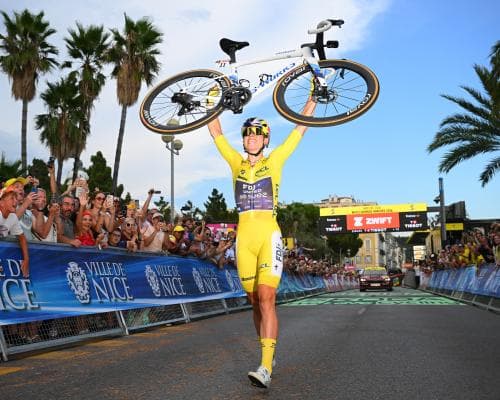
As the Tour de France Femmes rolls on, one imagines the next edition will draw even larger crowds, more champagne at the finish, and a new generation of riders inspired by what they saw. For now, the image that lingers is not of a podium or a trophy, but of a woman on a bike, her face a mask of pain and joy, crossing a line that seemed impossible only hours before. That is the real collectible here—not a thing, but a feeling. And for those who understand that the finest things in life are often the hardest to attain, it is worth more than any price tag could ever convey.