The New Luxury of Breathing Easy: Inside the Clean Air Club Movement
There is a particular kind of silence that falls over a valley when the sky turns the color of a bruised peach. For Miquette Thompson, a resident of rural Mendocino County, that silence has become a familiar companion. For the past week, the Feliz and Woodside fires have burned through more than a thousand acres of northern California, while Oregon and Washington burn in the distance, sending their smoke south like an unwelcome guest. Thompson steps outside and sees a hazy sky, and she knows what it means: the air is no longer safe. For the elderly, for children, for anyone with asthma, this is not an inconvenience. It is a threat. Hospitalizations for asthma spike by 10 percent on smoke days, according to a recent UC study. And yet, in her "wee rural little area," as she calls it, the local health department has been slow to distinguish between masks that actually filter the fine particulate matter in wildfire smoke and those that are merely polite gestures. Cloth masks, she explains, are better than nothing. But N95s are the real armor.
This is where the Clean Air Clubs come in. Born out of the pandemic, when a Chicago resident named Emily Dupree began lending air purifiers to touring musicians who couldn't perform in smoky venues, the movement has grown into a global network of over 40 clubs. They operate on a simple, radical premise: clean air should not be a luxury. Each club maintains a "lending library" of air purifiers and N95 masks, available free to anyone who needs them. In Mendocino, Thompson and her fellow organizers at Mendo Clean Air Club have partnered with local businesses — a café here, a hardware store there — to distribute masks to neighbors who might otherwise go without. It is mutual aid, dressed in the humble garb of a neighborhood watch, but with a sharper mission.
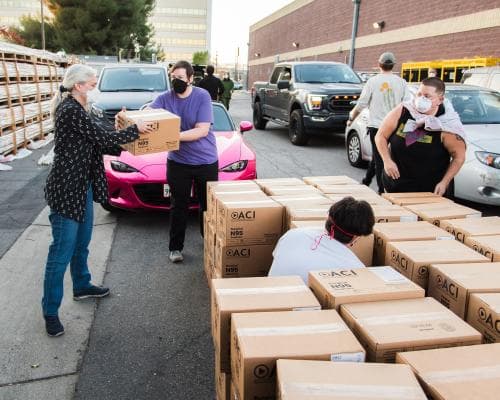
What makes these clubs so quietly revolutionary is their refusal to accept that the wealthy should be the only ones who can breathe easy. In Los Angeles, Mask Bloc LA handed out more than 300,000 masks in two weeks during the worst of the wildfire season. That is not a charity drive; it is a logistical feat, executed by volunteers who understand that a smoke-filled sky does not discriminate by zip code, but the ability to escape it certainly does. For the ultra-wealthy, a wildfire smoke event might mean a private jet to Aspen or a weekend at a coastal estate with HEPA-filtered HVAC systems. For everyone else, it means standing in line at a community center, hoping the supply lasts.
The craftsmanship here is not in the product but in the distribution. The air purifiers are not bespoke; they are standard HEPA units, the kind you might find at any big-box retailer. The masks are not designer; they are the same N95s that frontline workers wore during Covid. What is rare is the infrastructure — the trust, the local knowledge, the willingness to show up. Thompson recalls how, during the pandemic, the same group organized PPE distribution at farmers' markets and set up Covid testing stations. They learned then that the most effective safety net is not a government program but a neighbor who knows your name and your child's asthma triggers. That same ethos now applies to wildfire smoke, which is becoming as predictable as the morning fog.
In the world of high-end living, we speak of air quality as a feature of a property: "mountain-fresh," "ocean breeze," "state-of-the-art filtration." But the Clean Air Clubs are flipping that script. They are saying that clean air is not a perk of wealth but a right of citizenship. And in doing so, they are creating a new kind of luxury: the luxury of belonging to a community that watches out for you. It is a subtle shift, but a profound one. The collecting class may acquire vintage wines and classic cars, but what is more valuable than the ability to take a deep breath without fear? As one volunteer put it, "We are not just lending purifiers. We are lending peace of mind."
Looking forward, the Clean Air Clubs are expanding their mission beyond wildfire season. They are monitoring air quality year-round, preparing for a future where smoke events are not anomalies but a seasonal rhythm. They are also advocating for better public health messaging, so that no one is left to guess whether a cloth mask will do. For the ultra-wealthy, the lesson is not about buying a better air purifier — though there are plenty of high-end models on the market, from Swiss-made units with medical-grade filters to smart purifiers that sync with your phone. The lesson is about stewardship. The most enduring luxury, after all, is not a thing but a legacy. And the legacy of the Clean Air Clubs is this: in a world of hazy skies, they are the ones who brought the clarity.