The Unwelcome Homecoming: Daniel Kinahan’s Final Flight
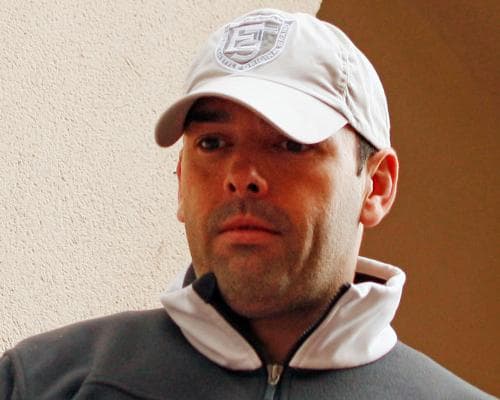
There is a particular kind of travel that the ultra-wealthy prize above all others: the seamless, discreet, utterly private journey. A Gulfstream whisking you from Dubai to a Mediterranean villa. A chartered yacht idling off the Amalfi coast. But on a grey Sunday evening, Daniel Kinahan experienced the most exclusive—and most final—transfer of his life: a government jet, a bomb-proof van, and a one-way ticket to Portlaoise prison.
For a decade, the alleged leader of the Kinahan organised crime group had been the ultimate ghost, drifting through the sun-drenched playgrounds of the Gulf and the sporting corridors of boxing. He was a man who collected champions the way others collect vintage watches, counting Tyson Fury among his friends, and who built MTK Global into a promotional powerhouse. Yet the same charisma that opened doors in Monaco and Manhattan also painted a target on his back. The Kinahan cartel, said to control a third of Europe’s cocaine supply, was not a brand you advertised lightly.
His return to Ireland was not the triumphant homecoming of a prodigal son. It was a carefully choreographed security operation, the kind usually reserved for heads of state or, more accurately, for the most dangerous men on the continent. The Irish government jet, a silver bullet of state power, touched down at Casement Aerodrome just before dusk. Kinahan, 49, was transferred to an armoured vehicle and escorted through Dublin’s quiet streets to the Criminal Courts of Justice, where he will face charges of directing organised crime. The tabloids, never ones for subtlety, had their headlines ready: “Du-Bye!” and “Dan and Dusted.” Even in his fall, he made the front pages.
What makes this story so fascinating for the luxury observer is not the violence or the alleged drug empire—it is the sheer logistics of a life lived in the shadows. Kinahan’s decade in Dubai was a masterclass in high-stakes evasion: a city of gold and glass, where the wealthy can buy anonymity as easily as a penthouse. He reportedly moved between villas, used multiple passports, and kept his movements as opaque as a Swiss bank account. But even Dubai, that haven of discreet wealth, eventually bowed to international pressure. The extradition was a reminder that no address, no matter how gilded, is truly beyond reach.
For collectors and connoisseurs of power, Kinahan’s downfall offers a darker mirror to the lives of the legitimate elite. He understood the currency of influence—boxing, philanthropy, the careful cultivation of celebrity—but he mistook it for immunity. The same networks that celebrated his rise were the ones that ultimately isolated him. In a world where reputation is everything, a man with a target on his back and a courtroom in his future is the ultimate cautionary tale.
Now, Kinahan faces a future far removed from the Gulf’s five-star suites. Portlaoise prison, 50 miles from Dublin, is not the kind of address that features in our pages. Yet there is a strange symmetry to his fate: after years of chasing the world’s most exclusive destinations, he has finally arrived at the one place no amount of money can buy him out of—a cell, a trial, and the quiet certainty that the game is over. As he told a podcaster from Dubai, “I think I’ve already got life in prison. And we have to go through the dance now.” The dance, it seems, has just begun.