The Queen of the Giant: A Solo Ascent on Mont Ventoux Rewrites the Tour de France Femmes
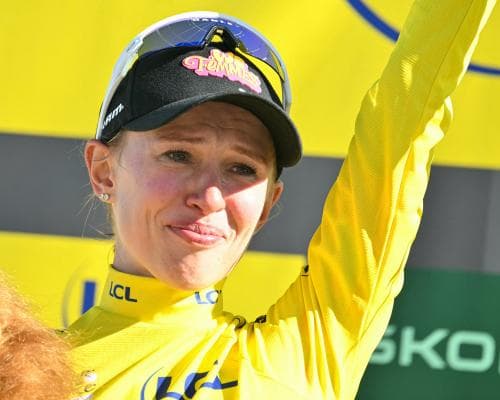
There are moments in sport that feel less like a race and more like a myth being written in real time. On a sun-scorched afternoon on Mont Ventoux, Kasia Niewiadoma did something that left even her own words trailing behind her. “It’s hard to describe my feelings because I’m still blown away by what just happened,” she said, and for once, the cliché of athlete-speak felt inadequate. This was not just a stage win; it was a declaration, a solo flight up the Giant of Provence that stripped the race of its pretenders and crowned a new queen.
For those who have stood at the foot of Ventoux, the mountain needs no introduction. Its bald, lunar summit has devoured champions and elevated legends, from Tom Simpson’s tragic last ride to the modern era’s great showdowns. But this was different. This was the Tour de France Femmes, a race still young in its rebirth, and Niewiadoma—a rider who has always finished on its podium since 2022—chose the hardest possible canvas for her first career stage victory. The 31-year-old Pole, who won the yellow jersey in 2024, had trailed Marlen Reusser by nearly two minutes after Tuesday’s time trial. On Ventoux, she erased that deficit with the kind of relentless, almost meditative climbing that makes you forget the pain of altitude and the burn in your lungs.
The drama unfolded in the mountain’s upper reaches, where the road narrows and the wind becomes a living thing. Demi Vollering, the 2023 champion, launched her attack at the Virage du Bois, a hairpin that has seen more than its share of broken dreams. But Niewiadoma and Reusser, as they had on Mont Brouilly two days earlier, refused to let the Dutchwoman escape. They rode her wheel with the patience of predators, and when the trio finally broke clear, the race became a chess game on two wheels. Vollering and Reusser eyed each other, their rivalry simmering, and in that moment of hesitation, Niewiadoma struck. With just under 10km to the summit, she accelerated, and the gap grew with every pedal stroke. It was not a sprint; it was a coronation.
What makes Ventoux so seductive to the wealthy traveler is not just its brutal gradient, but the sheer drama of its landscape. The climb begins in the lavender fields of Bédoin, winding through forests of oak and pine before emerging onto the barren, wind-scoured moonscape that has made it a bucket-list destination for amateur cyclists and a pilgrimage site for the sport’s faithful. To ride it is to experience both agony and transcendence, often in the same breath. For those who prefer to watch, the villages at its base—Malaucène, Bédoin, Sault—offer a front-row seat to history, with their cafés and stone terraces filling with spectators who have driven from across Europe to witness the spectacle.
Niewiadoma’s victory was not just a sporting upset; it was a study in the economics of elite endurance. In the world of luxury travel, where access is the ultimate currency, the Tour de France Femmes has become a rare commodity. Private chalets with helipads, VIP hospitality suites perched on the switchbacks, and guided cycling tours that retrace the stage routes are now part of the high-end travel lexicon. The race’s finale in the hills around Nice this weekend promises more of the same—Niewiadoma’s epic duel with Vollering on Alpe d’Huez in 2024 may yet be replayed, and the stakes are higher than ever. With two stages remaining, Niewiadoma leads by a mere 15 seconds, a margin so thin it could be erased by a gust of wind or a moment’s hesitation.
For the ultra-wealthy, this is the new frontier of sports tourism: not just watching from a box, but being embedded in the drama. Operators now offer heli-transfer to the summit, where guests sip champagne as riders pass below, their suffering a form of entertainment that money can’t buy. The mountain itself has become a status symbol, a place where the very act of standing at the top—whether on two wheels or on foot—confers a kind of sporting nobility. And for those who prefer to stay at the base, the region’s five-star estates, with their infinity pools and Michelin-starred kitchens, offer a luxurious counterpoint to the grit of the race.
As the Tour de France Femmes continues to grow, so too does its allure for the discerning traveler. The race is no longer a footnote to the men’s event; it is a destination in its own right, a showcase of athleticism and determination that draws crowds and investors alike. Niewiadoma’s ride on Ventoux has ensured that this year’s edition will be remembered not for its controversies or its crashes, but for a single, perfect moment of courage. “A lot of work went into it,” she said, and you could hear the years of sacrifice in her voice. For now, she wears the yellow jersey, but the mountain, as always, has the final word. It will be waiting for the next challenger, its slopes silent and unforgiving, ready to write another chapter in the endless story of the climb.