The Golden Fleece Returns: New Zealand’s High-Country Wool Becomes Luxury’s Newest Obsession
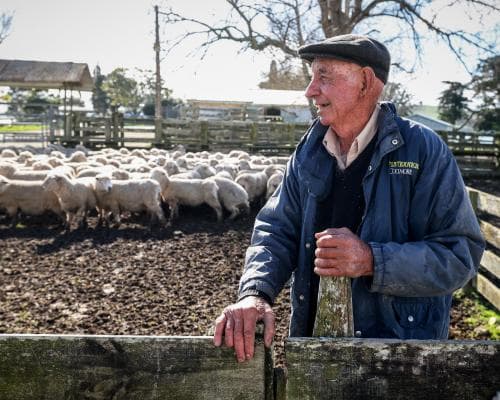
There is a moment in late autumn when the hills of Kaiwaka turn the colour of burnished gold, and the sheep—heavy with fleece—drift across the pastures like slow clouds. John Hargreaves has watched this scene his entire life, as did his father and his grandfather before him. But for the past six years, the wool on those sheep was worth less than the cost of shearing it. The flock shrank from 3,000 ewes to just over 1,700. The shearing shed stood quiet. And then, almost imperceptibly, the world turned. Now, for the first time in nearly a decade, Hargreaves’ wool is making money. “We’re covering our shearing costs and making some sort of a profit,” he says, with the quiet satisfaction of a man who has weathered a long drought.
This is not merely a farm story. It is the story of a material that once built a nation, fell into obscurity, and is now being rediscovered by the most discerning eyes in the world. New Zealand’s wool industry peaked in the 1980s with 70 million sheep—22 for every human—and wool was the country’s golden ticket. Then came synthetic fibres, cheap oil, and a global appetite for polyester that nearly killed the trade. Today, sheep numbers have fallen to 23 million, and dairy and forestry have swallowed the pastures. But as the cost of producing synthetics climbs—driven by rising oil prices and the instability of the Middle East—the world is turning back to nature. And New Zealand, with its pristine high country and generations of farming knowledge, is poised to become the source of the world’s most coveted fleece.
For the luxury traveller, this revival is not just an economic footnote; it is an invitation. The high-country stations of the South Island—where the Southern Alps scrape the sky and the rivers run glacier-blue—are becoming destinations in their own right. Travellers with a taste for the authentic are no longer content with a vineyard tour and a helicopter ride over Milford Sound. They want to stand in a woolshed, feel the lanolin on their hands, and understand the alchemy that turns a sheep’s back into a Chanel jacket. And the fashion house agrees. In April, Chanel signed an investment deal with Central Otago’s Lammermoor Station, part-owning the property to secure a supply of premium wool. It is a move that signals luxury’s new obsession: provenance, traceability, and the romance of a landscape that produces something irreplaceable.
But the appeal goes beyond the label. There is something deeply satisfying about a material that is renewable, biodegradable, and steeped in tradition—especially when it comes from a place as dramatically beautiful as New Zealand’s high country. The properties themselves are rugged and remote, often accessible only by helicopter or a long, winding gravel road. Guests who make the journey are rewarded with hospitality that is both humble and refined: a lamb roast cooked over an open fire, a bed of merino wool blankets, and the sound of wind moving through tussock grass. This is luxury stripped of pretension, replaced by the quiet opulence of landscape and legacy.
For the ultra-wealthy, the wool revival is also a signal. It represents a shift from conspicuous consumption to conscious collection—investing in things that hold value not just in price, but in story. A Chanel garment woven from Lammermoor wool is not merely a coat; it is a piece of New Zealand’s history, a fragment of a place that has been farmed for generations. The same impulse drives travellers to buy a stake in a sheep station, or to commission a bespoke suit from a mill that sources directly from these farms. It is the luxury of connection, of knowing exactly where something comes from and the hands that made it.
As the world’s wealthiest look for their next horizon, New Zealand’s South Island is emerging as a destination for those who have already seen everything else. The wool revival is the hook, but the real draw is the chance to witness a landscape in the midst of a quiet renaissance—to see the shearing sheds buzzing again, to meet the farmers who are finally seeing their work rewarded, and to take home a piece of something that cannot be mass-produced. For the traveller who has flown over the Sahara and sailed the Galápagos, there is a new frontier here, one that is measured not in hotel stars but in the quality of the fleece and the honesty of the land. And it is well worth the journey.