The Governance Gap: Football Australia Joins the Revolt Against FIFA's One-Man Rule
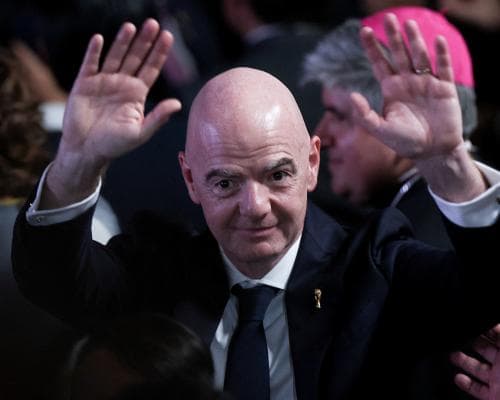
In the high-stakes world of global football governance, the art of the carefully calibrated statement is a weapon of its own. This week, Football Australia fired a shot that was loud enough to echo across confederations, yet measured enough to keep the diplomatic channels open. The target: FIFA president Gianni Infantino. The demand: not his head, but something almost more threatening to a leader who has centralized power — a transparent, independent process to dissect how decisions are made, and who gets to make them.
The three-paragraph statement, released on Tuesday, is a masterclass in institutional pressure. It backs the Asian Football Confederation (AFC) and its president, Sheikh Salman bin Ibrahim Al Khalifa, who just hours earlier had co-signed a letter with UEFA's Aleksander Ceferin and CONCACAF's Victor Montagliani demanding 'leadership that serves football, not seeks to command it.' Football Australia's language is more restrained — it calls for 'clear and credible action' and 'appropriate measures to strengthen governance, transparency, and accountability.' But the subtext is unmistakable: the era of unquestioning loyalty to FIFA's top office is over.
This is not a grassroots uprising. It is a coordinated push by the very institutions that form FIFA's power structure. The AFC, UEFA, and CONCACAF together represent a majority of the world's football federations and a massive share of the sport's commercial value. When these confederations start speaking in unison, they are not merely expressing displeasure — they are signaling that the status quo is untenable. The trigger? Infantino's proposal of the 'FIFA Forward Enterprise' late last month, a plan that critics say would further consolidate financial and operational control in Zurich, bypassing the traditional checks and balances of the member association system.
The technology angle here is not silicon, but it is equally disruptive: the technology of governance. In an era where data, transparency, and stakeholder trust are the new currencies of institutional legitimacy, FIFA's opaque decision-making is looking increasingly like a legacy system overdue for an upgrade. Football Australia's call for an 'appropriately independent process' is, in effect, a demand for a governance API — a set of transparent, verifiable rules that all parties can audit. The fact that a mid-tier federation like Australia is willing to step into this fray, rather than leaving it to the giants, suggests a democratization of accountability that could reshape how the sport is run.
The competitive context is sharp. Infantino has survived previous scandals — the 2015 FIFA corruption crisis, the 2022 World Cup awarding to Qatar — by outlasting his critics. But this time, the pressure is coming from within, from the very confederations that benefit most from FIFA's revenue-sharing model. The AFC's letter, co-signed by UEFA and CONCACAF, is a rare moment of unity among rivals who often compete for influence and World Cup slots. What unites them is a shared fear of a leader who has become too powerful to challenge through normal channels. The silence from other confederations — CAF, CONMEBOL, OFC — will be telling. If they join the chorus, Infantino's position becomes precarious. If they stay silent, the revolt may fizzle.
What this signals for the sector is a broader shift in how global sports bodies are being held to account. Institutional investors, broadcast partners, and even national governments are increasingly demanding governance standards that match corporate ESG criteria. Football, the world's most popular sport, is not immune to this scrutiny. The next few months will reveal whether Infantino can adapt to a more distributed model of leadership — or whether the calls for 'clear and credible action' will harden into demands for his departure. For now, Football Australia has drawn a line in the sand, and the rest of the football world is watching to see who crosses it.