The $100,000-a-Month Feed: Inside the Battle Over Truth Social's New Paywall
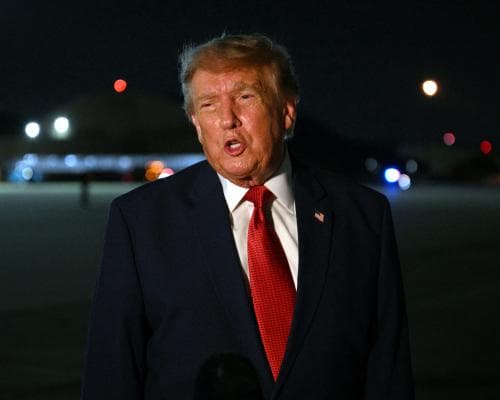
In the rarefied world where information is the ultimate currency, a new product has emerged that makes a Bugatti Chiron look like a bargain. For $100,000 a month—or $60,000 with a three-year commitment—Truth Social is offering a select clientele something no other platform dares to sell: a head start on the thoughts of the most powerful man in the world. The 'Truth API' launched on August 1, and within weeks it has ignited a legal firestorm that reads less like a tech dispute and more like a constitutional crisis dressed in a subscription tier.
The service is not about seeing Trump's posts before they go viral. It is about seeing them before the markets react. The feed covers ten of the platform's highest-profile accounts—the President, Vice President JD Vance, press secretary Karoline Leavitt, and other senior officials—delivering their words to paying subscribers ahead of the general public. For hedge funds, commodity traders, and geopolitical risk consultants, this is the ultimate insider tool: a direct line to the kind of market-moving announcements that have historically sent oil prices spiking and stock indices reeling. Trump's history of using Truth Social to break tariff news and military updates is well documented; now, that same channel is being monetized at a price that would make a private jet membership look modest.
The lawsuit, filed by The Intercept and the Freedom of the Press Foundation in the Southern District of New York, does not mince words. It calls the arrangement 'extraordinary, corrupt and unconstitutional.' The complaint targets not just the platform but Trump himself, two of his aides, and the executive office of the president. At its core, the argument is simple: when a sitting president sells early access to his official communications, he is effectively auctioning off the machinery of government to the highest bidder. The fact that the feed is marketed as a 'high-margin' revenue stream—by Truth Media's interim CEO, Kevin McGurn, no less—only sharpens the allegation that this is less about transparency than about turning the presidency into a premium subscription product.
For collectors and connoisseurs of rare assets, the Truth API represents a new category of luxury: temporal privilege. Unlike a vintage wine or a limited-edition tourbillon, what is being sold is not a physical object but a slice of time—the milliseconds between a president's thumbs-up and the world's knowledge of it. In the high-stakes game of global markets, those milliseconds are worth fortunes. The pricing structure—$100,000 monthly or $60,000 with a three-year commitment—suggests the platform knows exactly who its audience is: institutions that treat information as a commodity and are willing to pay for the kind of exclusivity that used to be reserved for private banking clients or members of a Palm Beach country club.
The broader market context is telling. This is not the first time a social media platform has experimented with tiered access, but it is the first time a sitting president's official communications have been packaged as a premium data feed. The move has drawn criticism from Democratic senators Adam Schiff and Elizabeth Warren, who have urged the SEC to investigate whether the service constitutes market manipulation—a concern that resonates with anyone who has watched a single presidential tweet send shockwaves through global indices. For the ultra-wealthy, who often pride themselves on being ahead of the curve, the Truth API offers a disturbing question: if the president's words can be bought, what else can be?
What this controversy signals about luxury taste is profound. The modern collector no longer just acquires objects; they acquire access, speed, and information. The Truth API is the logical endpoint of a culture where every second of a public figure's life is monetized, and where the line between public service and private enterprise has been erased with a credit card swipe. For the ultra-wealthy, the appeal is not just the content but the exclusivity—the knowledge that they are among a tiny circle who see the news before it is news. It is a form of connoisseurship that would make a Rothko or a first-edition Hemingway seem almost quaint.
Looking forward, the lawsuit's outcome could reshape the entire landscape of political communication. If the court rules against the arrangement, it may set a precedent that no elected official can sell preferential access to their official statements. If it rules in favor, it could open the door to a future where every presidential utterance is a paywalled commodity, and where the public's right to know is subject to the whims of a subscription model. For now, the Truth API remains live, a glittering, controversial object in the marketplace of ideas—and a stark reminder that in the age of information, the ultimate luxury is not a yacht or a penthouse, but the power to know first. And that, perhaps, is the most expensive thing of all.