The Art of the Pivot: Carter Gordon and the Elegant Calculus of a Test-Series Selection
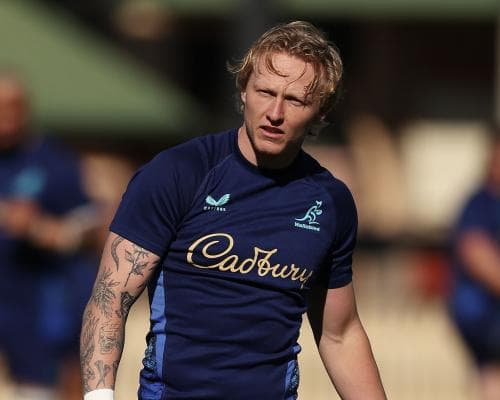
There is a particular thrill in watching a narrative finally click into place—the moment a long-awaited debutante walks into the room, or a vintage chassis hums to life after years in storage. For Australian rugby, that moment arrives this Saturday in Townsville, where Carter Gordon, the 25-year-old flyhalf, steps into the starting XV for the Wallabies’ second Test against Japan. It is not a debut, but it feels like an unveiling. After three false starts—a quad injury in November, a calf strain in June, and a week of full training that still ended with him on the bench—Gordon finally gets the keys to the machine. And for those who appreciate the finer mechanics of sport, this is not merely a team sheet. It is a statement of intent.
The selection is a study in the kind of balance that the ultra-wealthy understand instinctively: knowing when to hold, when to fold, and when to place a calculated bet on a proven asset. Coach Les Kiss, in his first series at the helm, has opted for Gordon over Declan Meredith, the incumbent who struggled in the oppressive Osaka heat last week. The reasoning, delivered with the measured calm of a man who has seen too many seasons to panic, is about equilibrium—finding the right mix of physical resilience and creative spark. Gordon, who returned to union after a stint in the NRL, brings a rare hybridity: the rugby league instincts for space and timing, grafted onto a union playmaker’s vision. It is the sort of cross-disciplinary pedigree that collectors admire in a bespoke timepiece—a movement that draws on multiple traditions to create something singular.
The craftsmanship here is not in the stitching of a leather seat or the polish of a wooden hull, but in the precision of a flyhalf’s decision-making under pressure. Gordon’s journey has been one of meticulous recalibration. After his NRL detour, he returned with a sharper edge, and his November Test against Italy showcased that promise before injury intervened. Now, with Ben Donaldson on the bench—one of seven players to have worn the No. 10 jersey since Joe Schmidt took over in 2024—the Wallabies are clearly in the market for a long-term solution. The home World Cup is barely a year away, and the search for a consistent pivot is akin to a connoisseur seeking the perfect vintage: it requires patience, a willingness to taste, and the nerve to commit when the moment is right.
What makes this selection particularly intriguing is the context of the broader squad. Joseph-Aukuso Suaalii, the cross-code sensation whose own transfer from rugby league has been the talk of the sporting set, is sidelined with a hamstring niggle described as “minor.” Alongside Len Ikitau’s absence, this opens the door for Isaac Henry to earn his first Test start at outside centre, partnering his Queensland Reds teammate Hunter Paisami. In the forward pack, Lukhan Salakaia-Loto returns for his first Test of the season, joining Lachlan Shaw in the second row. These are not merely replacements; they are deliberate choices, each one a brushstroke on a canvas that Kiss is painting with an eye toward depth and resilience. For the collector, it is the difference between buying a single masterpiece and curating a gallery.
For the luxury observer, there is a lesson in the Wallabies’ approach that transcends sport. The pursuit of excellence—whether in a vineyard, a design atelier, or a rugby team—is rarely a straight line. It is a series of refinements, setbacks, and quiet recalibrations. Gordon’s return is a testament to the value of patience and the courage to trust a process. The physical toll of a Test in Japan’s heat, the strain of travel, the pressure of expectation—these are the intangibles that separate the merely talented from the truly elite. Kiss’s comment about finding “balance” is not coach-speak; it is a philosophy. It echoes the way a master vintner blends grapes from different parcels to achieve a harmonious whole, or how a yacht designer balances speed against stability.
As the sun sets over Townsville this weekend, the Wallabies will take the field with a new-old rhythm. Gordon’s presence is a signal that the team is not just preparing for a single match, but building toward something larger—a World Cup campaign that demands more than flashes of brilliance. It demands consistency, adaptability, and the kind of quiet confidence that comes from knowing you have been tested and have not broken. For the rest of us, it is a reminder that the most compelling investments are often those that require a leap of faith. Whether it is a young flyhalf or a rare piece of art, the true value lies not in the immediate payoff, but in the story of how it came to be. And this Saturday, Carter Gordon writes the next chapter.