The £500 Coffee Cup: When Urban Convenience Collides with Zero-Tolerance Enforcement
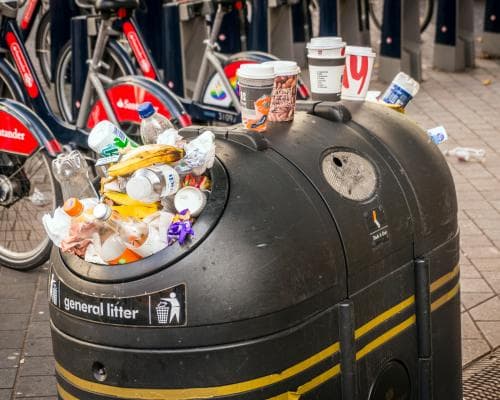
Picture this: you're late for a meeting at London Waterloo, the city's grandest transit cathedral, and you've just finished a flat white. The bin you find is overflowing—a monument to municipal neglect. Beside it, a plastic bag stuffed with rubbish, clearly awaiting collection. You drop your cup in, feel a flicker of civic virtue, and turn to leave. Then a man in a hi-vis vest materializes, clipboard in hand, and informs you that you've just committed a £500 offense. No warning. No appeal. Just a fine that could quintuple if you ignore it. This isn't a dystopian novel; it's the new reality for anyone who dares to dispose of waste in a city that has outsourced its conscience to private enforcement firms.
The case of CP, a Winchester resident who fell afoul of this system, is not an isolated anecdote—it's a symptom of a broader shift in how our urban environments are policed. Lambeth Council, the authority in question, has embraced the government's March 2024 statutory powers to fine 'litter louts' up to £500, and they're not shy about using the maximum. In fact, Lambeth reportedly issued the second-highest number of littering fines in the country over the past year, all while outsourcing enforcement to APCOA, a parking management company. The council insists APCOA doesn't pocket the revenue, but the optics are troubling: a private firm with a financial interest in issuing tickets, empowered to slap penalties on citizens who, in the most reasonable interpretation, were simply trying to do the right thing.
Let's talk about proportionality. A £500 fine is five times the penalty for jumping a red light, a genuine safety hazard. It's more than the cost of a night at The Connaught, and it's a sum that could devastate a family's monthly budget. Yet, unlike a parking ticket, there's no easy appeal—only a costly court battle that would likely eat the early-payment discount. The government's own guidance urges councils to focus on 'worst offenders,' not the unwitting. But in Lambeth, 'consistency' means fining everyone, regardless of intent. It's a blunt instrument, wielded with the subtlety of a sledgehammer, and it's creating a two-tier system of justice: one for those who can afford to shrug off a £500 hit, and another for those who must choose between paying the fine and skipping a mortgage payment.
What does this mean for the ultra-wealthy, you might ask? Well, for the truly affluent, a fine is merely a cost of doing business—a rounding error in a world of private jets and yacht maintenance. But for the aspiring class, the ones who've worked hard to afford a latte in the first place, it's a chilling reminder that the public realm is becoming a minefield of unexpected fees. It's not about the money; it's about the principle. The haves can navigate this with a discreet call to their solicitor, while the have-nots are left to wrestle with a bureaucracy that seems designed to trip them up. This is the new luxury: the ability to move through the city without fear of a random financial ambush.
But there's a deeper, more fascinating signal here. The enforcement officer's behavior—watching from a distance, waiting for the perfect moment to strike—feels less like civic duty and more like a performance. It's a theater of control, a reminder that the city is watching, and that even the most innocuous action can be criminalized. For those of us who value discretion and autonomy, this is the ultimate affront. The luxury market has long been about curation and choice; now, even the simple act of disposing of a cup has become a test of one's ability to play the game. The message is clear: if you want to live beyond reproach, you must either hire a personal concierge to handle your trash or invest in a private waste disposal service. The rest of us are left to navigate a Kafkaesque labyrinth of rules, fines, and hidden cameras.
Looking ahead, this trend shows no signs of abating. As councils face budget crunches, the allure of easy revenue from fines will only grow. The smart money is on a future where the truly privileged will bypass these pitfalls entirely, retreating into gated communities and private spaces where waste is whisked away by unseen hands. For the rest, the advice is simple: be vigilant, know your rights, and perhaps carry a spare bag—just in case. But also, consider this a call to arms. If the ultra-wealthy can't be bothered to fight for a fairer system, who will? The next time you're tempted to dismiss a £500 fine as a mere annoyance, remember: it's not about the cup. It's about the power to define what's acceptable, and who gets to decide.
The Experience
To navigate urban life with impunity, consider engaging a personal concierge service that handles everything from waste disposal to fine disputes—because true luxury is never having to think about the bins.