The Price of Truth: Inside the Murder Trial That Exposed Malta's Offshore Web
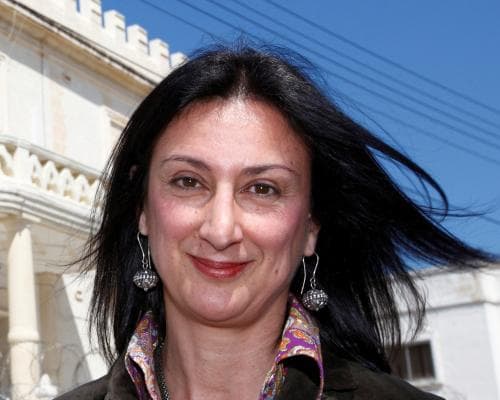
On a quiet October morning in 2017, Daphne Caruana Galizia drove away from her home in Bidnija, Malta, and never came back. A car bomb ended the life of the island's most fearless investigative journalist — and, as a jury heard this week, it may have been the ultimate price of exposing how the ultra-rich hide their money. The accused, Yorgen Fenech, is no ordinary defendant. He's the heir to one of Malta's largest fortunes, a man whose family built a business empire on energy, hospitality, and property. But in the courtroom, the focus wasn't on his wealth — it was on what that wealth bought.
Fenech stands accused of commissioning and paying for the murder. The prosecution's case, laid out through the testimony of Daphne's son, Matthew Caruana Galizia, paints a chilling picture: a journalist killed not for a single scoop, but for a decade of digging into the offshore structures that let Malta's political elite — and its business titans — move money in the shadows. This isn't just a crime story. It's a stark reminder that financial secrecy has a human cost, and that the tools used to protect wealth can also destroy lives.
Matthew Caruana Galizia, a software engineer who helped build the database for the Panama Papers investigation, took the stand on Monday. He described the moment he realized his mother's work was more dangerous than anyone knew. In 2015, while processing millions of leaked files from the Panama Papers — the massive trove of documents from the law firm Mossack Fonseca that exposed offshore holdings worldwide — he found something that hit close to home. "I had to share what I was seeing with my mother," he told the jury. "I believed it was too important." What he found was a direct line to Malta's then-energy minister, Konrad Mizzi, and the prime minister's chief of staff, Keith Schembri. Both had set up offshore companies shortly after taking office, with the help of an accounting firm that was opening bank accounts in the companies' names.
For wealth builders, the details are as instructive as they are unsettling. The Panama Papers, which won a Pulitzer Prize for the reporting team that included Matthew, revealed how easily the wealthy could create shell companies in tax havens like Panama, the British Virgin Islands, and Singapore. The mechanics are simple: a lawyer or accountant sets up a company, opens a bank account, and the owner's name never appears on either. It's legal, until it's used to hide bribes, evade taxes, or launder money. In Malta, the trail led straight to the heart of government. Daphne's blog posts, often scathing and personal, called out the corruption she saw. In early 2017, she commented on an article about Mizzi and Schembri: "How unbelievably corrupt they are — and worse still, they were not tempted into corruption when they were already jaded in power, but actually got into power with the express purpose of being corrupt. It was their roadmap."
That comment, shown to the jury, is a window into the stakes. Daphne wasn't just reporting on corruption; she was naming names and connecting dots that the powerful wanted left disconnected. Her work helped trigger a public outcry that led to the resignation of Malta's prime minister, Joseph Muscat, in 2020. But it also put her in the crosshairs of people like Fenech, who allegedly paid to have her silenced. The trial, which began in earnest this week, is the first time a jury has heard the full extent of the alleged conspiracy. Fenech, who has pleaded not guilty, was arrested in 2019 while trying to flee Malta on his yacht. He has since claimed he was a pawn in a larger scheme involving government officials — a claim the prosecution disputes.
For investors and the wealthy, this case is more than a true-crime drama. It's a signal that the era of effortless offshore secrecy is ending. Global regulators, emboldened by leaks like the Panama Papers, have pushed for greater transparency. The EU has introduced beneficial ownership registries, and the US has tightened rules on shell companies. The cost of hiding money is rising — not just in fees, but in risk. If a journalist can be killed for exposing a single offshore structure, imagine what a regulator or a rival could do with that information. The message is clear: wealth built on hidden foundations is fragile.
As the trial continues, the world is watching. Matthew Caruana Galizia told the court that once he started digging, it felt like a "portal" had opened and he could "see into hell." That hell is now on public display. For the financial elite, the lesson is sobering: the same structures that protect assets can also attract the wrong kind of attention. The smartest capital isn't just diversified — it's clean. And the price of forgetting that, as Daphne Caruana Galizia's family knows all too well, can be fatal.