The $1 Trillion Question: What Afghanistan's Lost Decade Means for the New Era of Impact Capital
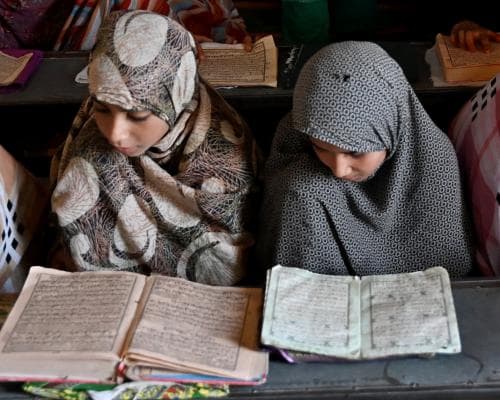
Five years ago this week, the world watched in real time as the last US helicopters lifted off from Kabul, ending a 20-year, $1 trillion experiment in nation building. The images were chaotic, the aftermath predictable. But for anyone who manages serious money—or serious influence—the real story isn't the military withdrawal. It's the financial one. The Taliban didn't just win a war; they inherited a country whose economy had been propped up by Western aid, and then they systematically dismantled the one asset that mattered most: half its human capital.
Let's put the numbers on the table. Over two decades, the US and its allies spent more than $1 trillion in Afghanistan, according to Brown University's Costs of War project. That's roughly $300 million a day for 20 years. More than 1 million coalition troops rotated through the country. Over 3,500 soldiers died, and 23,000 were wounded. And what did the exit buy? A Taliban government that has since issued edicts banning girls from education, legalizing child marriage, and providing legal cover for domestic violence. The June massacre of women's rights protesters—two dead, including a young boy—was barely a footnote in the Western press. For investors, this isn't just a humanitarian tragedy. It's a case study in how quickly sovereign-backed capital can evaporate when the political foundation cracks.
The financial mechanics of the collapse are instructive. Afghanistan's GDP contracted by roughly 20% in the first year of Taliban rule, and foreign aid—which once funded nearly 75% of public spending—was frozen or rerouted. The country's central bank assets, parked at the Federal Reserve Bank of New York, remain locked in a legal standoff. The result is a humanitarian economy, not a market economy. And that's where the money angle sharpens: the vacuum left by sovereign donors is now being filled by a mix of private foundations, diaspora remittances, and, increasingly, impact investors who are willing to take on extreme risk for measurable social returns. Gordon Brown's call for a new global fund for Afghan girls is, in effect, a proposal for a new asset class: human capital recovery in failed states.
Here's the uncomfortable truth for the wealthy. The traditional levers—government aid, multilateral loans, even military intervention—have proven blunt, slow, and easily undone. The Taliban's return erased in months what decades of foreign spending built. But the private sector is different. It's nimbler, more accountable, and more willing to bet on individuals rather than regimes. Think of it as the difference between buying a sovereign bond and buying equity in a single startup. The bond can be defaulted on; the startup can be nurtured, scaled, and protected. In Afghanistan, that means funding underground schools, women-led businesses, and digital infrastructure that can operate beyond the reach of the Taliban's edicts. It's not charity, it's patience capital—deployed with the expectation of a long-term, non-financial return that nonetheless preserves the option value of a future market.
For the ultra-wealthy, this is the new frontier of philanthropy and impact investing. The old model was writing a check to the Red Cross. The new model is building a portfolio of high-risk, high-impact bets in places where the state has failed. We're seeing it in Ukraine, in Gaza, and now increasingly in Afghanistan. The numbers are still small—a few billion dollars globally—but the trend line is up. Foundations like the Malala Fund and the Global Partnership for Education are increasingly acting like venture funds, backing local initiatives with measurable metrics. Brown's proposal for a dedicated fund, backed by sovereign and private capital, would be the first of its kind for a country under gender apartheid. That's not a moral statement; it's a market signal. Where there is systematic oppression, there is also systematic under-valuation. And where there is under-valuation, there is alpha for those willing to look beyond the next quarter.
The takeaway for wealth builders is not to feel guilty about the past, but to be strategic about the future. The $1 trillion spent in Afghanistan is gone, but the lessons are transferable. First, never confuse military presence with economic stability—the two are not correlated. Second, human capital is the most volatile asset class in the world; it can be destroyed by a single edict. Third, and most importantly, the next decade will reward investors who can operate in the gray zones of geopolitics—funding individuals, not regimes, and building systems that can survive a change in power. The Taliban are entrenched, but they are not the last word. The women and girls of Afghanistan are not waiting for a rescue; they are building workarounds. The smartest capital will find them. The question is whether you'll be part of that coalition of the willing, or just a spectator to the next collapse.