The River Wharfe: Britain's Most Exclusive Stroll Through History
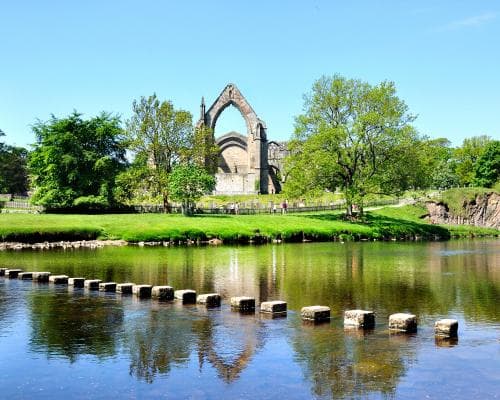
Forget the Riviera. The season's most coveted itinerary isn't a superyacht slip in Monaco or a chalet in Gstaad—it's a six-mile stretch of fast-flowing water in the Yorkshire Dales, where the only crowd is a congregation of ancient oaks and the only paparazzi are the herons stalking the shallows. Last summer, a discreet walk along the River Wharfe from Ilkley to Bolton Abbey became the quiet status symbol among those who have already seen everything. It's not about the distance; it's about the depth of the experience. Here, the ultra-wealthy rediscover what money can't buy: a landscape so old it predates the Norman conquest, yet so pristine it feels like a private estate.
The route begins at Ilkley's Riverside Gardens, a spot where Roman soldiers once stood guard over a frontier fort. You'll pass the ancient stone bridge, a relic of engineering that still carries foot traffic after centuries. The path winds to Addingham, where the Low Mill weir hums with the sound of water that once powered the Industrial Revolution. Beyond it, Castleberg fort—a bronze-age earthwork—rises like a natural sentinel. The climax is Bolton Abbey, a 12th-century monastery whose ruins are framed by woodlands and parkland that would make Capability Brown weep with envy. It's a walk through layers of history, each step a page in a leather-bound volume of British heritage.
What makes this walk a masterpiece of understated luxury is its refusal to perform. There are no Michelin-starred pop-ups, no branded pop-up shops. Instead, the Wharfe offers a rarer commodity: silence, broken only by the rush of water and the occasional call of a curlew. The path is well-maintained but not manicured—it respects the wildness of the Dales, a landscape that has inspired poets and painters for centuries. For those who measure value in authenticity, this is the equivalent of a bespoke Savile Row suit: timeless, crafted by nature, and impossible to replicate.
The Wharfe walk is part of a broader shift among the affluent toward slow, immersive travel. The Norfolk Broads, the Water of Leith in Edinburgh, the River Sowe in Coventry—these aren't just waterways; they're private galleries of biodiversity. A week cruising the Bure at a 5mph pace, with stops at St Benet's Abbey and the world's largest village store, offers a kind of reset that a week in St. Barts can't. It's the new luxury: time, unhurried, spent in places where the only deadline is the sunset.
For the discerning traveler, the Wharfe is the crown jewel. It's a walk that can be done in an afternoon, but lingers in the memory for a lifetime. The ruins of Bolton Abbey, the weir at Addingham, the Roman ghosts at Ilkley—these are the markers of a life well-lived, not just well-funded. As the luxury market pivots from possessions to experiences, this is the experience that money can't rush. It's a reminder that the greatest status symbol is a quiet morning, a river, and the knowledge that you've seen something most will never notice.
The future of luxury travel is here, and it's not a new resort or a private island. It's a six-mile stretch of river in Yorkshire, where the only check-in is the sound of water over stone. For those who can afford anything, this is the one thing worth having: a walk that feels like a secret, shared only with the landscape and the history it holds. The Wharfe isn't just a river; it's a private club, and membership is open to anyone willing to slow down enough to join.
The Experience
Arrange a private guided walk along the Wharfe with a historian, or charter a luxury narrowboat on the Norfolk Broads for a week of unhurried exploration.