The 850-Year-Old Festival That Outshines Glastonbury: Inside Wales' Most Exclusive Cultural Pilgrimage
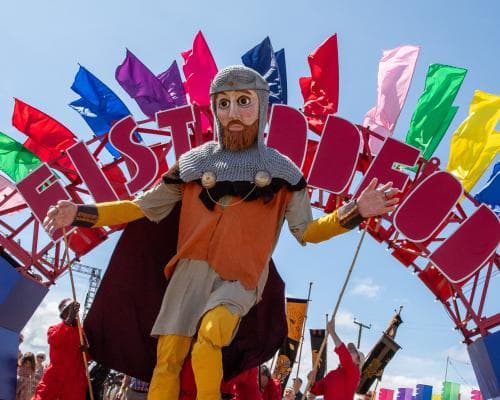
Imagine a festival so exclusive it has been running for 850 years—longer than any monarchy, longer than any bank, longer than the concept of the nation-state itself. Now imagine it's not in a capital city, not in a grand opera house, but in a field in West Wales, where a 5-meter puppet of a medieval prince awakens from a cathedral slumber to preside over a week of poetry, music, and pure, unadulterated Welshness. This is the Eisteddfod, the oldest and largest touring cultural event in Europe, and this year it's celebrating its 850th birthday in the shadow of Cardigan Castle, the very place where it all began. For the ultra-wealthy, who have seen everything and bought everything, this is the rarest commodity of all: an authentic, unbroken tradition that money alone cannot buy. It's not Glastonbury with better weather; it's Glastonbury with a pedigree, a soul, and a waiting list that's been forming for eight and a half centuries.
The story starts in 1176, when Lord Rhys ap Gruffydd, a medieval Welsh prince who had just banished the Norman invaders and made peace with King Henry II, decided to throw a party. Not just any party—a grand tournament of bards and musicians, a competitive showcase of poetry and song, with a chair as the prize. He called it an eisteddfod, which roughly translates to 'sitting together.' And so it has remained, a tradition that has survived wars, conquests, and the rise and fall of empires. This year, from August 1 to 8, the Eisteddfod y Garreg Las—named after the bluestone in the nearby Preseli hills that was used to build Stonehenge—will host over 1,000 events, from poetry readings to performances by the Super Furry Animals, and is expected to draw 150,000 visitors. That's a number that would make any luxury brand blush, yet the Eisteddfod remains a hidden gem, a secret known only to the initiated. As creative director Marc Rees puts it, 'It's Glastonbury on wheels, basically, so I don't know why it goes so under the radar in the rest of the UK.'
But what makes this festival truly extraordinary, and what would appeal to the connoisseur of rare experiences, is the craftsmanship and heritage embedded in every detail. The centerpiece is Lord Rhys himself, a 5-meter puppet crafted by Cardigan's Theatr Byd Bach with input from the local community. He's been touring the region, 'awoken' from his deep sleep in St David's Cathedral, accompanied by his faithful hunting dog, Teifi, and the year's crown and chair—the traditional prizes for the best free-verse poem, a nod to the chair Lord Rhys awarded to the first winner in 1176. This is not some corporate-sponsored, Instagram-bait installation; this is a living, breathing piece of history, brought to life by artisans and volunteers. The local fundraising committees have raised £400,000 to stage the event, and hundreds of volunteers have prepared the site near the village of Llantwd. The Gorsedd Cymru, a secret society of poets and writers once influenced by druidism, adds a layer of mysticism that makes the whole affair feel like a private club for the cultural elite—except the membership is open to anyone with a love of art and a willingness to sit together.
For the luxury market, the Eisteddfod represents a shift away from ostentatious consumption and toward something more meaningful: experiential wealth. The ultra-wealthy are no longer satisfied with buying a yacht or a private island; they want to buy a story, a legacy, a connection to something older than themselves. This is a festival that has been evolving for 850 years, adapting to every era while maintaining its core essence. It's a dynamic, modern festival that offers something for everyone, as John Davies, chair of the executive committee, notes: 'I hope that Lord Rhys himself would have enjoyed the trip… 850 years is a long time, and it is amazing that the eisteddfod is still developing and evolving every year.' That's the kind of longevity that makes a Patek Philippe look like a disposable watch. The Eisteddfod is not just an event; it's a living museum, a testament to the enduring power of culture and community. And for those who attend, it's a chance to be part of something that has outlasted empires and will likely outlast us all.
Looking forward, the Eisteddfod is a beacon for the future of luxury travel and cultural tourism. It's not about buying a ticket; it's about joining a procession that has been marching for centuries. The festival moves between north and south Wales each year, so there's always a new location to discover, a new landscape to explore, and a new set of stories to uncover. For the discerning traveler, this is the ultimate pilgrimage—a week of poetry, music, and dance in a landscape that inspired Stonehenge. It's a chance to sit together with 150,000 other people who understand that true luxury is not about what you own, but what you experience. And as Lord Rhys's puppet awakens from his slumber, he reminds us that some things are worth waiting 850 years for. The only question is: will you be there for the 851st?
The Experience
For a truly bespoke cultural pilgrimage, consider chartering a private jet to Cardiff and arranging a chauffeured tour of the Preseli hills and Cardigan Castle before the festival's opening ceremony.