The Beautiful Game’s Revenge: How the World Cup Redrew the Map of Power
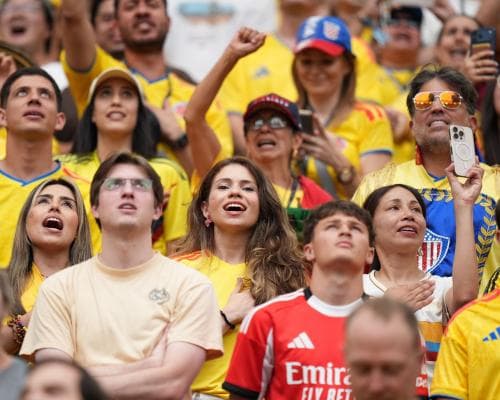
The moment Donald Trump reportedly leaned on FIFA to reinstate a red-carded American player, the entire world held its breath — not in anticipation, but in collective fury. It was a move so audacious, so nakedly transactional, that even the most jaded football fan felt a chill. But then the beautiful game did what it has always done: it answered with a 4-1 demolition of the co-hosts by tiny Belgium, a nation smaller than Connecticut. The stadium erupted, and for one night, the global order felt like a fairy tale.
This was not just a football match. It was a tectonic shift in the cultural and geopolitical landscape — and for those who curate lives around the rarest of experiences, it was a masterclass in why the World Cup remains the most powerful stage on earth. While the ultra-wealthy often collect private islands, hypercars, and rare whiskies, the true connoisseurs understand that the most valuable asset is a moment that cannot be bought. This was one such moment: a democratic uprising played out on 22,000 square meters of grass.
The match itself was a study in contrasts. The United States, backed by the world’s largest economy and a president who treats international relations like a hostile takeover, found itself outplayed by a nation whose entire population could fit into Los Angeles. Belgium’s golden generation — De Bruyne, Hazard, Courtois — moved with the precision of a Swiss watch, each pass a quiet rebuke to the bluster from Washington. The 4-1 scoreline was not just a victory; it was a manifesto. It said: money cannot buy grace, and power cannot buy heart.
For collectors, this match is already being framed as a watershed moment in sports memorabilia. The match ball, the jerseys, even the referee’s notebook from that night are likely to fetch seven figures at auction in the coming years. But the true rarity lies in the story itself — a narrative so rich in irony and justice that it rivals any piece of art hanging in a Palm Beach living room. The ultra-wealthy have long understood that provenance is everything. And the provenance of this match is: the day the little guy won.
What does this signal about luxury taste? It signals a shift away from the gaudy and toward the meaningful. The same people who once clamored for corner offices and private jets are now seeking out experiences that offer a sense of moral clarity. A box seat at a World Cup match where the underdog triumphs against a superpower is the new status symbol — more coveted than a Bugatti, because it cannot be replicated. It is a story you tell at dinner parties, a memory that ages like a great Bordeaux.
Looking forward, the World Cup’s next iteration will undoubtedly see even more aggressive attempts by autocrats and oligarchs to bend the game to their will. But if this match taught us anything, it is that the pitch is the last truly democratic space on earth. For the editorial desk of The Curated Life, that is the most luxurious truth of all: no amount of wealth can guarantee a win. And that, paradoxically, is what makes the beautiful game the ultimate collectible.