The $187,500 View: How a Sydney Gardener’s Chainsaw Redefined ‘Waterfront’
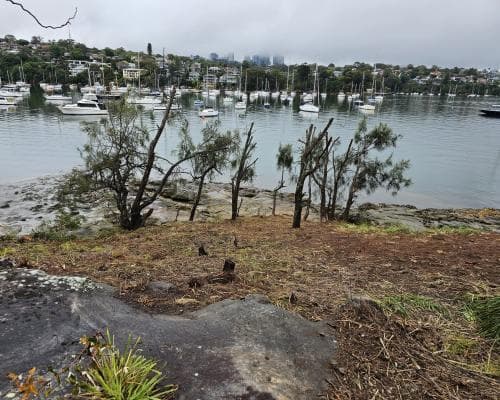
It began, as so many great follies do, with a simple request. A gardener hired to trim grass at a harbourside mansion in Sydney’s exclusive Longueville enclave was soon handed a chainsaw and a mandate: clear the trees. Over twelve days, 287 native trees—some decades old, all on council-owned foreshore land—were felled to open up a water view. The gardener, Yi Wang, left payments in a shoe, hired casual labourers, and sent progress updates to his employer. The result? A fine of $187,500, a criminal conviction, and a scarred landscape that will take thirty years to heal.
The property in question, a Lucretia Avenue residence that sold in 2014 for $7.6 million, was once described by agents as an “exclusive waterfront” boasting “water views from every room” and a private beach. But for the owner’s stepdaughter, who hired Wang, those views weren’t enough. The adjacent bushland—a lush, protected corridor of native vegetation—was the final obstacle to perfection. In late 2023, Wang orchestrated the clearing of 1,210 square metres of that land, cutting down everything from mature eucalypts to delicate undergrowth. The court heard that the destruction eliminated potential habitat for powerful owls and microbats, and stripped natural protection from an Aboriginal midden—a shell midden that had survived centuries, only to be exposed by a gardener’s ambition.
What makes this story so quintessentially Sydney—and so emblematic of a certain strain of ultra-wealthy taste—is the casualness of the crime. Wang’s employer, Yao Wu, allegedly told him, “This is my back yard,” as if public land were merely an extension of private privilege. The payments left in a shoe suggest a knowing wink, a nod to the informal economy that often accompanies such discreet landscaping projects. But the New South Wales Land and Environment Court saw it differently. Justice Rachel Pepper convicted Wang on three counts of unlawful clearing, noting the “deliberate and sustained” nature of the work. The fine, while significant, is a fraction of the property’s value—a detail that will not be lost on those who view this as a cost of doing business.
For collectors of prime real estate, the case is a stark reminder that views are not just aesthetic—they are legal, ecological, and increasingly litigious. In Sydney’s harbourside suburbs, where a single water view can add millions to a property’s price, the temptation to “improve” one’s outlook is immense. But as this case shows, the market is shifting. Councils are cracking down on illegal clearing, with fines escalating and courts taking a dim view of those who treat protected bushland as a personal arboretum. For the ultra-wealthy, the calculus has changed: a better view may cost you more than a few hundred thousand dollars—it could cost you your reputation.
There is a deeper lesson here, one that resonates beyond Sydney’s shores. The luxury of a view is not just about what you see; it is about what you preserve. The most coveted homes in the world—from Amalfi cliffside villas to Malibu beach houses—derive their value from the natural beauty around them. To destroy that beauty is to diminish the very asset you sought to enhance. The powerful owls and microbats that once roosted in those trees are gone, and with them, a piece of the property’s soul. As one local resident put it, “You don’t buy a view; you borrow it from the future.”
In the end, Wang’s story is a cautionary tale wrapped in a luxury-lifestyle parable. It speaks to the lengths some will go to for a perfect panorama, and the price they ultimately pay. For those of us who covet the harbourside life, the lesson is simple: the best views are the ones that remain untouched. And the finest homes are those that respect the land they stand on—because, as this case proves, the land has a long memory, and so does the law.