The Final Whistle in the Sky: How the Ultra-Wealthy Are Experiencing the 2026 World Cup’s Last Stand
The smoke from distant wildfires drifts across the Meadowlands like a ghost of summer, but inside the private lounges of MetLife Stadium, the air is chilled, filtered, and perfumed with vetiver. Tomorrow, Spain and Argentina will clash for the most coveted trophy in football—and the ultra-wealthy will watch it not from the stands, but from a constellation of skyboxes, each one a microcosm of curated comfort. The 2026 World Cup has been a marathon of excess, and the final weekend is its most refined act.
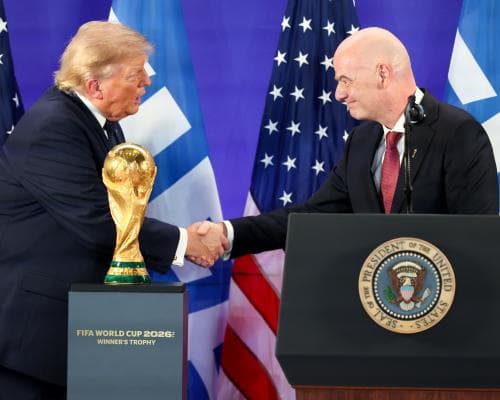
This is not your father’s World Cup. The third-place playoff between France and England in Miami today is a footnote for the elite—a chance to stretch legs on a superyacht moored off Key Biscayne before the main event. Tomorrow, the real draw is the spectacle: a final that pits two footballing dynasties against each other, with a halftime show rumored to cost more than most nations’ GDP. And yes, Donald Trump may indeed crash the trophy lift—but for the guests in the $50,000-a-seat suites, that’s just another layer of theater. The wildfire smoke? An atmospheric detail, like the haze over a Tuscan vineyard at harvest.
What defines luxury at this level is not the ticket—it’s the access. The most coveted seats are not in the stadium at all. They are aboard the 200-foot yachts that will anchor in the Hudson River, their decks transformed into viewing platforms with catered tasting menus from three-Michelin-star chefs. Others have chartered private Gulfstreams to circle the stadium at low altitude, watching the match on cabin screens while sipping 1982 Château Margaux. The third-place playoff in Miami is a warm-up for these connoisseurs—a chance to test the hospitality at Hard Rock Stadium, where the VIP village offers oxygen bars to combat the humidity and personal stylists to refresh your linen suit before the after-party.
But the real story is the object of desire itself: the final. It is a collision of heritage and hype. Spain brings a tiki-taka lineage that has defined a generation; Argentina brings Messi’s ghost and a new wave of talent. For collectors of rare experiences, this is the equivalent of acquiring a Ferrari 250 GTO—impossible to replicate, priceless in memory. The market for such moments is opaque but voracious. Resale tickets for the final have hit $28,000 on secondary markets, but the true currency is invitation. The most exclusive parties are not publicized; they are whispered about in the members’ clubs of Mayfair and the penthouses of Buenos Aires.
What this signals about luxury taste is a shift from possession to participation. The ultra-wealthy no longer just collect cars, watches, or wine—they collect moments that cannot be commodified. A World Cup final is the ultimate ephemeral trophy: it exists for 90 minutes, then vanishes into legend. The wildfire smoke, the halftime show, the ex-president—all of it becomes part of the story you tell at dinner parties for decades. To be there is to own a piece of history, and for those who can afford it, that is the only ownership that matters.
As the sun sets over the Meadowlands tomorrow, the final whistle will blow, and a new champion will be crowned. But for the editors of The Curated Life, the real victory is in the journey—the private jets, the yachts, the skyboxes, and the smoke-tinged air that made this World Cup unlike any other. The next one, in 2030, will be in Morocco, Portugal, and Spain. Start planning your itinerary now. The smoke will clear, but the memory will linger like a fine cognac.