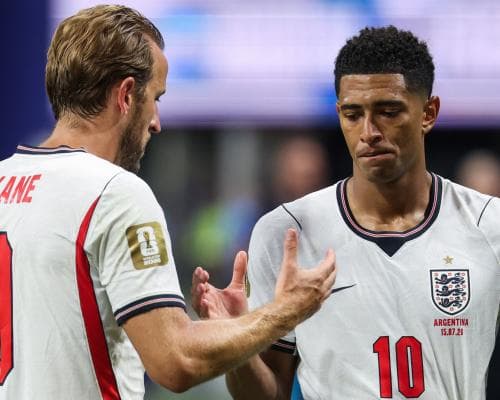
The Final That Defies Strategy: Why Spain’s Coach Won’t Shackle Messi
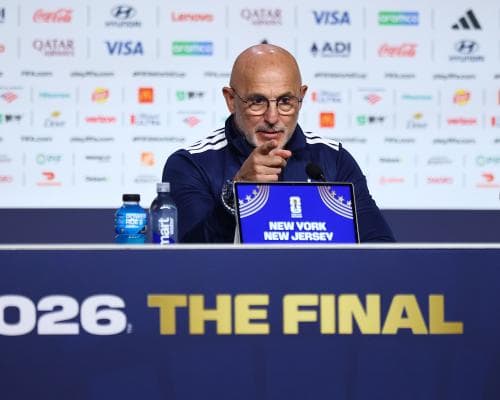
The last time Luis de la Fuente tried to man-mark Lionel Messi, it lasted exactly 15 minutes. That was 22 years ago, in a dusty under-19 cup tie at Barcelona’s Miniestadi, when Messi was a 16-year-old whisper of a player and de la Fuente was a Sevilla youth coach. He assigned a dedicated shadow, the boy tracked every step, and for 70 minutes the score held at 0-0. Then the marker picked up a yellow card, de la Fuente pulled him off, and Messi scored four goals in the time it takes to sip a cortado. The lesson landed like a thunderclap. Now, as Spain prepares to face Argentina in Sunday’s World Cup final in New Jersey, de la Fuente is telling that story with a knowing laugh. “Does that mean we will man-mark him? No.”
This is not a tactical breakdown. It is a confession of awe — the kind that only the ultra-wealthy understand when they encounter something that money cannot buy, control, or replicate. For the collector who owns a Bugatti Chiron and a Rothko, Messi is that rare object: a force of nature that defies strategy, price, and precedent. De la Fuente’s refusal to assign a single defender to the Argentina captain is the luxury equivalent of a gallerist admitting that you cannot hang a Caravaggio in a hallway and expect it to behave. You simply create the best possible room for it to exist, and then you watch.
The setting itself is a study in aspirational geography. The final takes place at MetLife Stadium in East Rutherford, New Jersey — a venue that, for the global elite, is less about the bleachers and more about the private suites, the champagne corridors, and the helicopter pads that dot the Meadowlands. The match is a collision of two footballing aristocracies: Argentina, with its cult of Messi, and Spain, with its conveyor belt of tiki-taka prodigies. De la Fuente, a silver-haired tactician who has spent decades in the game’s inner sanctums, speaks of the final as “a game of talent, brilliance, great play” — the kind of language you’d hear at a Sotheby’s auction for a Patek Philippe Grandmaster Chime.
What makes this story sing for the luxury reader is the question of rarity. De la Fuente was asked whether Spain’s teenage phenom Lamine Yamal is “the nearest thing to Messi.” His answer was a quiet masterpiece of discernment: “Lamine has to be Lamine. Messi can never be repeated. He is an extraordinary talent and above all an example for young players in his attitude, his behaviour, the spectacular World Cup he is producing and the age at which he is producing it.” In the world of collectibles, this is the difference between a limited-edition Richard Mille and a one-of-a-kind Fabergé egg. One is rare; the other is singular. De la Fuente understands that genius cannot be cloned, only admired from a respectful distance.
The market context is telling. In the past decade, the value of a World Cup final appearance has climbed into the stratosphere — broadcast rights, sponsorship deals, and the secondary market for match-worn shirts have turned the event into a $500 million-plus ecosystem. Yet de la Fuente’s anecdote reveals a deeper currency: the story itself. The tale of the 16-year-old Messi dismantling a man-marking scheme in 15 minutes is now a piece of oral history that will be retold in private jet lounges and members’ clubs for decades. It is the kind of narrative that separates a mere sporting event from a cultural artifact.
What does this say about luxury taste? That the ultimate sign of sophistication is knowing when to let go. The ultra-wealthy do not try to control everything; they curate the conditions for brilliance to emerge. De la Fuente’s strategy — or non-strategy — is a lesson in restraint. He will not waste a player on a ghost. Instead, he will trust his own team’s talent, their collective intelligence, their ability to “pay close attention” without obsession. It is the same philosophy that drives a collector to display a Basquiat without a velvet rope: you honor the work by letting it breathe.
As the final whistle approaches, one thing is certain. Whether Argentina lifts the trophy or Spain reclaims its crown, the image that will linger is not a goal or a save, but a coach laughing at his own hubris 22 years ago. In a world of algorithm-driven tactics and data-crunching analysts, de la Fuente’s story is a reminder that some things — like Messi, like a perfect Napa Cabernet, like a sunset over the Amalfi Coast — are simply beyond strategy. The only sensible response is to pour a glass, lean back, and enjoy the show.