The Claret Jug Chase: Inside the High-Stakes Drama at Royal Troon
A ball skims the right edge of the cup, a putt dies a few rolls short, and a champion’s hopes zig-zag across the 18th like a loose thread. Welcome to the final day of The Open at Royal Troon, where the air tastes of salt and tension, and the leaderboard shifts with the wind off the Firth of Clyde. This is not merely a golf tournament. It is a collector’s edition of human nerve, where the ultra-wealthy—those who own the yachts moored in Troon’s harbor and the private jets parked at Prestwick—gather to watch history carve itself into the dunes.
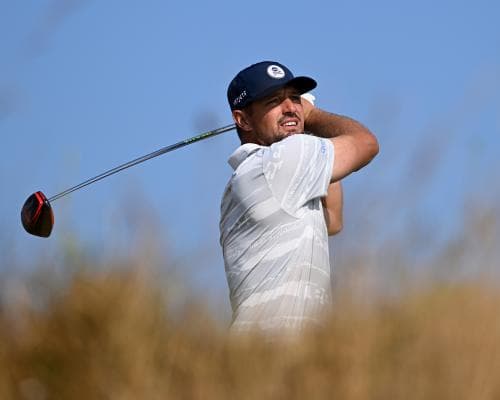
At the center of the drama is a cast of characters who embody the sport’s rarefied air. Kim Si-woo, a wedge artist from Seoul, flirts with the lead after a bank-side recovery that leaves the ball three feet from the pin—a shot so delicate it could have been a painter’s brushstroke. Sam Burns, all quiet Southern grace, nearly matches him, while Bryson DeChambeau—the physicist-turned-linksman—nearly drains a 50-foot uphill putt that would have sent a shiver through the grandstands. These are not just athletes; they are craftsmen of the improbable, and their tools—forged in bespoke workshops, weighted to the gram—are as much a part of the story as the players themselves.
But the real fascination lies in the unraveling. Cameron Young’s bid has dissolved over the last hour, a bogey at 15 marking the slow death of a dream. Scottie Scheffler, the defending champion and a man whose swing is the envy of every teaching pro from St. Andrews to Shinnecock, finishes his round with a wild zig-zag: a drive over the left fences, a second back over the same fence, then a desperate chip that lands three and a half feet from the hole. He saves par, but a level 70 is not what the Claret Jug’s keeper had in mind. The Jug jig looks up, as we say in the clubhouse—a Scottish phrase that means the party might be over. For the collectors in the crowd, those who own vintage putters and framed photographs of past champions, this is the moment the auction turns. The price of a memory, after all, is always highest when the outcome is uncertain.
The market for such moments is, of course, invisible but palpable. At The Open, the real currency is not the prize purse but the stories that will be retold in the members’ lounges of Muirfield and the private dining rooms of Manhattan. A single shot—like DeChambeau’s birdie at the par-three 15th, a six-foot putt rolled with the care of a watchmaker—can shift a reputation. Jackson Suber, a name few knew before this week, now stands one stroke behind the co-leader, his bunker escape at 14 a textbook study in controlled aggression. For the discerning spectator, these are the details that matter: the way a player’s shoulders settle after a miss, the exact arc of a ball against the grey Scottish sky. It is a language of nuance, spoken by those who understand that true luxury is not the object but the moment it inhabits.
What does this signal about luxury taste? That the most coveted experiences are not the ones you can buy, but the ones you witness. The ultra-wealthy do not come to Royal Troon for the hospitality tents or the champagne—they come for the raw, unscripted theater of a sport that refuses to be tamed. As the final round tightens, with DeChambeau now at -6 and Scheffler needing a miracle, the question is not who will win. It is which story will endure. Will it be the physicist’s calculated charge, or the champion’s last stand? The answer, like the tide, is already moving. And for those lucky enough to be here, that is worth more than any Claret Jug.