Australia's Pump-Panic Pivot: EVs Just Took Nearly Half the New-Car Market
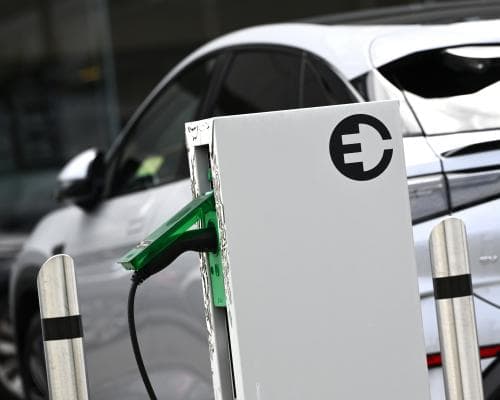
There is a moment in every market when a trend stops being a trend and becomes a stampede. For Australia's auto industry, that moment was the second quarter of 2026. Forget the slow, polite adoption curves you see in other Western markets. Down under, the data just snapped. In the three months from April to June, electric vehicles, plug-in hybrids, and traditional hybrids combined to capture nearly half of all new car sales. The combustion engine, that century-old workhorse of the Australian driveway, suddenly finds itself in the minority. This isn't a niche environmental story. This is a hard, quantifiable shift in where hundreds of billions of dollars of household capital are flowing.
The numbers out of the Australian Automobile Association's latest EV Index are nothing short of staggering. Battery electric vehicle sales more than doubled quarter-on-quarter, jumping from 34,435 units in Q1 to 69,414 in Q2. That is the largest quarterly rise for EVs ever recorded in the country. At the same time, the market share for pure petrol-powered vehicles collapsed from 64.23% to 50.84% — the lowest figure on record and the biggest single-quarter drop since the index began. Combined with hybrids and plug-ins, the electrified segment now commands roughly 49% of the market. We are one quarter away from the combustion engine becoming a minority choice in Australia. That is not a projection. That is the trajectory.
What triggered this sudden pivot? Simple economics, wrapped in geopolitics. Fuel prices peaked in March amid instability in the Middle East that rattled key supply routes, pushing the cost of a litre toward and beyond the psychologically brutal $2 mark. The federal government stepped in on 30 March with a temporary fuel excise reduction to cushion the blow, but that band-aid is scheduled to be ripped off this Sunday. With the excise relief ending and pump prices again tracking toward that $2 threshold, Australian motorists are voting with their wallets. They are not waiting for charging infrastructure to be perfect. They are not waiting for resale values to stabilise. They are doing the math on a $100 tank of petrol and deciding that the future is now.
This is a wealth story as much as it is a transport story. For the average Australian family, the shift to an EV represents a reallocation of several thousand dollars a year from a consumable (fuel) to a capital asset (the car itself). But zoom out, and the capital flows get far more interesting. The surge in EV sales is a direct transfer of wealth away from the oil majors, the refining giants, and the tanker operators who profit from Australian fuel consumption. It is also a massive tailwind for the battery metals complex — lithium, nickel, cobalt, and copper — that underpins every one of those new vehicles. Investors who hold mining equities, battery tech names, or even the broader clean energy trade are watching this data with a very satisfied smile. The Australian consumer just delivered a quarterly earnings beat for the entire electrification supply chain.
For the ultra-wealthy, this data point is a useful barometer of how quickly consumer behaviour can shift when prices bite. Australia is not a country with aggressive EV mandates or punitive carbon taxes. It is a country where people simply looked at the cost of petrol, looked at the cost of charging, and made a rational decision. That is the kind of signal that moves markets. The wealthy understand that infrastructure spending will now accelerate to meet this demand — charging networks, grid upgrades, and battery storage will all need capital, and quickly. The smart money is already positioning for the ripple effects, from real estate near fast-charging corridors to logistics companies upgrading their fleets.
Looking forward, the question is no longer whether Australia will hit electric vehicle parity with petrol cars. It is when. If the current pace of adoption holds, the internal combustion engine could dip below 50% market share within the next quarter. The fuel excise relief ending this weekend will only accelerate the shift, as the price differential at the bowser re-widens. For wealth builders, the lesson is clear: when a structural shift meets a price shock, move fast. The Australian car market just did. The capital that follows it will be just as swift.