FIFA's $4.6B Power Struggle: Infantino Faces a Coup as Kushner's World Cup Deal Collapses
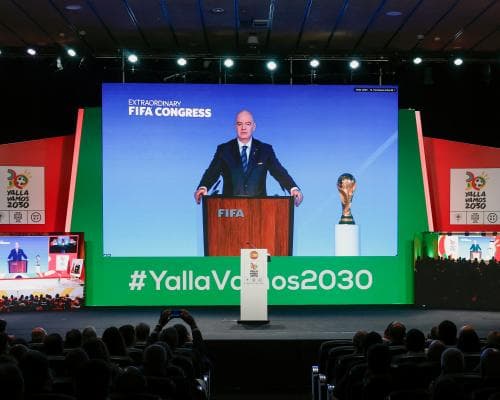
The most powerful man in soccer just blinked. Gianni Infantino, the Swiss-Italian lawyer who runs FIFA like a personal fiefdom, was forced to abandon a secret plan to sell a 20% stake in a new World Cup operating company to Thrive Capital, the investment firm co-founded by Joshua Kushner. That's the same Kushner whose brother-in-law is Jared Kushner, Donald Trump's son-in-law and Middle East dealmaker. The U-turn, announced in a terse FIFA statement in the early hours, wasn't a strategic retreat. It was a survival move. And it may not be enough.
The Guardian has learned that a rebellion was already brewing inside the FIFA Council before the World Cup sell-off story even broke. A group of council members — sources say they've already reached double figures — is trying to force an extraordinary general meeting (EGM) that could escalate into a full-blown leadership challenge. Under FIFA's rules, a motion from 19 of the 37 council members can trigger such a meeting. The rebels are demanding an independent review into the bizarre decision to lift Folarin Balogun's suspension during the World Cup, a move that reportedly involved multiple phone calls from Trump himself. The Norwegian FA has filed a formal complaint with the IOC, alleging FIFA breached its own rules on political neutrality.
Let's put the numbers in perspective. FIFA is sitting on reserves of roughly $4.6 billion, and the 2026 World Cup in North America is expected to generate over $11 billion in revenue — a record. That's the kind of cash that makes sovereign wealth funds salivate. Infantino's plan was to create a new operating company to run the tournament's commercial rights, then sell a fifth of it to Thrive Capital. For Kushner, a Harvard-educated venture capitalist with a net worth estimated at $2 billion, it would have been a backdoor into one of the most lucrative sports properties on earth. For Infantino, it was a way to lock in political allies and personal wealth. Instead, it became a smoking gun.
The rebellion is about more than just one player's suspension. It's about accountability — or the lack thereof. FIFA has insisted the Balogun decision was taken independently by its ethics committee, but it has yet to publish a written report on the hearing. That's not good enough for the council rebels, who see Infantino's pattern of rule-by-decree as a threat to the institution's credibility. They're also likely emboldened by the fact that Infantino caved so quickly on the Thrive deal. If he's weak, he's vulnerable.
What does this mean for the wealthy and the markets? First, it's a reminder that even the most powerful institutions can be disrupted from within. FIFA is a quasi-monopoly, but its governance is fragile. Second, the collapse of the Thrive deal is a signal to private equity and venture capital that sports governance carries political risk. Investors like Kushner are used to navigating regulatory hurdles, but this was a different kind of blowback — a global backlash from football federations that don't want to see the World Cup turned into a private equity plaything.
For now, the EGM is still a long shot. The rebels need 19 votes, and they're not there yet. But the momentum is real, and the silence from FIFA's headquarters in Zurich is telling. If the meeting is called, Infantino will have to defend not just the Balogun affair, but his entire modus operandi. He'll point to FIFA's growing revenues and the promise of a record-breaking 2026 tournament. His critics will point to the lack of transparency, the cozy relationships with autocrats, and the stench of a deal that would have enriched the Kushner family.
The smart money is on Infantino surviving — for now. He's survived worse, including a criminal investigation in Switzerland that was dropped in 2020. But the cracks are showing. The world's richest sport is now a battleground for control of its most valuable asset: the World Cup. And the next few months will determine whether Infantino remains the emperor of soccer or becomes a footnote in its history.