The Premier League's Managerial Giants Are Gone — and the Money Men Are Paying Attention
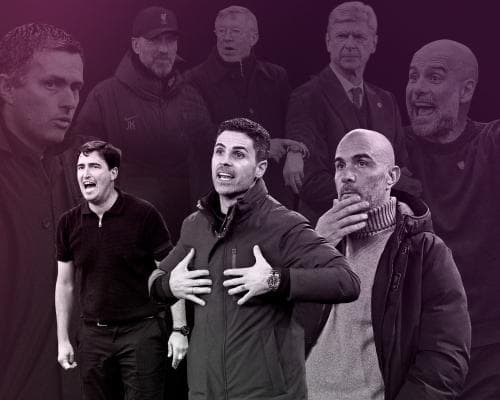
The Premier League has always sold a very specific kind of product: certainty wrapped in chaos. You knew the protagonists. You knew the grudges. You knew that, come autumn, Sir Alex Ferguson would be scowling at a referee, Arsène Wenger would be defending some obscure midfielder's technique, and José Mourinho would be making it all about himself. That was the league's real currency — not just goals, but characters. And now, for the first time since the competition's inaugural season in 1992, none of the five great managerial beasts will be on the touchline. Ferguson, Wenger, Mourinho, Jürgen Klopp, and Pep Guardiola — all gone. The last of them, Guardiola, walked away from Manchester City this summer, leaving a void that isn't just emotional. It's financial.
Let's be blunt: the Premier League is the most valuable domestic football property on Earth, with broadcast deals and commercial rights worth billions annually. But its premium pricing has always been tied to narrative — the storylines that keep global audiences glued to screens from Singapore to Seattle. And for three decades, those storylines were built around larger-than-life managers. Ferguson vs. Wenger was a Cold War with a ball. Mourinho's arrival was a revolution in attitude as much as tactics. Klopp's gegenpressing turned Liverpool into a cultural phenomenon, not just a team. Guardiola's positional play was a masterclass in intellectual dominance. These men weren't just coaches; they were content engines. They generated headlines, debates, and, crucially, viewer loyalty. That loyalty is what drives the league's $10 billion-plus annual revenue machine.
Now, look at the dugouts. The longest-serving Premier League manager is Mikel Arteta, who took over Arsenal in 2019 — a relative youngster in this context. Unai Emery, his predecessor at the Emirates and now at Aston Villa, is second. Régis Le Bris, who arrived at Sunderland just two summers ago, is already the fourth-longest-serving boss in the division. That's a staggering stat: a man who has been in England for two years is more established than 16 of his 19 counterparts. The turnover is brutal. The average tenure of a Premier League manager is now under 18 months, according to league data. And that churn isn't just a sporting problem; it's a capital problem. Every sacking costs a club millions in compensation, severance, and the inevitable disruption to squad value. For the wealthy owners who treat clubs as trophy assets or speculative investments, this is a direct hit to the balance sheet.
The shift is also a generational change in how the game is run. The new breed — Arteta, Emery, De Zerbi, and others — are more system-driven than personality-driven. They're tacticians, not tyrants. They're more likely to be found in a video analysis room than in a press conference war of words. That's not necessarily a bad thing for the football itself. But it's a problem for the brand. The Premier League has sold itself on drama, on the sense that anything could happen because these titans were locked in eternal combat. Without them, the league risks becoming just another high-quality product — efficient, polished, but less essential. And in the attention economy, where the Saudi Pro League and other upstarts are throwing money at stars, that's a dangerous erosion of the moat.
For the wealth managers and family offices that have poured money into football — from the Glazers at Manchester United to the sovereign wealth funds at Newcastle and Manchester City — the lesson is clear: the value of a club is increasingly tied to the stability of its football operations. A charismatic manager was, in effect, a cheap hedge against chaos. He was the one who kept the narrative coherent, kept the players aligned, kept the fans believing. Now, with that hedge gone, the risk premium on every club has gone up. The next few years will be a stress test for the league's pricing power. Can it still command record broadcast fees without the box-office names? Can it still attract global sponsors who want to be associated with winners, not just well-run teams? The early signs are mixed. The 2025-26 season is already being billed as the most unpredictable in a generation, which is exciting — but unpredictability is exactly what investors hate.
Here's the forward-looking angle: the void at the top is an opportunity. The next alpha manager is out there, and the club that finds them first will capture a disproportionate share of the narrative and the money. It could be De Zerbi at Tottenham, who has the swagger and the tactical audacity to become a cult figure. It could be a young coach from the Championship or abroad who hasn't yet been discovered. The market for managerial talent is about to become as competitive as the market for players. For the wealthy owners, the smart play is not to chase the next big name but to build a structure that can survive the inevitable turnover — a director of football, a data-driven recruitment system, a culture that doesn't depend on one ego. The era of the big beast is over. The era of the institution is beginning. And the money that understands that first will be the money that wins.
So, as the Premier League prepares for its first season without its giants, the message to the wealth desk is simple: watch the dugouts, not just the scoreboard. The next great fortune in football — and the next great loss — will be made in the unglamorous work of succession planning. The heroes are gone. The survivors will be the ones who knew that all along.