The Ronaldinho Effect: How a Billionaire Heir Is Betting Big on a Tiny Italian Club
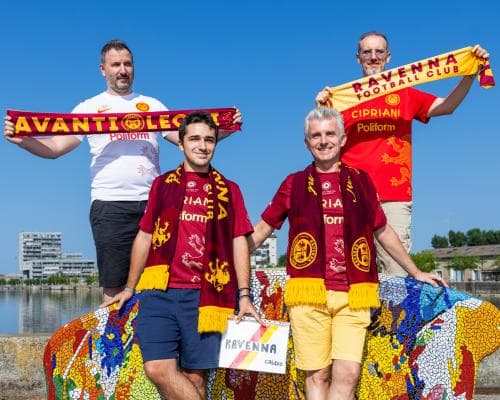
On a scorching summer afternoon in Ravenna, a city far better known for its fifth-century Byzantine mosaics and Dante's tomb than for footballing glory, eyes are peeled in the historic centre for one of world football's most recognisable figures – a man who featured in the World Cup final half-time show alongside Madonna and Ronaldo: Ronaldo de Assis Moreira, better known as Ronaldinho. “We haven't seen him yet,” four Ravenna supporters sitting at a cafe say with dry irony as they flip through La Gazzetta dello Sport, Italy's famous pink sports daily. They are undeniably sceptical, viewing the signing as a purely commercial operation, yet deep down they still harbour the dream of seeing the 2005 Ballon d'Or and 2002 World Cup winner wear their yellow and red shirt.
This is the Ronaldinho Effect – and it's sweeping through a quiet corner of Emilia-Romagna thanks to the business instinct of Ignazio Cipriani. Heir to the Venetian hospitality dynasty behind the renowned Harry's Bar, Cipriani took over the club in 2024 when they were in Serie D, the fourth tier of Italian football. A native of Ravenna, he is the grandson of Raul Gardini, the Italian chemicals tycoon and sailor who steered Il Moro di Venezia to the 1992 America's Cup final. In his first year as president, Cipriani oversaw victory in the Serie D Cup and promotion to the professional ranks of Serie C. But that is merely the first step in a long ascent, he says: “It's not a provocation. Serie A is the goal I declared from day one because I intend to reach it. And the Champions League remains the ultimate horizon we want to walk towards, step by step. I made this statement because I like working with my back against the wall: when you have no way out, you are forced to find solutions instead of excuses.”
The numbers behind this bet are modest by billionaire standards, but the strategic logic is pure high-finance. Ronaldinho, now 44, retired from professional football in 2018, but his brand remains a global asset – he boasts over 70 million Instagram followers and a lifetime of highlight reels that still generate millions of views. Signing him to a Serie C club is not about his legs; it's about his reach. For Cipriani, the deal is a classic arbitrage play: buy a distressed asset (a provincial club), inject star power to boost visibility, and flip it into a media and commercial juggernaut. The transfer fee is undisclosed, but industry insiders estimate a figure in the low six figures – a rounding error for a family whose hospitality empire spans Venice, New York, and London. The real return will come from sponsorships, broadcast rights, and merchandise, which could skyrocket if the club's profile rises even a fraction.
The rarity here is the asset itself. Ravenna FC is not a storied giant like Juventus or Milan; it's a scrappy underdog with a rich local history but no recent glory. Cipriani is betting that heritage plus celebrity equals value. He's already leveraged his family's connections to bring in a global audience: the club's social media following has reportedly tripled since the announcement, and preseason friendlies are being rescheduled to accommodate international broadcast interest. This is not just a football story – it's a case study in how the ultra-wealthy are increasingly treating sports franchises as alternative investments, with returns measured not just in trophies but in brand equity and cultural capital.
For markets, the Ronaldinho Effect signals a broader trend: the democratization of football's financial elite. While the super-clubs hoover up billions in TV deals, smaller clubs are becoming vehicles for wealthy individuals to buy status and influence at a fraction of the cost. Cipriani's move echoes the playbook of investors like Ryan Reynolds and Rob McElhenney at Wrexham, but with a distinctly Italian twist – blending old-world luxury with new-world media savvy. The question is whether this model can sustain itself beyond the initial buzz. Ronaldinho's contract is reportedly short-term, and his role may be more ambassadorial than athletic. But even if he plays only a handful of minutes, the optics alone could justify the investment.
Looking ahead, Cipriani's ambition is clear: he wants Ravenna in Serie A within five years, and he's willing to spend to get there. For wealth builders, the lesson is twofold. First, passion assets – whether football clubs, art, or rare whiskies – can generate outsized returns when paired with smart marketing and a long-term vision. Second, never underestimate the power of a famous face to move markets, even in the most unlikely corners. As the fans in Ravenna sip their espresso and wait for a glimpse of their new icon, they're witnessing something more than a transfer – they're watching a billionaire's bet on the alchemy of fame and football. And if it works, don't be surprised to see more heirs and tycoons following suit, buying up their hometown clubs and dreaming of Champions League nights.