The Loyalty Premium: What Football Fandom Teaches Us About Capital Allocation
There's a moment in Joseph Heller's Catch-22 when an old Italian man explains his wartime loyalties with brutal honesty: he was pro-German when they protected him from the Americans, and pro-American now that they protect him from the Germans. He'll be a faithful partisan to anyone who keeps him alive. It's a cynical take on allegiance, but it's also a masterclass in survival — and it's exactly how too many investors think they should behave, and exactly how they get burned.
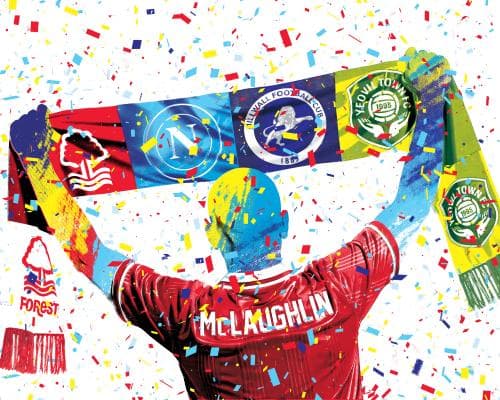
I thought about that old man while reading a recent essay about football fandom — about a kid who grew up in south London, geographically destined to support Crystal Palace or Millwall, but who ended up a Nottingham Forest supporter after one glorious afternoon at Upton Park in 1987. The essay is about sport, but it's really about something else: how we attach ourselves to assets, teams, or ideas that have no rational claim on our loyalty — and how we justify abandoning them when the tide turns.
Now, I'm not going to tell you that football fandom is the same as portfolio management. It's not. But the emotional mechanics are eerily similar. The essay's author admits his early switch to Everton was 'pure, unadulterated glory-hunting' — the equivalent of buying a stock at its peak because everyone else is. Then he pivoted to Tottenham, possibly because of Paul Gascoigne's talent — the equivalent of chasing a hot sector because one analyst wrote a bullish note. And then, despite all that, he ended up loyal to Forest — a mid-table club with a storied past but no immediate promise of glory. That's the opposite of momentum investing. That's value investing, with an emotional dividend.
The market angle here is simple: the most successful capital allocators I know don't switch allegiances lightly. They have a thesis, they test it, and they stick with it until the facts change — not until the price moves. The football fan who switches from Everton to Tottenham to Forest is the retail investor who buys the meme stock, then the AI stock, then the ESG fund, then back to cash — always chasing the last winner, always arriving late. The old Italian in Catch-22 is the worst kind of allocator: he'll back anyone who holds power today, but he has no conviction, and so he holds no lasting value.
What's the actual financial lesson? It's about the 'loyalty premium' — the extra return you get from staying with an asset or strategy through a drawdown because you understand its intrinsic worth. Forest won the European Cup twice in 1979 and 1980, against all odds, under Brian Clough. If you'd bought that story in 1987, you'd have seen relegation, promotion, and decades of mediocrity. But you'd also have seen one of the most remarkable turnarounds in English football history when they returned to the Premier League in 2022 after 23 years away. The patient fan — or investor — who held through the wilderness was rewarded not with steady returns, but with a moment of pure, unquantifiable upside.
For the wealthy, the lesson is sharper. The ultra-rich don't get rich by switching allegiances every time the wind changes. They build concentrated positions in things they understand — a business, a property, a thesis — and they hold through the noise. The football fan's geographic dislocation — living in south London but supporting Forest — is a metaphor for the modern investor's ability to go anywhere, but it's also a warning: just because you can move your capital anywhere doesn't mean you should. The smartest money in the world is often the most boring. It's the family office that has held the same private equity stake for 30 years. It's the billionaire who refuses to sell a legacy business even when the market begs him to.
So what does this mean for you? It means your loyalty is an asset, not a liability — if it's placed correctly. The football fan who switched teams for glory is a trader. The fan who stuck with Forest is an investor. The old Italian in Catch-22 is a mercenary, and mercenaries never build anything lasting. In markets, as in sport, the strongest players are not the ones who switch sides at the first sign of trouble. They're the ones who know why they're on the pitch in the first place — and who stay until the final whistle, even when the score looks bleak. That's the real alpha. And it's available to anyone willing to stop chasing the next shiny thing and instead ask: what do I actually believe in?