Ancient DNA Rewrites History: The Female Shaman Who Shatters Bronze Age Assumptions
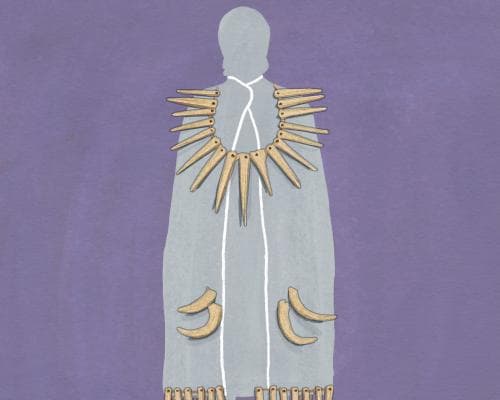
For decades, the Upton Lovell Shaman sat quietly in the Wiltshire Museum, labeled a man. The artifacts buried with the body—a ceremonial cloak, copper tools, a stone for sharpening metal—seemed to confirm the bias: only a male could have held such status in Bronze Age Britain. No one questioned it. Then, a team at the Francis Crick Institute ran ancient DNA on the skeleton. The result? XX chromosomes. The shaman was a woman.
This is not just a correction of a dusty museum label. It is a window into how deeply our assumptions about the past are shaped by modern prejudices—and how a single technology is ripping those assumptions apart. Over the past two decades, the ability to extract and sequence DNA from poorly preserved, millennia-old samples has improved exponentially. What once required pristine bone now works from a fragment of tooth or a speck of dirt. The result is a torrent of revelations that force us to confront how wrong we have been.
Consider just a few of the bombshells: Neanderthals and modern humans interbred far more frequently than anyone imagined—around 50,000 years ago, with genetic traces still in our DNA. The first modern Britons had “dark to black” skin, a fact that upends the whitewashed origin stories of the British Isles. And the mysterious deaths of Italy’s Medici family in the 16th century? Not murder, as historians long assumed, but malaria—revealed by DNA from their bones. Every time we widen the keyhole, we see a past far more complex, mobile, and surprising than the textbooks suggested.
The technology behind this shift is paleogenomics—the science of reading ancient DNA. Since roughly 2010, advances in sequencing machines, computational algorithms, and contamination controls have made it possible to read genomes from samples that are 10,000, even 100,000 years old. The Francis Crick Institute, a powerhouse in this field, has become a hub for such work. But the implications go far beyond academia: this is a tool for rewriting the narratives that underpin national identities, gender roles, and even medical history.
What does this mean for the elite investors and philanthropists who fund deep-tech research? The market for ancient DNA analysis is still niche—driven by universities, museums, and a handful of biotech startups—but its spin-offs are massive. The same sequencing technologies are used for forensic science, tracking zoonotic diseases, and even studying the microbiome of ancient soils. The billionaire class, from Jeff Bezos to Peter Thiel, has poured capital into longevity and genomics ventures; the same tools that reveal a female shaman could one day help reverse-engineer human aging or resurrect extinct species.
This is also a cautionary tale for the innovation world. The Upton Lovell discovery reminds us that technology does not just create new things—it demolishes old certainties. For every startup promising to disrupt an industry, there is an implicit bias baked into the data we collect and the questions we ask. The shaman’s DNA did not just reveal her sex; it revealed the blind spots of an entire field. The same will happen in AI, biotech, and climate tech as better tools force us to question our assumptions about who holds power, who builds, and who leads.
So what comes next? As paleogenomics becomes cheaper and faster, expect a flood of revisions to history’s most sacred stories. The Bronze Age was not a simple hierarchy of male warriors and female gatherers; it was a world where women wielded spiritual and technological authority. The next decade will likely see similar shocks: the first female pharaohs, the true architects of ancient engineering, the real spread of early languages. The shaman is just the beginning. For investors and innovators, the lesson is clear: the most valuable data is often the data that shatters your worldview. Pay attention to the skeletons in the closet—they might be rewriting the future.