Europe's Burning Future: Why Pyrocumulonimbus Storms Demand a Firefighting Revolution
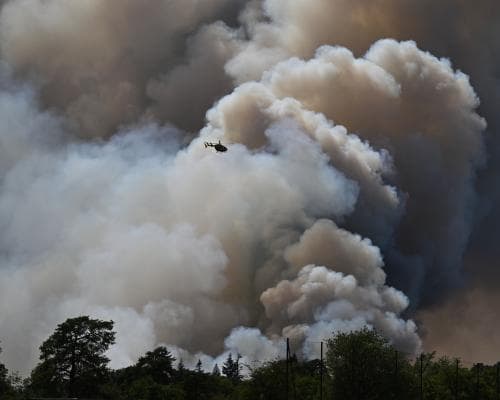
A new word is terrorizing French firefighters: pyrocumulonimbus. It sounds like a dinosaur, but it's worse — a fire that births its own weather system, whipping winds into unpredictable cyclones and turning a forest fire into a self-sustaining inferno. This summer, for the first time in Europe, that monster appeared over the Bordeaux region, as France endured its third major heatwave and prepared for a fourth. The statistics are brutal: 220,000 people evacuated from Gironde. Over 170,000 hectares burned in Spain — six times last year's total. This is not a natural disaster. It is a technological failure waiting for a solution.
Here's the cold truth: we are still fighting 21st-century fires with 20th-century tools. Planes drop water. Firefighters dig lines. It's heroic, but it's not enough against a pyrocumulonimbus that creates its own wind. The real innovation gap is not in climate policy — though that's critical — but in the robotics and AI systems that could see through smoke, predict fire spread in real time, and deploy autonomous ground and aerial units to contain blazes before they become weather events. The Guardia Civil in Spain and the Sécurité Civile in France are overwhelmed. They need help that doesn't sleep, doesn't tire, and doesn't get lost in zero visibility.
Spain's prime minister, Pedro Sánchez, has been a rare voice calling for an accelerated green transition. But even he hasn't yet fully embraced the next logical step: a massive public-private push into firefighting robotics. Think swarms of drones equipped with thermal imaging and chemical retardant dispensers, coordinated by AI that ingests satellite data, wind models, and historical burn patterns. Think autonomous ground vehicles that can enter zones too hot for humans, building firebreaks with precision. This is not science fiction. Companies like DJI, Boston Dynamics, and a slew of European startups — think France's Nato Technologies or Spain's Drone Hopper — already have the hardware. What's missing is the political will to fund, integrate, and deploy these systems at scale.
The market context is screaming for disruption. The global wildfire suppression market is projected to grow from $3.5 billion to over $6 billion by 2030, driven entirely by climate change. Yet the current tech penetration is laughably low — mostly satellite monitoring and basic drone surveillance. The opportunity for deep-tech investors is enormous: build the operating system for firefighting in a hotter world. The bottleneck isn't technology; it's procurement. European governments still buy firefighting equipment like they're outfitting a 1990s army. They need to think like venture capitalists, funding pilots, scaling what works, and accepting that some robots will fail — because the alternative is 220,000 people fleeing their homes every summer.
What this signals for the sector is a shift from reactive to predictive fire management. The next frontier is not just putting out fires, but preventing them from becoming pyrocumulonimbus storms in the first place. That means AI models trained on decades of fire data, drone patrols that spot hotspots before they explode, and robotic teams that can thin forests and manage fuel loads autonomously. Europe's wildfires are a canary in the coal mine — but also a $6 billion market that will reward the inventors who treat fire not as an enemy to be fought, but as a system to be managed.
Here's the forward-looking close: The pyrocumulonimbus is a warning shot. Next summer will be worse. The question is whether Europe's leaders will keep fiddling while the continent burns, or whether they will fund the robotic firefighting force that tomorrow's climate demands. The technology exists. The capital is ready. The only missing piece is a political class willing to admit that the old ways are dead. The future of firefighting is not more water bombers — it's AI, robotics, and the courage to build a new system before the next inferno arrives.