Nepal’s Malnutrition Crisis Exposes the Cost of Broken Global Health Supply Chains
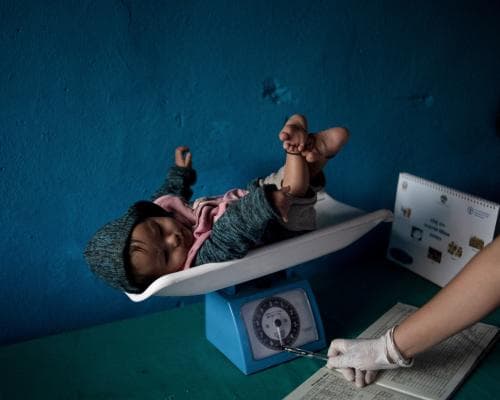
The largest ever survey of children under five in Nepal has delivered a stark verdict: child malnutrition has reached ‘alarming’ levels, with wasting rates in the Madhesh province hitting 12.3% — well above the World Health Organization’s 10% threshold for immediate intervention. This is not a slow-burn tragedy. It is the direct consequence of a sudden, politically driven withdrawal of US aid in 2025, which severed the supply chains, community health networks, and therapeutic food programs that had helped cut under-five mortality by 72% between 1996 and 2022. For the deep-tech and public health communities, the signal is unmistakable: even the most effective biotech interventions — from ready-to-use therapeutic foods to micronutrient powders — are only as strong as the funding and logistics that deliver them.
At the center of this crisis is Pooja Pandey Rana, Helen Keller Intl’s country director for Nepal, who ran the now-axed USAID nutrition programs. Her warning is precise: a malnourished child faces a 12-fold higher risk of death compared to a healthy one. The screening, conducted over three weeks in May, weighed and measured more than one million children aged six months to five years — roughly half the target population. In remote areas, the true rates may be even higher. The numbers are a data-driven alarm: 7.8% of children suffer from wasting, 1.6% from severe wasting, and 17.4% are underweight. These are not abstract statistics; they are the real-world output of a collapsed intervention pipeline.
The technology that could address this is already mature: precision agriculture tools for biofortified crops, AI-driven supply chain optimization for therapeutic food distribution, and low-cost point-of-care diagnostics for early detection of malnutrition. Startups in the ag-biotech and digital health space — from companies developing drought-resistant, high-iron lentils to those using satellite imagery to predict food insecurity — have the tools. What they lack is the capital continuity and political stability to deploy at scale. The USAID shutdown removed $60 billion in annual funding, creating a vacuum that no single private player has yet filled. The result is a regression to pre-intervention baselines, as Pandey Rana fears: ‘We are now backsliding.’
This crisis places Nepal at the intersection of a larger global reckoning. The World Bank and Gates Foundation have long championed nutrition as a high-return investment — every dollar spent on reducing stunting yields $16 in economic returns. But the current funding gap exposes a structural vulnerability: the most effective biotech solutions are deployed through government and NGO networks that are themselves subject to geopolitical whiplash. Meanwhile, the private sector remains hesitant to enter markets where margins are thin and distribution is mountainous. The competitive landscape is not about which company has the best probiotic or fortified food; it is about who can build a self-sustaining last-mile infrastructure that outlasts any single donor.
For the innovation ecosystem, the lesson is brutal but clear: the next generation of malnutrition interventions must be designed for resilience, not just efficacy. That means decentralizing production of therapeutic foods, using blockchain for transparent aid tracking, and embedding diagnostic AI into community health workers’ phones. Nepal’s data — the 12.3% wasting rate, the 24.2% underweight rate in Madhesh — is a live case study in what happens when the biotech supply chain is severed. The question is whether the industry will treat this as a market signal to build redundancy, or as another forgotten headline.
The forward path lies in coupling biological innovation with financial innovation. Impact bonds, outcome-based contracts, and pooled funding mechanisms could insulate critical nutrition programs from single-source dependency. If the billionaire class — from Gates to Bezos to the new wave of tech philanthropists — is serious about world-changing technology, this is the test case. The technology to save these children exists. What is missing is the will to build a system that cannot be switched off by a single political decision. Nepal’s children are the canary in the coal mine for global health resilience. The rest of the world should be measuring their own supply chains against that 12.3%.
More in INNOVATION

The $1.3 Trillion Exodus: How America’s Community Bankers Are Fighting to Keep Rural Wealth From Vanishing Into Crypto’s Black Hole

The Next Frontier in Crypto Crime: Predatory Seed-Phrase Recovery Scams Signal a Darker Fintech Underbelly

The Sovereign Mind: OpenAI’s GPT 5.6 Sol and the New Geometry of Power