The Gardener Who Paused to Help — and Vanished Into the Machinery of a Nation
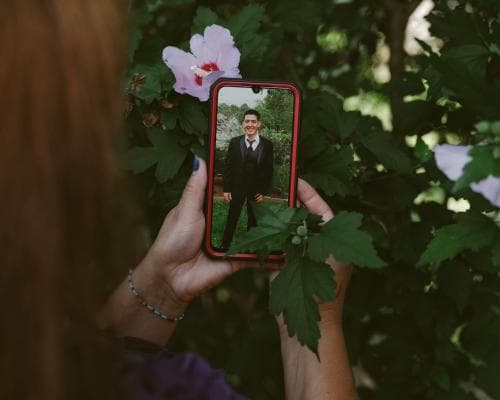
The afternoon sun was soft over Rhinebeck, that postcard-perfect stretch of the Hudson Valley where white clapboard houses and heirloom rose gardens make time feel decorously slow. Gerson Turcios had just finished mowing a lawn, his shirt damp with honest work, when he noticed two dark SUVs idling outside his rented home. The men standing beside them looked lost. So he did what any well-mannered young man in a small town would do: he walked over to help. That gesture — instinctive, neighborly, utterly human — would cost him his freedom. Within minutes, Turcios was handcuffed in the back of one of those SUVs, his life in Rhinebeck reduced to a blur of flashing lights and a photograph snapped by a stranger who had asked, with chilling casualness, where he was from.
For the ultra-wealthy who summer in Rhinebeck — the hedge funders, the gallery owners, the weekenders who collect Shaker furniture and drink natural wine at the Beekman Arms — the lawn is a canvas. It is manicured to a velvet perfection, edged with the precision of a Rothko line. The people who tend those lawns are often invisible, their labor as essential as it is unacknowledged. Turcios was one of them: a 23-year-old from Honduras who had crossed rivers and deserts as a teenager, fleeing violence that would make most of us flinch. He built a life here, mowing grass, planting annuals, learning the names of native perennials. He was, by every account, a hard-working kid — the kind of kid who stops to help strangers who look lost. That is the cruel irony at the heart of his story: his decency is what got him caught.
The machinery that swallowed Turcios is vast and impersonal, but its human cost is achingly specific. Detained first in Newburgh, then moved to a facility far from the Hudson Valley’s gentle hills, he joined the nearly quarter of a million people deported from inside the US in the past year. The statistics are staggering — half a million including border apprehensions — but they are also numbing. What the numbers cannot convey is the texture of a life interrupted: the lawn left half-mowed, the brother left to explain, the neighbors who suddenly realize they never learned the gardener’s last name. In Rhinebeck, though, something remarkable happened. The town did not look away. Neighbors organized, lawyers volunteered, and a quiet, fierce campaign to bring Turcios home began. It is a story that feels almost antique in its simplicity — a community rallying around one of its own — yet it cuts against the grain of a national conversation that has grown deaf to individual mercy.
What Turcios’s case reveals about taste, in the most elevated sense, is not about art or architecture but about the moral texture of a place. The ultra-wealthy are often drawn to Rhinebeck for its authenticity, its resistance to the glossy sameness of the Hamptons. They pay a premium for the privilege of living in a town that still has a five-and-dime, a town where the farmer’s market vendors know your name. But authenticity is not a surface; it is a practice. It means recognizing that the young man who trims your boxwoods is not a service provider but a neighbor. It means understanding that the beauty of a place is inseparable from the dignity of the people who maintain it. Rhinebeck’s fight for Turcios is, in that sense, a kind of curation — a deliberate choice about what kind of community to be.
The collector’s market, like the immigration system, is driven by scarcity and desire. We covet what is rare, what is hard to obtain, what has a provenance that adds to its value. But Turcios’s story flips that logic. Here is a young man whose value is not in his rarity but in his ordinariness — his willingness to work, to help, to belong. The town’s campaign to free him is not a political statement; it is a declaration of what they already know: that a community is only as rich as its least powerful member. In a world where the ultra-wealthy spend millions on a painting that will hang in a climate-controlled room, Rhinebeck is investing in something far more precious — the principle that a life is not disposable, that a gardener is not a fixture, that a kid who stopped to help should not be punished for it.
As the legal battle grinds on, Turcios remains in detention, his future uncertain. But his story has already altered the town’s sense of itself. Neighbors who once exchanged pleasantries over hedges now exchange phone numbers. The lawns are still mowed, the roses still pruned, but there is a new awareness that the hands doing that work belong to people with names, with histories, with dreams. And that is the quiet revolution of Rhinebeck: not a protest, not a slogan, but a refusal to let a young man’s kindness become his crime. In the end, the true luxury is not the manicured lawn or the historic home; it is the freedom to walk toward a stranger and offer help, without fearing that the gesture will be your undoing. That is what Gerson Turcios lost, and what Rhinebeck is fighting to give back.