Noma's New Menu: Can Fine Dining Survive Its Own Genius?
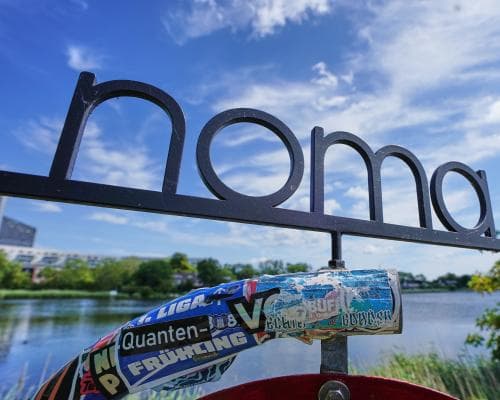
When Pablo Soto steps into the kitchen at Noma next week, he won't just be taking over the world's most celebrated restaurant. He'll be piloting an experiment: can the temple of culinary perfection, built on the relentless drive of a single genius, be rebuilt on a foundation of ordinary human decency? The answer will ripple far beyond Copenhagen's cobblestone streets.
For two decades, Noma was the Mount Everest of fine dining — a place where chefs came to conquer, not to thrive. René Redzepi, the co-founder and star chef, turned Nordic foraging into a global obsession, earning five 'world's best' titles and three Michelin stars. But earlier this year, the mountain began to crumble. A New York Times investigation detailed accusations of physical and psychological abuse — punching, screaming, public shaming — that left former employees describing work as 'going to war.' Redzepi stepped down, apologizing to 'those who have suffered under my leadership.'
Now, Soto — a nine-year Noma veteran — is rewriting the playbook. The most visible change is a monthly evolving menu, replacing the old seasonal one. But the deeper shift is cultural: a 'heightened focus on enabling employees to live full lives.' That phrase, in an industry built on 16-hour shifts and military discipline, is nothing short of revolutionary. The question is whether the food can survive the humanity.
Soto insists it's still 'the same Noma,' and Redzepi will retain creative influence from a distance. But the power dynamic has inverted. The chef who once ruled with fear is now a consultant, not a king. This is more than a staffing change; it's a governance model for the creative economy. When the visionary becomes a liability, how do you preserve the vision without the visionary's toxicity? Noma is the test case.
The broader industry is watching. Fine dining has long been a pyramid scheme of suffering, with apprentices enduring abuse to earn their place at the top. But the post-pandemic labor market has shifted. Young chefs are demanding better pay, reasonable hours, and psychological safety. In Paris, Tokyo, and New York, kitchens are quietly adopting 'no shouting' policies and mental health days. Noma's reboot, if successful, could accelerate this shift — proving that excellence doesn't require cruelty.
Yet the skeptics are loud. Can a menu that changes monthly — a logistical nightmare — maintain the precision that earned three stars? Can a kitchen where people 'live full lives' produce the obsessive, microscopic detail that made Noma a pilgrimage site? The history of creativity suggests a trade-off. But Soto is betting that a calmer kitchen will breed more inventive cooking, not less. He's also betting that diners, who now scrutinize where their food comes from, will start scrutinizing who makes it.
There's a deeper irony here. Redzepi's fall mirrors the broader reckoning facing tech billionaires and venture-backed founders who built empires on 'move fast and break things' — including people. The cult of the founder, whether in a kitchen or a Silicon Valley boardroom, is collapsing under the weight of its own collateral damage. Noma's new model is a quiet but powerful counter-narrative: you can build a great institution without breaking its people.
The next few months will be telling. If Noma thrives, it will become a blueprint for the creative industries — a proof point that genius can be collaborative, not coercive. If it fails, the excuse will be that 'greatness requires sacrifice.' But Soto's real innovation isn't the menu. It's the message: that the future of elite work is not about endurance, but about sustainability. And that, perhaps, is the most radical dish Noma has ever served.