Ed Miliband's Foreign Office Playbook: Climate, EU Reset, and the Battle for Global Order
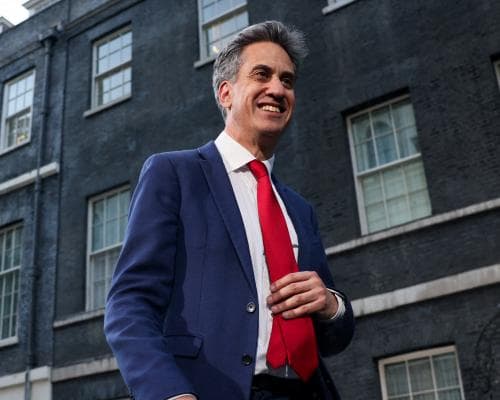
For decades, the Foreign Office has been the quiet consolation prize of British politics — a place for ambitious ministers to park their careers while the real power sits in Downing Street. Ed Miliband, the new foreign secretary, is having none of it. His allies describe a man with an 'immense appetite to get things done,' not a resentful also-ran who missed the Treasury. This is a policy obsessive who sees the job as the ultimate leverage point for shaping the next decade — and he is already sketching a playbook that could rewire Britain's place in the world.
Miliband's core bet is that the UK's biggest challenge is not military or even economic, but relational: the European Union. He is preparing a distinct agenda for EU relations over the next decade, working closely with new Europe minister Hamish Falconer. The subtext is clear: the Brexit era of bluster is over, and the era of quiet, technical re-engagement has begun. Miliband understands that the single biggest question facing the UK is how to build a stable, mutually beneficial relationship with the bloc — not through grand gestures, but through incremental, policy-driven trust-building. This is the kind of long-horizon thinking that usually belongs in corporate strategy rooms, not diplomatic cables.
But the EU is just the opening move. Miliband is also gearing up for Britain's chairmanship of the G20 next year, and he is determined to use that platform to drive the climate crisis up the global agenda. This is not your grandfather's climate diplomacy. Miliband is likely to push for binding commitments on green technology transfer, carbon pricing alignment, and perhaps even a global carbon border adjustment mechanism. He knows that the climate crisis is not a niche issue for environmentalists — it is the ultimate security threat, economic disruptor, and geopolitical weapon all rolled into one. And he is positioning the UK as the honest broker between the US, China, and Europe on this front, even as Washington's alliance grows more volatile.
Miliband arrives at a Foreign Office in flux. He is the tenth foreign secretary since William Hague stepped aside in 2014, and he has no permanent secretary after the sacking of Olly Robbins. Staff are on rolling strike over job cuts. Yet Miliband seems undeterred. He is a policy-driven operator who thrives on complexity, and he is already wading into the most contentious debates about the future international order. On Palestine, his instincts are clear — he urged his MPs to recognize Palestine back in 2014 — but he is pragmatic enough to know that progress will be slow, especially with Israeli elections and the fragile glimmer of Hamas disarmament.
The market here is not just diplomatic — it is the global order itself. Miliband is betting that the UK can be a niche player in the new multipolar world, not by clinging to a fading empire, but by being the most creative, policy-savvy middle power. This is a sharp contrast to the transactional, short-termism that has dominated Western diplomacy for the past decade. He is signaling that the UK will invest in institutions, not just relationships; in rules, not just deals. For investors and tech leaders, this means a more predictable, climate-focused, EU-aligned Britain — a country that could become a hub for green finance, carbon markets, and cross-border innovation.
What does this mean for the wider sector? It suggests a return to a kind of diplomatic industrial policy — where foreign ministries are not just talking shops, but engines of economic and technological advantage. The G20 chairmanship will be Miliband's stage to test this thesis, and the climate crisis will be his stress test. If he succeeds, he could redefine what a foreign secretary does in the 21st century: not just a crisis manager, but a long-term architect of global rules. If he fails, he will be just another name on the plaque at King Charles Street. But given his track record of policy tenacity — from the Labour leadership to the climate brief — the smart money is on him making the office matter again. Watch this space: the next decade of British diplomacy just got interesting.