The Crown’s AI Gambit: Britain’s Billion-Dollar Dance Between Ambition and Caution
Imagine standing at the edge of a private helipad, the London skyline glinting through morning fog, your pilot waiting for a destination. But you can’t decide whether to lift off or stay grounded. That, in essence, is the United Kingdom’s current posture in the global AI race—a nation of immense historical wealth and institutional power, poised for a leap into the future, yet held back by a distinctly British fear of overreach. For the ultra-wealthy, this isn’t just a policy debate. It’s a signal about where to park capital, which boardrooms to court, and whether the next trillion-dollar fortune will be minted in London, Silicon Valley, or Shenzhen.
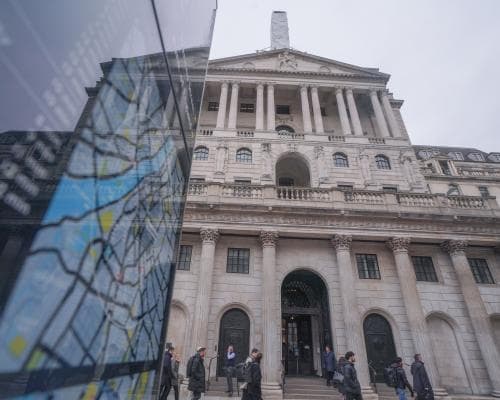
The Bank of England, that venerable keeper of the realm’s financial stability, is about to loosen its corset. In the coming weeks, regulators plan to ease capital rules first tightened after the 2008 financial crisis—a move designed to unleash a fresh wave of lending. Investors, particularly hedge funds, are already clamoring for more liquidity to pour into AI-related equities. The numbers are staggering: global AI investment is expected to surpass $200 billion this year alone, and the UK wants a piece. But here’s the rub: the same central bank that’s easing the rules is also sounding alarms. Governor Andrew Bailey recently warned of a “triple whammy”—oversized investment in AI stocks, slower-than-expected adoption, and the breakneck pace of development that could leave even established giants in the dust. It’s a rare moment of public self-doubt from an institution that prides itself on stoic confidence.
This tension is the hallmark of a luxury market in transition. The UK’s position is not unlike that of a bespoke tailor who suddenly must decide whether to mass-produce. The craftsmanship of British finance—its deep reserves, its regulatory rigor, its centuries-old reputation for prudence—is both a strength and a shackle. The capital rules being relaxed were designed to prevent another 2008-style collapse, but they also throttled the kind of aggressive, high-risk lending that fuels tech booms. Now, as the US and China charge ahead with near-religious fervor—American giants like OpenAI and Apple betting their entire futures on AI—the UK is trying to thread a needle: mobilize resources without igniting a bubble. For the discerning investor, this means opportunity. The looser lending environment will likely create a new class of AI startups in London, Cambridge, and Oxford, firms that may not have the flash of Silicon Valley but offer the stability of blue-chip heritage. Think of it as the difference between a limited-edition Patek Philippe and a smartwatch: both tell time, but one holds value across generations.
What this signals about wealth and taste is profound. The ultra-wealthy have long understood that true status isn’t just about acquisition—it’s about timing. The UK’s cautious AI play is a masterclass in knowing when to hold and when to fold. While American billionaires are all-in on a single industry, the British approach is more akin to a diversified art collection: a bit of Old Master, a splash of contemporary, and a whisper of emerging talent. Governor Bailey’s public warnings, rather than spooking the market, may actually attract the kind of patient capital that seeks long-term value over speculative frenzy. The risk of a sharp correction is real, he said, but he offered no new policies to guard against it. That’s not negligence—it’s a signal that the market, not the state, should decide the winners. For the readers of this magazine, that is the ultimate luxury: the freedom to bet big, but with eyes wide open.
Looking forward, the UK’s AI trajectory will be defined not by speed, but by selectivity. The coming months will see a surge in lending to hedge funds and venture firms that specialize in AI, and the first wave of exits—IPOs, acquisitions, or private placements—will test the market’s appetite. The real prize, however, isn’t just financial. It’s the creation of an ecosystem where British expertise in law, finance, and engineering converges with American capital and Chinese manufacturing. For those with the means, the play is simple: identify the firms that combine AI’s raw power with the UK’s institutional wisdom. That might mean a startup developing AI for luxury supply chains, or a fund that invests in AI-driven art authentication. The crown may not win the race to the moon, but it could own the most valuable real estate along the way.
The Experience
For a private briefing on AI investment opportunities in the UK, book a consultation with our wealth advisory desk—where discretion meets the future of capital.