The $1,600 Laptop That Taps Back: Microsoft’s Surface Laptop 8 and the New Currency of Haptic Luxury
Imagine this: you glide your finger across a laptop’s trackpad, and instead of a dead, glassy silence, you feel a tiny, precise tap. Not a click. A whisper of feedback. That is the Surface Laptop 8’s party trick — and it is the sort of detail that separates a tool from a treasure. For the ultra-wealthy, the best objects don’t just work; they communicate. They talk back. And in a world where the difference between a $1,000 machine and a $1,600 one often comes down to a badge, Microsoft has bet big that the richest consumers will pay a premium for a machine that actually touches them.
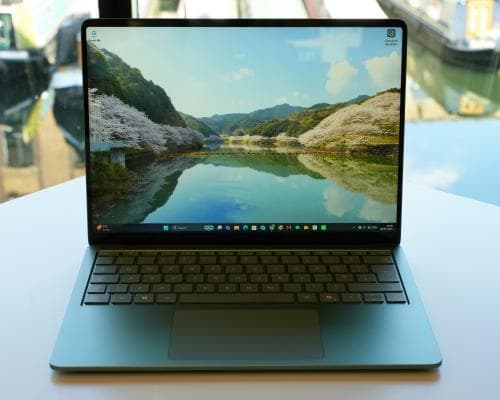
Let’s talk numbers, because in luxury, price is a signal. The Surface Laptop 8 starts at £1,449 — roughly $1,600 — a staggering £400 jump over its predecessor. The culprit? RAMageddon, the industry’s polite term for the skyrocketing cost of memory and chips. But to the discerning buyer, that price hike isn’t a burden; it’s a filter. This is not a laptop for everyone. It is a laptop for someone who values the haptic tap of a closing window, the crisp 120Hz refresh rate of a 13.8-inch LCD screen, and the quiet hum of a Qualcomm Snapdragon X2 Elite processor that runs cool while rivals burn. The jade green finish alone — a deep, jewel-like hue — makes the aluminum body feel less like a gadget and more like a piece of jewelry.
Craftsmanship is the soul of this machine. The keyboard is satisfying in the way a well-tuned piano key is. The speakers are clear and full, if light on bass — think a chamber quartet, not a nightclub. The display supports HDR and Dolby Vision, though its glossy coating catches overhead light like a polished gemstone. And then there is the haptic trackpad: a feature that uses tiny vibrations to simulate physical feedback. When you hover over the close button, you feel it. When you snap a window to the side, you feel that too. It is a small, almost invisible upgrade — but in the world of bespoke luxury, it is the difference between a suit off the rack and one that knows your shoulders.
What does this tell us about wealth and taste? That the ultra-wealthy are no longer satisfied with raw power alone. The Surface Laptop 8 is fast — 16 to 20 percent faster in single-core performance than the last generation — but it still lags behind Apple’s M5 MacBook Air. That is not the point. The point is battery life: nearly 14 hours of real work, with 15 browser tabs open, chat apps running, and a text editor humming along. For the globe-trotting CEO or the hedge fund manager who lives on planes, that endurance is worth more than a benchmark score. The machine runs silently most of the time, too — no fan noise to interrupt a Zoom call with a private equity board. It is a statement that power and poise can coexist.
Looking ahead, Microsoft is playing a long game. The Surface Laptop 8 is the second generation of its ARM-based, Qualcomm-powered revolution — a direct challenge to Apple’s dominance in thin-and-light computing. The haptic trackpad is just the beginning. As Windows 11 evolves, expect more tactile gestures, more subtle cues that blur the line between screen and skin. For the buyer who already owns a private jet, a Patek Philippe, and a villa in Capri, the next frontier is not faster chips. It is a machine that feels alive. The Surface Laptop 8 is not perfect — the glare on that glossy screen will annoy you in a sunlit study — but it is the first laptop that actually taps you back. And in a world of silent, soulless rectangles, that is a luxury worth paying for.
The Experience
Book a private, no-pressure demo at a Microsoft Signature Suite in New York, London, or Dubai — where you can feel the haptic trackpad for yourself over champagne and a curated playlist.