The Drone War Escalates: How Precision Strikes Are Redrawing the Middle East’s Battlefield

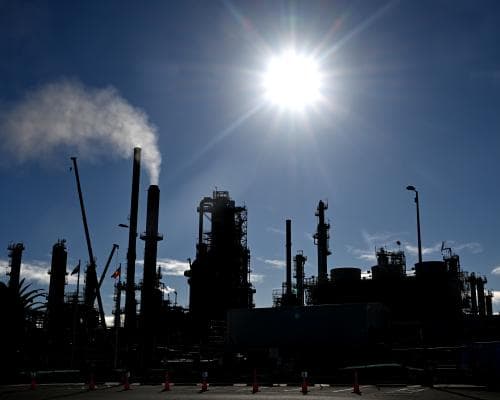
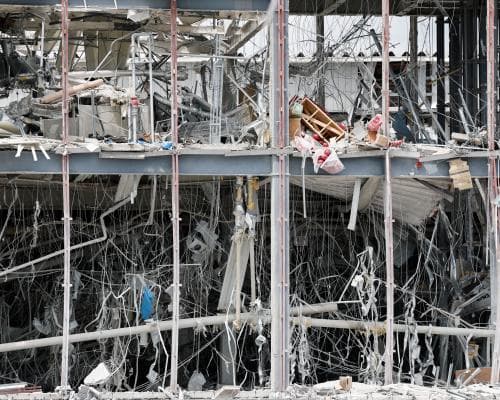
A gas port in Egypt. A floating storage tanker off Damietta. A convoy of Shia militia fighters in Iraq. These aren’t random targets. They are nodes in a new kind of battlefield — one where a $20,000 drone can cripple a billion-dollar energy asset, and where the line between state warfare and proxy skirmishes has been erased entirely.
This week’s US-Saudi strikes on Iraq’s Popular Mobilisation Forces (PMF) — killing at least 20 fighters — weren’t just another round of tit-for-tat. They were a public declaration that Riyadh is no longer a silent partner in America’s air campaign. When Saudi jets joined American bombers to hit Iranian-backed targets inside Iraq, the region entered what analysts now call “uncharted territory.” The old playbook of deniable strikes and back-channel deterrence is dead. What’s replacing it is faster, more distributed, and far harder to control.
Look at the technology at play. The PMF is a network of Shia-majority factions, established in 2014 to fight ISIS under Iranian general Qassem Suleimani’s supervision. It’s not a conventional army. It’s a decentralized web of militias, each with its own supply chains, drone workshops, and missile caches. Iran has spent years equipping these groups with loitering munitions, precision-guided rockets, and one-way attack drones — the same kind that hit a US base in Jordan and, separately, struck a US-owned tanker off Egypt’s coast this week. The source of that Egyptian drone remains unclear, but the pattern is unmistakable: non-state actors are now deploying state-level strike capabilities.
This is where the capital story gets interesting. The global defense tech market is pivoting hard toward counter-drone systems, electronic warfare, and autonomous surveillance. Venture funds that once shunned “hardware” are pouring billions into startups like Anduril, Shield AI, and Israel’s Robotican — companies building AI-driven detection networks and laser-based interceptors. The US Department of Defense’s Replicator initiative, which aims to field thousands of attritable drones by 2025, is the clearest signal yet that mass and speed now trump platform sophistication. The old F-35 vs. Su-57 dogfight narrative is giving way to something more mundane and terrifying: swarms of cheap, expendable drones overwhelming layered air defenses.
The market context is brutal. The tit-for-tat strikes this week — Iran hitting US positions in Jordan, the US and Saudi hitting PMF sites in Iraq, and the drone strike on Egypt’s Mediterranean coast — suggest the fragile pause in direct US-Iran hostilities is over. Each escalation creates demand for new defensive technologies: hardened energy infrastructure, maritime drone patrols, and AI-powered threat prediction. For investors, the signal is clear: the Middle East is becoming a live-fire testbed for next-gen defense tech, and the companies that prove themselves here will own the global market for a decade.
What does this mean for the sector? First, the line between “defense” and “energy security” is dissolving. A gas port is now a military target. A tanker is a floating vulnerability. Second, the monopoly on precision strikes is breaking. Non-state actors — backed by state sponsors — can now hit strategic infrastructure with off-the-shelf technology. Third, the US-Saudi alliance is deepening its operational integration, which will accelerate joint procurement of counter-drone and ISR (intelligence, surveillance, reconnaissance) systems.
The forward view is unsettling but clear. The next war won’t start with a declaration. It will start with a drone over a port, a flash of light, and a plume of smoke. The billionaires and defense tech founders who understand that asymmetry — who build systems that can track, identify, and neutralize a $5,000 threat before it hits a $500 million asset — will define the next era of national security. The old guard of tanks and fighter jets is still important, but the real action is in the invisible, autonomous, and cheap. The region has entered uncharted territory. The technology to navigate it is being built right now.