Australia’s $4m Refinery Study Is a Bet on Yesterday’s Energy
The Australian government just dropped $4 million on a feasibility study for a new oil refinery in the Pilbara. Climate experts called it what it is: a study of dinosaur technology. Greg Bourne, a former BP regional president and now a Climate Council councillor, put it bluntly. Over the next 20 to 30 years, he said, you’d have to be blind to think this thing turns a profit. Australia is sprinting into renewables. In ten years, we’ll need less oil. In twenty, the refinery is a monument to a dying industry.
This isn’t just a policy squabble. It’s a signal. The Albanese government announced the study alongside the WA government on Tuesday, framing it as a fuel-security measure. But the real story is the gap between that framing and what the numbers say. Professor Frank Jotzo, director of the Centre for Climate and Energy Policy at ANU, called the move a “big signal against the clean energy transition” at this week’s Clean Energy Summit. When the people who model carbon leakage and stranded assets tell you a project is uneconomic before the first shovel hits dirt, you should listen.
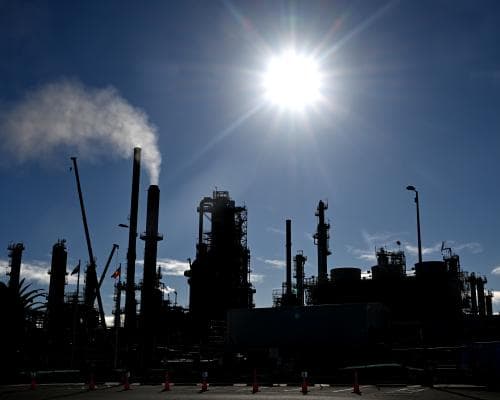
Let’s talk about the technology itself. An oil refinery is a massive, capital-intensive beast. It’s a maze of pipes, distillation columns, and cracking units that separate crude into gasoline, diesel, and jet fuel. The Pilbara proposal would be a greenfield build in one of the most remote, hot, and cyclone-prone regions on Earth. Construction costs would balloon. Operating costs would be brutal. And the product? A fossil fuel that faces declining demand as electric vehicles, renewable hydrogen, and synthetic fuels eat its lunch. Bourne, who spent decades inside BP’s refining business, knows the math. “From a commercial point of view, you’ve got to be able to make sure you’re going to get a profitable return over the next 20, 30 years,” he told reporters. He doesn’t believe that’s possible.
The competitive context is even uglier. Asia is awash in refinery capacity. Singapore, South Korea, and China have modern, efficient plants that can produce fuels cheaper than any new Australian facility ever could. Australia already imports most of its refined fuel. Building a new refinery would require massive government subsidies—likely billions—to even approach viability. That’s money that could go to grid-scale batteries, pumped hydro, or domestic renewable fuel production. Jotzo’s work on carbon leakage shows that propping up fossil infrastructure in a high-cost country like Australia simply shifts emissions elsewhere while locking in decades of pollution.
What does this signal for the sector? It signals that the clean energy transition is now a live political fight, not a theoretical one. Governments still feel the gravitational pull of legacy industries, especially when fuel security is the buzzword. But the experts are unanimous: the future is not a new oil refinery. It’s green hydrogen, synthetic kerosene, and electrification. The $4 million study will likely confirm what everyone already knows—that the project is a non-starter. The real question is whether policymakers will listen, or whether they’ll let the sunk-cost fallacy drag them into a multibillion-dollar white elephant.
So here’s the forward look. In five years, we’ll look back at this feasibility study the way we now look at proposals for new coal plants in the 2010s—as a last gasp. The capital markets are already voting. Global investors are fleeing new fossil infrastructure. Insurance premiums for refineries are rising. And the talent? The best engineers and project managers are chasing gigs in solar, wind, and battery storage. Australia has a choice: spend billions on a refinery that will be obsolete before its first barrel, or double down on the technologies that will actually power the next economy. The study is a test. The answer, if we’re honest, is already written.