The Race Against Rubble: How Japan’s Next Earthquake Response Will Be Robotic
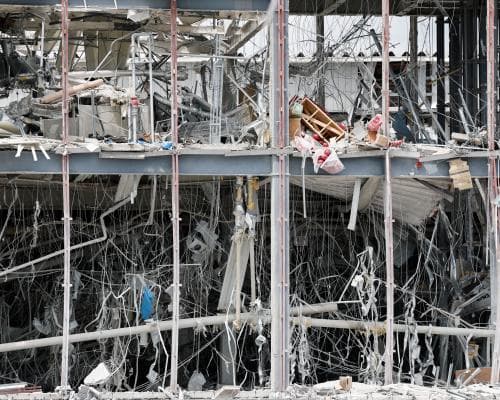
The explosion came an hour after the ground stopped shaking. Takateru Sonoda, a salon owner near Kumamoto, thought a bomb had gone off. In reality, a gas leak had torn through an Aeon shopping centre, burying workers under concrete and steel. Rescue teams pulled eight people out, but four remain unaccounted for. Across the region, 37,000 homes are dark, 9,500 have no gas, and the prime minister, Sanae Takaichi, has declared a “race against time.”
This race is still being run by humans with crowbars, flashlights, and sheer grit. That is the problem. Japan is the most seismically prepared nation on Earth — its buildings sway, its trains stop, its citizens drill from childhood. Yet when the dust settles, the actual extraction of trapped survivors looks nearly identical to what it did after the 1995 Kobe earthquake. The bottleneck is not prediction; it is intervention. And the technology to change that — search-and-rescue robotics — remains stuck in labs, pilot programs, and underfunded government initiatives.
The pieces already exist. Quadrupedal robots like Boston Dynamics’ Spot can navigate unstable debris, carry sensors, and map voids too small or dangerous for human rescuers. Snake-like robots from Japan’s own Tohoku University can slither through narrow gaps in collapsed structures, equipped with cameras and microphones to locate survivors. Aerial drones can scan entire disaster zones in minutes, using thermal imaging to spot body heat through rubble. None of these were deployed at scale in Kumamoto. The reason is not capability; it is coordination, cost, and cultural inertia.
The capital story here is instructive. Japan’s robotics sector is world-class — Fanuc, Yaskawa, and SoftBank have poured billions into industrial and service robots. But disaster robotics is a different beast. It requires ruggedization, real-time communication in network-failed zones, and a procurement system that can move faster than a bureaucratic committee. The government’s own Disaster Robotics Task Force, established after the 2011 Fukushima meltdown, has produced impressive prototypes — but few have been field-tested in a live, large-scale event like this one. The market is stuck in a chicken-and-egg loop: no proven demand means no mass production, which means high unit costs, which means no adoption.
Meanwhile, the competitive landscape is shifting. China’s DJI now dominates the consumer drone market and has quietly built a line of industrial inspection drones that could easily be adapted for search-and-rescue. The U.S. Department of Defense has funded DARPA’s Subterranean Challenge, which pushed teams to develop robots for underground disaster scenarios — and the winners included a snake robot from Carnegie Mellon and a legged bot from NASA’s Jet Propulsion Laboratory. Japan risks losing its edge not because its engineers are less brilliant, but because its deployment pipeline is clogged.
The signal for the sector is unmistakable. Every major earthquake — from Nepal in 2015 to Turkey in 2023 — repeats the same pattern: heroic human rescue efforts, heartbreaking death tolls, and a brief surge of interest in robotic alternatives that fades before the next tremor. The difference now is the convergence of cheaper sensors, better AI, and a generation of investors who have seen what autonomous systems can do in warehouses and battlefields. The question is no longer whether robotics can save lives in disasters. It is whether the political will and procurement reform can arrive before the next “race against time” begins.
The forward-looking close is both sobering and hopeful. Japan will rebuild Kumamoto, as it always does. But the real test of its innovation muscle will come in the quiet months after the cameras leave. If the government fast-tracks a national disaster robotics corps — funded by a mix of public money and private capital from the same billionaires who back SpaceX and autonomous delivery — the next earthquake response could look radically different. Imagine a swarm of drones overhead, a dozen legged bots crawling through rubble, and a command center streaming real-time survivor locations to human rescue teams. That future is technically possible today. The only missing ingredient is the decision to build it.