The Thin Air Between Glory and Silence: Nirmal Purja and the New Age of Extreme Alpinism
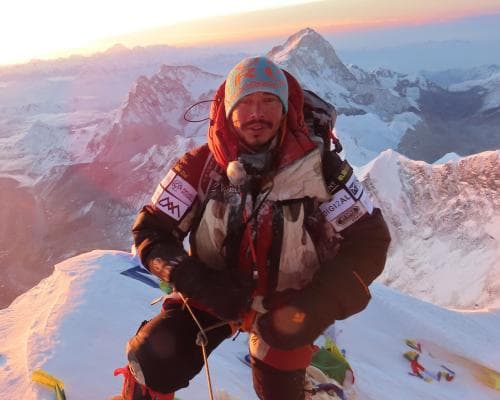
At 8,051 metres, Broad Peak is not the tallest of the Karakoram giants, but it is among the most unforgiving. It is a mountain that rewards patience and punishes pride, a place where the air is so thin that a single misstep can turn a triumphant summit into a silent disappearance. On a grey Friday in July, the mountain claimed its latest toll: an avalanche swept across a team of eleven climbers, including Nirmal Purja, the man who redefined what the human body can do above 8,000 metres.
For those who follow the high-altitude world, Purja needs no introduction. The former Gurkha and British special forces operator became a global icon in 2019 when he climbed all fourteen of the world's 8,000-metre peaks in just over six months, shattering the previous record by years. He followed that with the first winter summit of K2, a feat long considered impossible. His expeditions have been chronicled in breathless documentaries, his Instagram feed a scroll of summit selfies and oxygen-mask grins. He is, in the truest sense, a celebrity of the death zone — a man whose name evokes both awe and, in some circles, controversy.
But this story is not just about Purja. It is about the shifting demographics of extreme mountaineering, and the growing number of wealthy adventurers who now book seats on these lethal summits as if they were business-class upgrades. Among the dead is Nadhira Alharthy, the first Omani to climb Everest, a trailblazer who had become a symbol of possibility for a new generation of Middle Eastern climbers. Also lost is Mallory Geis, an American climber whose name now joins a grim roll call of those who sought the world's highest places and found only the mountain's cold embrace. Their bodies have been recovered and taken to a hospital, but the search for the others, including Purja, continues — halted at nightfall, hampered by weather and a stark logistical gap.
That gap is worth pausing on. In Nepal, a private helicopter rescue industry has grown up around the Everest economy, with operators on standby to pluck climbers off the mountain at a moment's notice. Pakistan, by contrast, relies on military helicopters, which are fewer, slower to deploy, and subject to the whims of a government that has other priorities. For the ultra-wealthy climber, this difference is not a footnote; it is a life-or-death calculus. The Karakoram is wilder, more remote, and far less forgiving than the Himalaya — and yet it is increasingly the destination of choice for those who have already ticked Everest and want something harder, something more exclusive.
This is the new luxury of the death zone. Not the luxury of marble bathrooms and Michelin-starred dinners, but the luxury of access — to permits, to Sherpa support, to the kind of logistical machinery that once belonged only to national expeditions. A private expedition to Broad Peak can cost upwards of $50,000, and that buys you a team of high-altitude porters, a base camp manager, and the illusion of safety. But as Friday's avalanche proved, no amount of money can buy control over a mountain that decides, in an instant, to take everything.
The trackers worn by the climbers told the story: a rapid loss of altitude, the signature of an avalanche sweeping a team down a face. Purja's tracker shifted location after the initial impact, suggesting he may have been carried further — whether alive or not, no one yet knows. The aerial drones that spotted seven climbers could not verify their identities or conditions. In the age of satellite phones and real-time tracking, this is the cruel paradox: we can see the mountain, but we cannot see the truth.
What does this mean for the future of extreme travel? For a certain kind of ultra-wealthy adventurer, the draw of the 8,000-metre peaks is only intensifying. They are the last places on Earth where the phrase 'no one has ever done this' still applies. But this tragedy is a reminder that the era of the celebrity climber may be giving way to something more sober — a recognition that the mountains are not a stage, but a grave. The next frontier for the truly wealthy may not be higher peaks, but deeper caution: better rescue infrastructure, more rigorous vetting, and a humility that the summits demand but rarely grant.
As night falls on Broad Peak, the search has paused, but the questions remain. Will Purja be found alive, adding another chapter to a legend already marked by near-miracles? Or will his name join the growing list of those who became the mountain itself? For those who watch from the comfort of their screens, it is a story of heroism and hubris. For those who climb, it is a reminder that the mountain does not care who you are. It only cares that you are there.