The $25 Ticket: Olivia Rodrigo’s Brooklyn Pop-Up and the New Currency of Cool
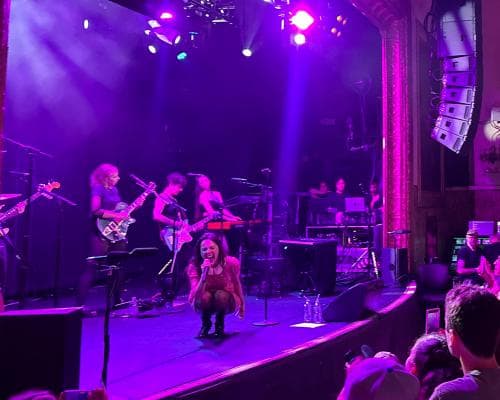
At 10am on a sweltering Thursday, Olivia Rodrigo’s Instagram feed blinked to life with a single, unadorned announcement: she would play Brooklyn that night. No fanfare, no countdown, no sponsored post. Just a time, a place, and a price—$25, cash at the box office, first come, first served. By 11:40am, the thousand wristbands were gone. The queue, which had curled around the block in 100-degree heat, was already being turned away. For the lucky few who made it inside Warsaw—a century-old Polish community hall turned punk shrine in Greenpoint—the evening would deliver something rarer than a private jet or a penthouse view: proximity to a generational star in a room that felt like a secret.
This is the new arithmetic of desire. In an era when the ultra-wealthy can buy anything—a first-edition Hemingway, a Bugatti Chiron, a week in a Malibu compound—the most elusive commodity is not objects but moments. Rodrigo’s pop-up concert was less a performance than a masterstroke of scarcity. The $25 ticket price was almost laughably modest, but the real cost was measured in geography, endurance, and luck. Fans who lived near Driggs Avenue or happened to be working remotely with a flexible laptop schedule had an edge; everyone else watched the wristbands evaporate. The result was a room of true believers, not corporate VIPs—a crowd that felt like a secret society, not a ticketing demographic.
For those who collect experiences the way others collect art, this is the ultimate acquisition: a memory that cannot be replicated, photographed, or resold. Rodrigo, 23, has spent the past fourteen months scaling the summit of pop—her third album, You Seem Pretty Sad for a Girl So in Love, debuted at No. 1 in June with the year’s biggest opening week by a female artist, and her upcoming 86-date world tour includes a ten-night stand at the O2. Yet here she was, in a ballroom that usually hosts hardcore bands and serves pierogi from a stand off stage right. The whiplash was intentional, and it was perfect.
What makes this moment so resonant for the luxury-minded is not the price tag but the inversion of it. The ultra-wealthy have long paid for exclusivity through cost—a $500,000 table at a gala, a $2 million suite at a five-star resort. Rodrigo flipped that script, making exclusivity a function of effort, not expense. The fans who showed up at 10:30am, who stood in the heat, who watched their MacBooks sweat in canvas totes—they earned the right to be there. In a world of algorithmic access, that sweat equity is the new black card. It’s the same logic that drives the waitlist for a Hermès Birkin or the private viewing of a Rothko: the difficulty is the point.
For collectors and tastemakers, the concert signals a broader shift in what constitutes status. The ultra-wealthy are increasingly trading visible opulence for what might be called “quiet scarcity”—things that cannot be bought at any price, only discovered. A hand-typed letter from a friend, a bottle of wine from a vineyard that only sells to members, a seat at a dinner where the guest list is a secret. Rodrigo’s show was a textbook example: no VIP section, no meet-and-greet, no merch drop. Just a thousand people in a room, sharing a moment that will be retold for years.
As the tour begins, the question is whether this kind of magic can be bottled. Rodrigo’s stadium shows will be spectacular, but they will be a different animal—a spectacle, not a secret. The Brooklyn pop-up was a reminder that the most precious thing in a hyper-commodified world is the uncommodifiable: a Tuesday night in a Polish hall, a girl with a guitar, and the feeling that you were there before anyone else knew to be. For the luxury set, that’s the true trophy—not what you own, but what you were lucky enough to witness. And in that, Rodrigo may have just given the 1% their most valuable lesson yet: the best things in life are still free. Or, at least, twenty-five dollars.