The Youngest Heavyweight Since Tyson: Moses Itauma’s Quiet Rise to the Brink of History
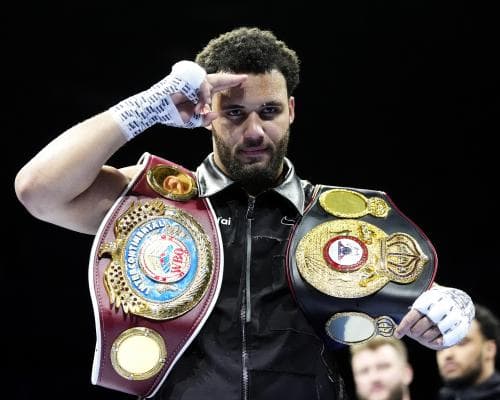
There is a particular kind of silence that precedes a heavyweight title fight — not the quiet of a library, but the stillness of a coiled spring. Moses Itauma, 21, sat in a London hotel suite on Friday afternoon and described his reaction to the news that his August 29 bout against Filip Hrgovic had been upgraded to a vacant IBF world title fight. His response was not a whoop of joy, nor a nervous gulp. It was a shrug, delivered in the flat, unhurried cadence of a man who has already seen the ending of this story. “I didn’t really have any reaction,” he said. “I was like, if I’m fighting Hrgovic and I’ve got the opportunity for it to be a world title, then yeah, chuck it on the line.”
That nonchalance is not arrogance — Itauma is too precise for that. It is the calm of a craftsman who knows his tools. The fight against Hrgovic, a Croatian heavyweight with a granite chin and a mean right hand, was already a serious assignment. Adding a belt to the stakes changes the optics, not the opponent. “It’s still the same fight, innit?” Itauma said, and you believe him, because he speaks like a man who has already run the tape in his head a hundred times. This is the same kid who, at 19, knocked out Dillian Whyte in under two minutes — a veteran who had shared a ring with Anthony Joshua and Povetkin, and who was dispatched with the kind of brutal efficiency that makes boxing purists lean forward in their seats.
The history books are already open, waiting. If Itauma beats Hrgovic, he will become the second-youngest heavyweight champion in the sport’s long and bloody history. The youngest remains Mike Tyson, who at 20 years and four months stopped Trevor Berbick in the second round in November 1986 — a fight so violent that Berbick, after a second knockdown, staggered across the ring like a drunk man on a sinking ship, fell, rose, toppled again, and finally collapsed in the opposite corner. Itauma has watched that fight, of course — every young heavyweight has. But he is not chasing ghosts. “Tyson’s had his career,” he said, with the polite finality of a man closing a door. “I’m still making my career.”
That career is being built with the patience of a collector acquiring a masterpiece — one brushstroke at a time. Itauma’s most recent outing, a five-round dismantling of Jermaine Franklin, drew effusive praise from Teddy Atlas, the legendary trainer who helped shape Tyson’s early ferocity. Atlas called it “the performance of a future champion,” and for once the hyperbole felt earned. Itauma moves like a lightweight, punches like a cruiserweight, and thinks like a chess player. He does not waste energy on bravado. He lets his fists do the talking, and they speak in a language that is universally understood: short, sharp, and final.
In the rarefied world of heavyweight boxing, where the difference between immortality and obscurity is often a single punch, Itauma represents something refreshingly modern. He is not a trash-talker, not a showman, not a social media provocateur. He is, in his own words, “not braggadocious, not swaggerdocious.” That understatement is itself a luxury — the confidence of a man who knows that the belt, when it comes, will fit perfectly around his waist. The market for heavyweight champions has always been volatile; the last decade has seen a carousel of champions, each with a asterisk next to their reign. Itauma, with his youth and his quiet menace, offers the promise of stability — a long reign, a coherent narrative, a fighter you can build a legacy around.
What Itauma signals, more than anything, is a shift in the taste of the boxing cognoscenti. The era of the loudmouth is fading. The new generation of fans — and the new generation of sponsors — wants excellence without the noise. They want a fighter who walks into the ring like he’s walking into a boardroom: measured, prepared, and utterly certain of the outcome. Itauma is that fighter. He does not need to sell the fight with words; his fists are the pitch, and they have never missed.
And so, on August 29 in London, a young man will step into the ring with a Croatian veteran and a vacant title on the line. The history books will be open on the table, waiting to be written. Itauma will not look at them. He will look at Hrgovic, and he will do what he has always done — let his fists deliver the final word. If he wins, he will not celebrate with a roar. He will nod, maybe smile, and then get back to work. Because for Moses Itauma, the youngest is not a destination. It is just a step on the way to becoming the greatest.