The Gravity of Silence: Remembering Jake Whisenant, Yosemite's Speed Demon
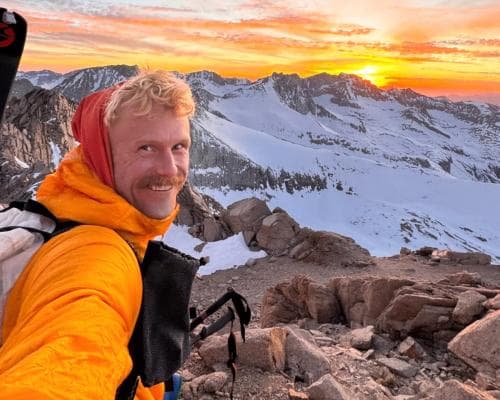
There is a particular kind of silence that lives at 3,000 feet on a granite wall. It is not the absence of sound, but the presence of gravity — a weight that presses into your chest as the valley floor shrinks to a rumor below. Jake Whisenant knew that silence intimately. He chased it, measured it, and broke it into seconds. On August 2, in the Sequoia and Kings Canyon wilderness, that silence became permanent. The 30-year-old from Mammoth Lakes fell to his death while attempting a first ascent, leaving a community of climbers, dreamers, and adrenaline architects to reckon with a loss that feels both impossible and inevitable.
Whisenant was not a household name in the way of sponsored athletes with film crews in tow. He was something rarer: a purist's purist, a man who moved through Yosemite like a rumor. His 2024 speed record on El Capitan's 2,000-foot route — two hours, 55 minutes, and 32 seconds, alongside his partner Brant Hysell — was not a publicity stunt. It was a meditation on efficiency, a choreography of chalk and nerve. In May, he and another partner completed the legendary Nose route twice in a single day, a feat that sounds like a typo until you see the calloused hands and the quiet, satisfied grin in the photos that follow. He described the record day as "a truly magical day that I'll never forget." He was right, though not in the way he meant.
The Sierra Nevada is not a place that negotiates. It is a landscape of absolutes — 14,000-foot peaks, glacial valleys, and walls of rock that have been patiently waiting for 100 million years. For the ultra-wealthy, this range has long been a playground of private lodges and helicopter drops, a place to sip bourbon by a fire after a day of "roughing it" at $2,000 a night. But Whisenant's Sierra was different. It was a place of first ascents and no safety nets, where the only amenity is the truth of your own grip. His death is a reminder that the mountains do not care about your net worth, your followers, or your résumé. They care only about your next move.
For those who travel to the high country seeking something beyond a room with a view, Whisenant's story is both a warning and an invitation. The climbing community has lost a poet of verticality, a man who grew up in the Sonoran Desert suburbs and found his cathedral in the granite. His fiancée, Emma London, wrote in an obituary that she "received the call that no one ever wants to get" — a line that will resonate with anyone who has ever loved someone who looks at a mountain and sees a question that must be answered. He studied environmental studies at UC Santa Barbara, picked up composting and surfing and cycling, and then he found the one thing that made all other motion feel like standing still.
What does this mean for the world of luxury travel? It is a quiet correction to the narrative that the wilderness can be bought, tamed, or Instagrammed into submission. The ultra-wealthy are increasingly seeking not just comfort but consequence — experiences that leave a mark. Whisenant's life was a masterclass in that pursuit, albeit at a level of risk that most would never consider. The resorts of Aspen and the chalets of Zermatt will still fill their rooms, but the most discerning travelers are beginning to understand that the real luxury is not a heated floor or a private chef. It is the ability to stand in a place where you could die, and choose to live.
As the sun sets over the Sierra Nevada, the climbing community will gather in small kitchens and dusty parking lots, telling stories of Jake — the kid from Arizona who moved faster than fear. His records will be broken; that is the nature of numbers. But the silence he found in the vertical world, the one that he chased with such ferocity, is now a part of him in a way that no summit can match. For those of us who write about travel, who are paid to find the next destination, the next thrill, the next five-star escape, his story is a humbling reminder: the most profound journeys are not the ones we book. They are the ones we earn, sometimes with everything we have.