Big Sur's Burning Edge: The Luxury Coastline That Nature Keeps Reclaiming
There is a moment on the Pacific Coast Highway when the fog lifts and the cliff drops away, and you feel you are driving off the edge of the known world. That is Big Sur. It is a place where the ultra-wealthy pay upwards of two thousand dollars a night to sit in a glass-walled room and watch the ocean do nothing at all. But this week, the ocean is not the view. The mountains are burning.
The Timber fire, which began on Sunday in the steep chaparral of Los Padres National Forest, has grown to 2,000 acres, and by Tuesday morning, the famous coast was under evacuation orders. The Alila Ventana, a cliff-top sanctuary known for its Japanese-inspired onsen baths and fog-wrapped forest suites, has emptied its guests. Nepenthe, the legendary terraced restaurant where Audrey Hepburn once dined and where every sunset feels like a private screening, has shuttered its doors. Even the Henry Miller Memorial Library, that ramshackle shrine to literary bohemia, sits silent. The irony is almost too sharp: the very places we go to escape the world are now being evacuated from it.
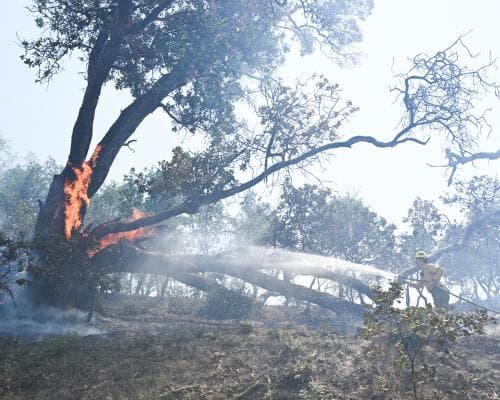
For those who know Big Sur, this is not new. The region has a long, intimate relationship with fire, with landslides, with the slow collapse of its own cliffs into the Pacific. The 2016 Soberanes fire burned for months and cost over $200 million to contain. In 2021, the Colorado fire forced the closure of Highway 1 for nearly a year, cutting off the coast like a severed artery. And now the Timber fire, moving slowly but dangerously along the ground, through grass and oak woodland, has closed the highway to non-residents. The fire is only 5% contained, but officials say it is not racing through the treetops; it is creeping, smoldering, choosing its path with a kind of deliberate menace.
What does this mean for the luxury traveler? It means that the very notion of a 'safe' escape is being recalibrated. The Alila Ventana, with its glass walls and minimalist architecture, is a masterpiece of transparency—but transparency works both ways. When the mountains burn, you see everything. The resort's evacuation is a reminder that no amount of thread count can insulate you from the elements. And yet, there is a strange, almost perverse allure in that. The wealthy do not go to Big Sur for the predictable. They go for the sublime, for the vertigo of standing at the edge of a continent and feeling small. Fire, in its terrible way, is part of that sublime.
The evacuation has also touched the region's more humble treasures. The Henry Miller Library, a nonprofit haven of books and art, has been a gathering place for writers and wanderers since the 1980s. Its closure is a blow to the cultural soul of the coast. Nearby state parks, including Julia Pfeiffer Burns and Pfeiffer Big Sur, are closed to visitors during what should be their busiest season. The Pacific Coast Highway, that ribbon of asphalt that is itself a kind of pilgrimage route, is now a corridor of containment lines. Firefighters are working to keep the blaze from crossing the road, to protect the homes and hotels that cling to the cliffs like barnacles.
For the discerning traveler, this is a moment to watch and wait. The luxury of Big Sur has always been about access—to the views, to the silence, to the feeling of being at the edge of the map. But access is a privilege that nature can revoke at any moment. The fire is a reminder that the most exclusive destination in the world is still, at its core, a wilderness. And that is precisely why we go there.
What comes next? The fires in British Columbia, where 20,000 people have fled and the military is on standby, are a stark echo. The west is burning, and the luxury travel industry is being forced to adapt. But Big Sur will rebuild, as it always has. The Alila will reopen. Nepenthe will serve its famous Ambrosia burgers again. The library will host readings under the redwoods. And the wealthy will return, drawn by the same irresistible pull that has always defined this coast: the knowledge that beauty is fragile, and that to witness it is to be changed.
In the meantime, the smoke will clear, the highways will reopen, and the fires will be remembered as part of the place's story. For those who can wait, the reward is not just a vacation—it is a lesson in humility, wrapped in fog and salt air. For those who cannot, there are other mountains, other coasts. But none will be this one. Big Sur is not a destination. It is a force of nature. And right now, it is reminding us who is really in charge.